
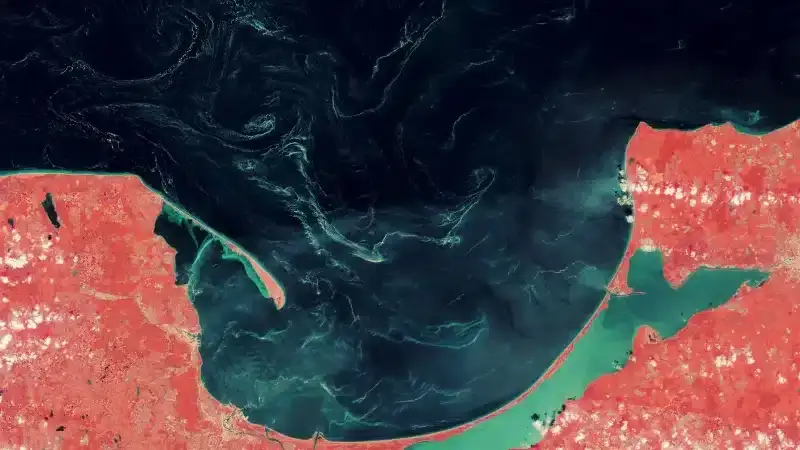
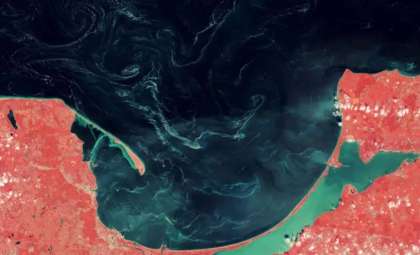
In 2018, an intriguing phenomenon emerged over the Baltic Sea that has now been decoded, revealing an explanation far beyond initial assumptions. Images from the European Space Agency’s Sentinel-2A satellite showed peculiar reflective patches near the Gulf of Gdańsk, located off the northern Polish coastline. While early speculation pointed to pollution or algal blooms, recent research has identified a far more surprising source.
Pine Pollen Spanning the Baltic Sea
These unusual ocean surface formations were caused by the dispersion of pine pollen grains originating from the Pinus sylvestris tree. A study published in Remote Sensing of Environment" revealed that between May 10 and June 16, extensive pollen release occurs, spreading across the entire Baltic Sea rather than remaining confined to coastal areas.
Scientists examined multispectral satellite data spanning 2000 to 2021, assessing 14 years marked by notable “large concentrations of pollen grains.” The study attributes this finding to frequent multispectral satellite observations combined with the distinct reflectance features of pine pollen.

These observations were validated through controlled laboratory studies, matching satellite-detected reflectance to the unique optical signature of pine pollen. This enabled researchers to separate pollen signals from other typical ocean surface features such as marine debris or cyanobacteria.
An Oceanic Carpet: Implications for Carbon and Ecosystems
The discovery gains importance due to the ecological influence these pollen slicks might exert. Containing “a substantial carbon load,” these pollen mats could impact carbon sequestration by aiding the storage of carbon dioxide within ocean environments. The research points to the role of pine pollen dispersal in affecting both carbon cycles and marine ecological systems on a broad scale.
Lead researcher Chuanmin Hu, in an interview with NASA’s Earth Observatory, highlighted that the distinct optical traits of our pollen samples allowed for precise satellite detection. He also mentioned that monitoring pollen clusters could have wider applications: “If we can track pollen aggregation in different places, this may provide useful data for fisheries studies.” This suggests satellite observations could expand beyond mere environmental tracking to illuminate land-to-sea biological interactions.
Satellites Reveal Links Between Land and Sea
This example showcases how satellite monitoring is becoming pivotal in disentangling complex environmental connections. What once seemed an odd surface anomaly has now bridged knowledge across botany, marine science, and climate research. The remarkable visibility of these slicks from space was unlocked by long-term archival data and advancing remote sensing capabilities.
Far from simply being discarded as pollution or oceanic detritus, these seasonal slicks illustrate a fascinating link between terrestrial forests and marine systems. The study broadens our understanding of atmospheric and ocean processes and exemplifies the wealth of discoveries possible through orbital observations of Earth.
- Categories:
- News








0 comments
Sign in to Comment