
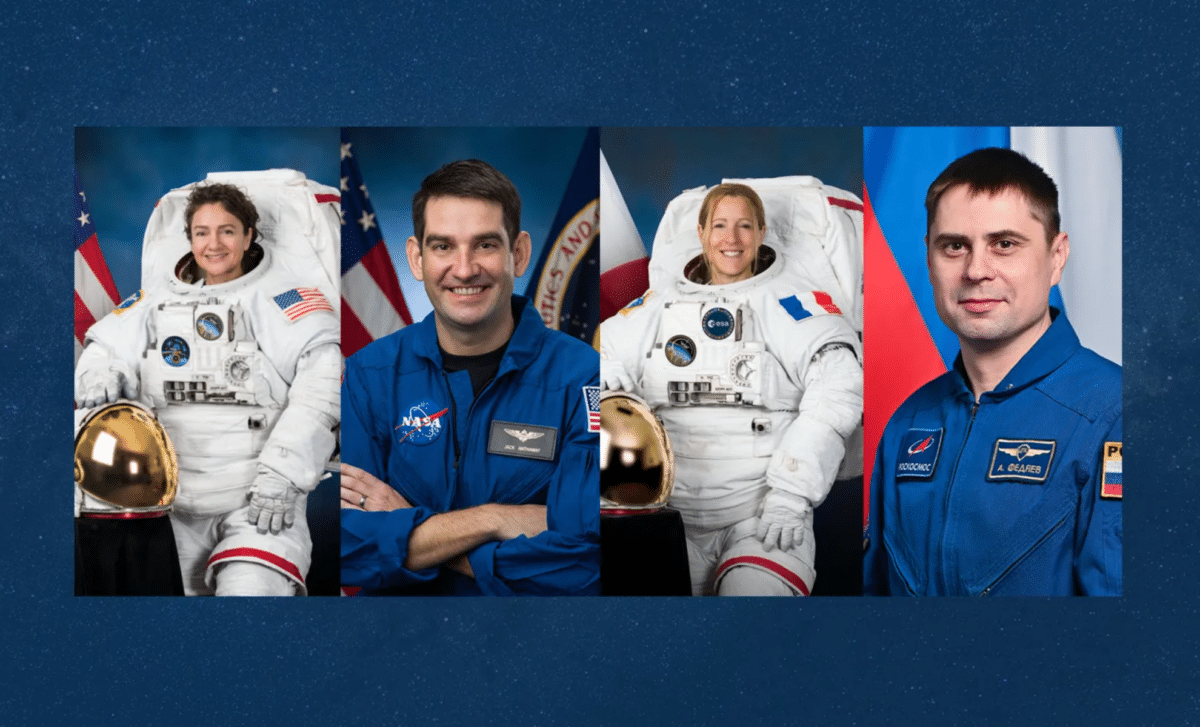
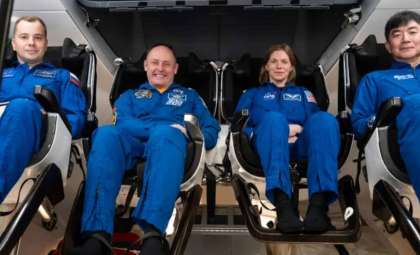
NASA’s upcoming SpaceX Crew-12 expedition, targeting a launch in February 2026, represents a significant chapter in space exploration. This journey will feature a team of astronauts from NASA, ESA, and Roscosmos embarking on extended scientific missions aboard the International Space Station (ISS). Recently unveiled by NASA, the crew’s diverse backgrounds and specialized roles highlight the mission’s potential to drive forward both scientific knowledge and the future of deep space travel.
Continuing Scientific Innovation with NASA’s SpaceX Crew-12
The International Space Station (ISS) has long stood as a beacon of global scientific partnership and discovery. Scheduled for launch no earlier than February 15, 2026, the SpaceX Crew-12 mission builds on this tradition, uniting astronauts from NASA, ESA, and Roscosmos. Far from being a routine ISS crew rotation, this mission plays a crucial role in advancing preparations for humanity’s forthcoming ventures to the Moon and Mars. In an official NASA announcement, details on the crew’s roles were shared, emphasizing the mission’s importance in expanding human spaceflight capabilities.
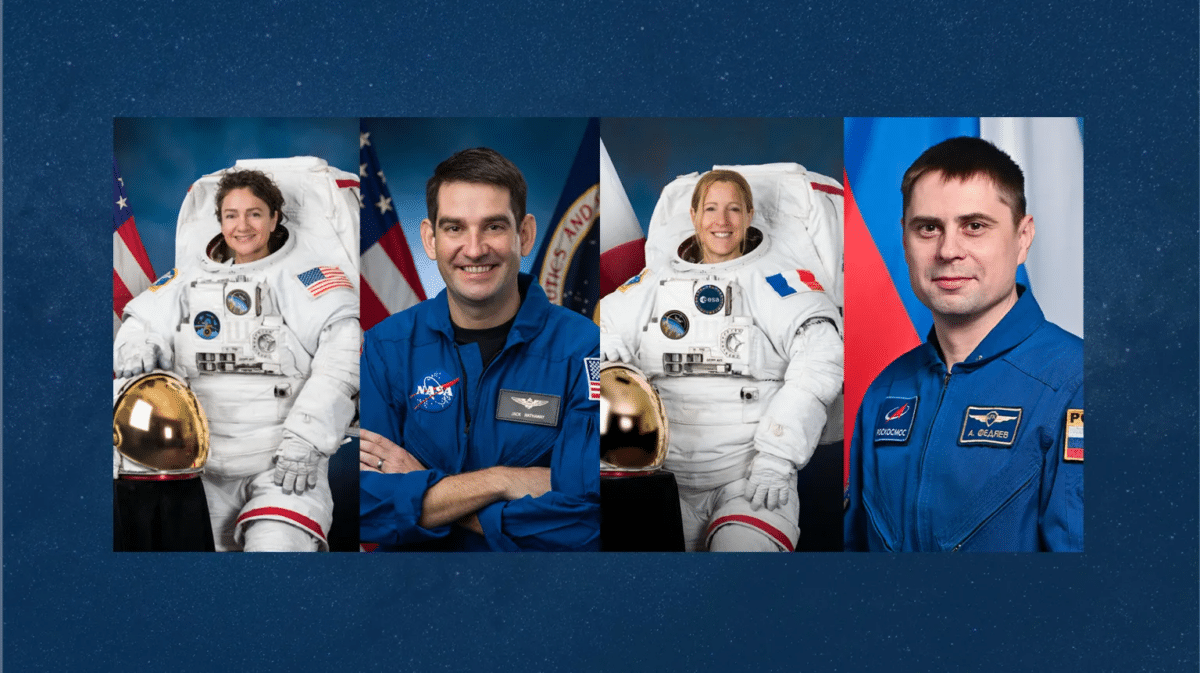
Leading the team is NASA astronaut Jessica Meir, who brings her extensive experience to the helm of the Crew-12 mission. A biologist and marine scientist, Meir previously made history by participating in the first all-female spacewalk alongside astronaut Christina Koch. Meir’s expertise positions her uniquely to guide the international crew in carrying out pivotal scientific and operational duties aboard the ISS. This flight will mark Meir’s second time in space, accompanied by newcomer Jack Hathaway, a U.S. Navy commander with a background in aviation and military tactics embarking on his maiden orbital journey.

An International Team with Specialized Skills
As space exploration evolves, so too does the collaboration across nations, exemplified by Crew-12. In addition to NASA’s Meir and Hathaway, the mission will include ESA astronaut Sophie Adenot and Roscosmos cosmonaut Andrey Fedyaev. Adenot brings a strong background in engineering and flight mechanics and will experience space for the first time. Prior to joining ESA, she accumulated over 3,000 flight hours as a helicopter test pilot, knowledge that will be invaluable for mission operations and scientific work aboard the ISS.
Returning for his second spaceflight, Roscosmos cosmonaut Fedyaev previously flew on NASA’s SpaceX Crew-6 mission. Boasting more than 600 flight hours as a pilot before his cosmonaut selection, his seasoned expertise will be critical as Crew-12 tackles advanced research. Fedyaev’s participation underscores the deepening cooperation among international space agencies and the unique experience that veteran astronauts contribute to the station.
Mission Objectives: Preparing for Deep Space Journeys
While the Crew-12 mission will contribute significantly to ongoing research aboard the ISS, it also serves as a vital stepping stone toward expanding human presence beyond low Earth orbit. Through NASA’s Commercial Crew Program, the Crew-12 voyage aims to ready astronauts for prolonged missions, including upcoming lunar expeditions under NASA’s Artemis initiative and eventual missions to Mars. Opportunities during the mission will include supporting current experiments and testing new technologies and protocols essential for future long-duration space travel.
The crew’s scientific investigations and technology trials will address challenges inherent in extended spaceflight, providing key insights into maintaining astronaut health and functionality over months or years in space—a critical foundation for upcoming exploration to the Moon, Mars, and beyond.
- Categories:
- News









0 comments
Sign in to Comment