
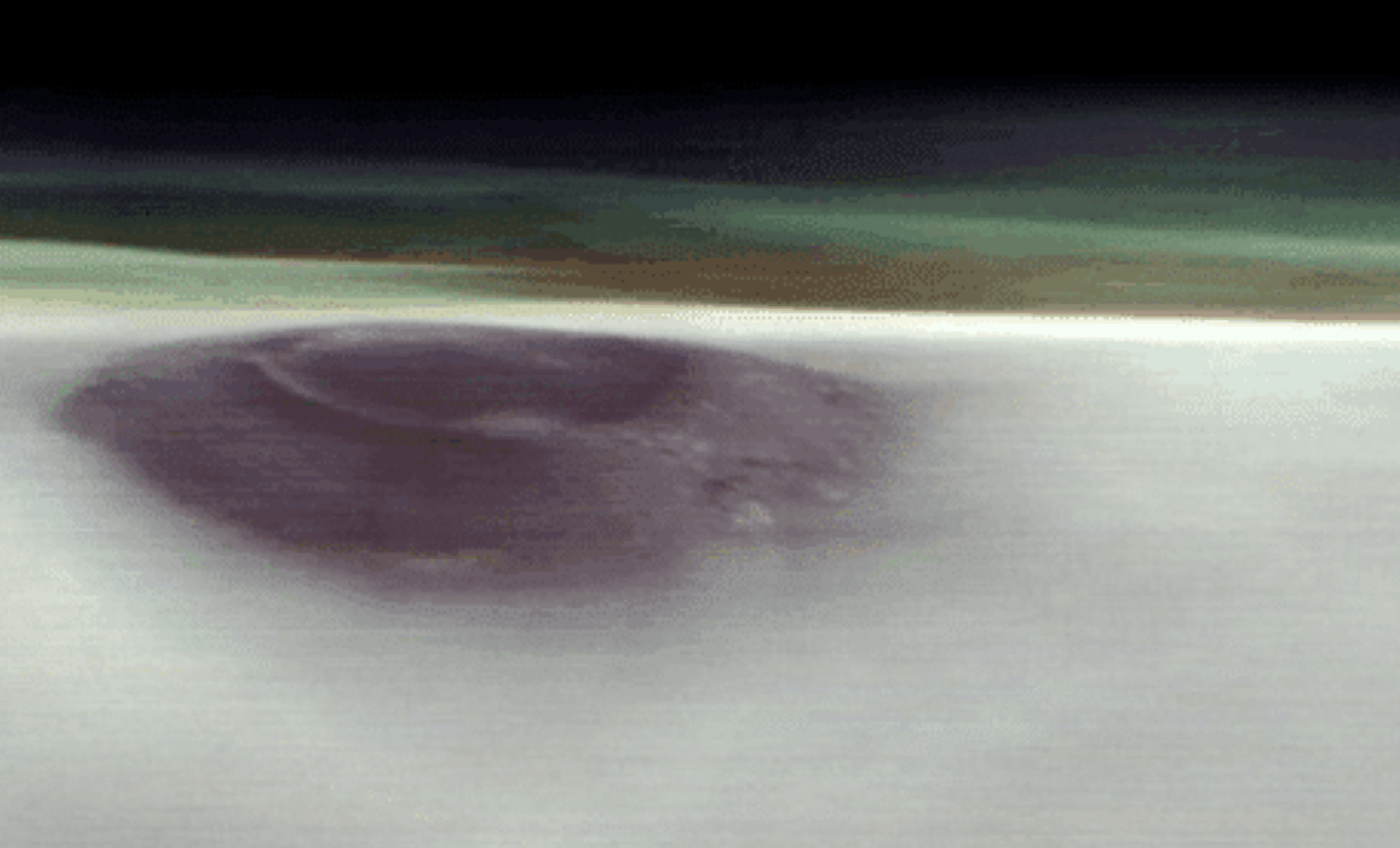
NASA’s Mars Odyssey spacecraft has captured an astonishing image showing a colossal structure piercing through the morning clouds of Mars. This impressive formation, identified as the summit of Arsia Mons, offers a rare glimpse into the upper atmosphere of the Red Planet. Shared by NASA’s Jet Propulsion Laboratory, the photo presents a captivating view that challenges our current understanding of Martian atmospheric phenomena.
Striking Image: Volcanic Peak Rising Above Martian Clouds
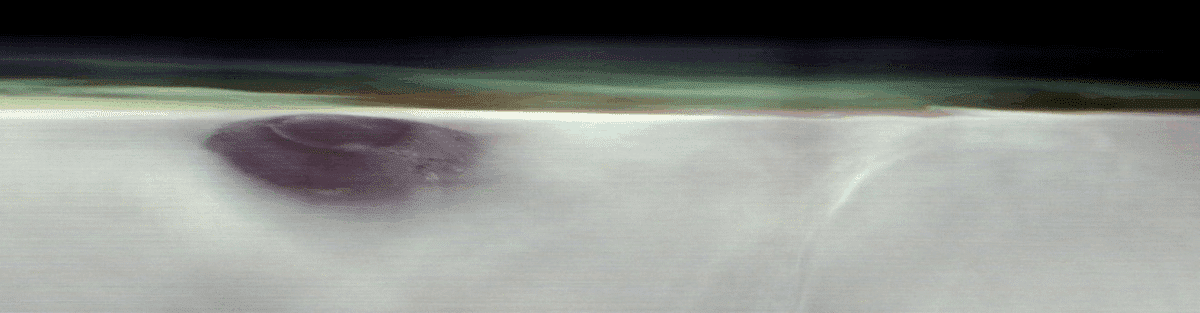
On May 2, 2025, the Mars Odyssey orbiter recorded an extraordinary scene just before sunrise. The image highlights a towering, rugged peak emerging from the lower Martian atmosphere, breaking through the morning cloud cover. This landmark stands sentinel-like over the Tharsis region, and is believed to be the summit of Arsia Mons, one of Mars’ most massive volcanoes.
This marks the first occasion where such a large geological feature has been observed rising above the cloud layer from orbit. Jonathon Hill, the operations lead for Odyssey’s Thermal Emission Imaging System (THEMIS), commented,

“We picked Arsia Mons hoping we would see the summit poke above the early morning clouds. And it didn’t disappoint.”
The exceptional detail and clarity of the shot provide an uncommon perspective of Mars typically accessible only during spacecraft flybys near Earth.
Odyssey’s Long Mission Expands Its Scientific Reach
Since its launch in 2001, NASA’s Mars Odyssey has been essential for exploring Mars’ surface. Initially focused on surface imaging, the probe’s mission has evolved to include detailed studies of the upper atmosphere, providing valuable insights into atmospheric layers and weather dynamics. Odyssey now offers a unique vantage point on Martian clouds, horizon views, and changing atmospheric conditions.
The spacecraft’s Thermal Emission Imaging System (THEMIS), originally designed for surface observation, has proven highly adaptable. By shifting focus to monitor Mars’ atmospheric horizon, THEMIS is successfully capturing the planet’s transitional atmospheric phenomena. Michael D. Smith, a planetary scientist at NASA’s Goddard Space Flight Center, noted,
“We’re seeing some really significant seasonal differences in these horizon images. It’s giving us new clues to how Mars’ atmosphere evolves over time.”
Insights Into Seasonal Atmospheric Shifts
One fascinating outcome of this research is the revealed variability of Mars’ upper atmosphere with seasonal changes. By observing cloud patterns, dust activity, and atmospheric structures at different times, Odyssey provides essential data to understand Martian weather cycles.
During Mars’ aphelion—the point when it’s farthest from the sun—dense cloud bands form along the equator. These result from moist air rising over elevated terrain, cooling, and condensing into thick cloud layers known as the aphelion cloud belt, vividly captured by the orbiter. The volcano’s peak rising above this mist exemplifies the dynamic atmospheric interactions occurring on Mars.
“We’re seeing some really significant seasonal differences in these horizon images,” explained Michael D. Smith.
His observations suggest these findings not only deepen understanding of present weather but also illuminate potential long-term climate developments on Mars.
Unlocking New Atmospheric Mysteries on Mars
Odyssey’s novel approach to studying Mars by focusing on the planetary horizon has revealed previously hidden atmospheric details. The striking visuals of a volcanic peak piercing through the cloud deck offer unique opportunities to analyze cloud behavior and atmospheric conditions.
This unusual perspective—rarely accessible from Earth-bound observatories—helps scientists examine how temperature, pressure, and other variables shape Martian weather patterns. Continued monitoring promises to enhance knowledge of Mars’ climatic evolution and the processes governing its thin atmosphere.
- Categories:
- News










0 comments
Sign in to Comment