
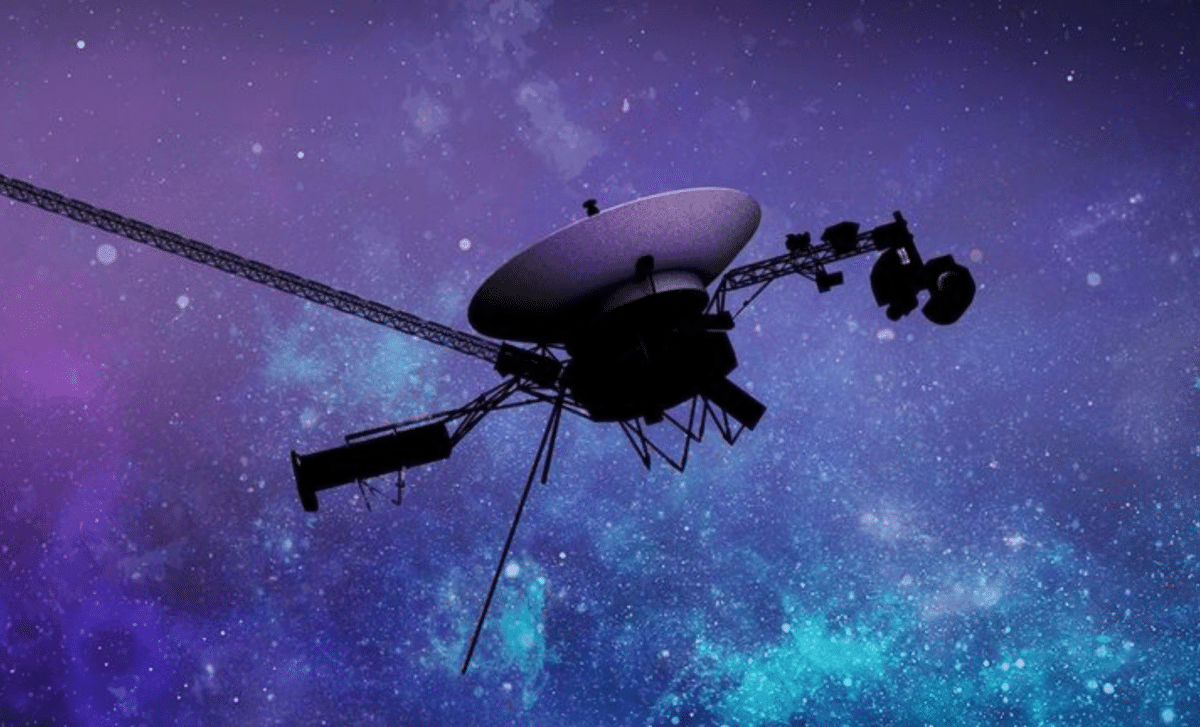
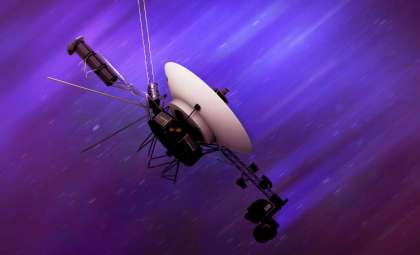
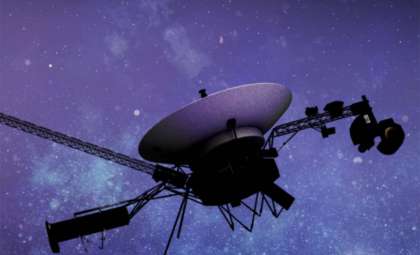
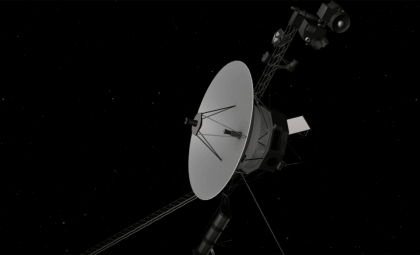
To prolong the operational lifespan of Voyager 1, the spacecraft that has journeyed farther than any other human-made object, NASA engineers have opted to deactivate one of its crucial instruments. The Low-energy Charged Particles (LECP) experiment, functioning nearly continuously since the probe’s 1977 launch, will cease data collection.
A Calculated Move to Sustain Voyager 1’s Longevity
In a precise and deliberate effort, the team at NASA’s Jet Propulsion Laboratory (JPL) recently commanded the shutdown of a major instrument aboard Voyager 1. This step conserves limited power resources, ensuring the spacecraft can remain active and continue transmitting valuable information from the depths of space. Facing dwindling energy reserves after traveling over 15 billion miles from Earth, the decision to disable the Low-energy Charged Particles experiment (LECP) — which operated for nearly five decades — was essential to keep core systems functional and to extend the probe’s mission.
This adjustment reflects NASA’s ongoing commitment to maximizing the longevity of both Voyager spacecraft through thoughtful energy management.

“While shutting down a science instrument is not anybody’s preference, it is the best option available,” said Kareem Badaruddin, Voyager mission manager at JPL. “Voyager 1 still has two remaining operating science instruments, one that listens to plasma waves and one that measures magnetic fields. They are still working great, sending back data from a region of space no other human-made craft has ever explored. The team remains focused on keeping both Voyagers going for as long as possible.”
Closing the Chapter for the LECP Instrument
Since its deployment in 1977, the LECP instrument has been essential in detecting low-energy charged particles such as ions and electrons. According to NASA, the data collected has deepened scientific understanding of the interstellar environment, revealing details about cosmic rays and pressure boundaries beyond the solar system. These unique measurements, only possible from a probe so distant, have been instrumental in expanding knowledge of deep space. Approaching its 50th year in operation, each instrument’s use is carefully assessed to ensure the mission’s continuing scientific value.
However, NASA engineers have maintained a minimal power supply to a motor within the LECP, consuming just 0.5 watts, keeping the potential for future reactivation viable. This approach preserves operational flexibility as part of the Voyager team's broader mission strategy.
Managing Power in the Vastness of Space
Voyager 1’s energy derives from a radioisotope thermoelectric generator (RTG), which harnesses heat from decaying plutonium to generate electricity. Over time, the RTG’s output diminishes by roughly 4 watts annually, and after nearly 49 years, the available power is sharply decreasing. Specialists at JPL must meticulously ration this limited energy to sustain key instruments and prevent system failures due to freezing conditions.
In February 2026, during a scheduled maneuver, the spacecraft encountered a significant drop in power, prompting urgent intervention. Any further decreases risked triggering Voyager 1’s undervoltage protection, a safeguard that would automatically disable vital spacecraft functions. The engineering team’s prompt measures granted the probe an additional year-long buffer before more drastic conservation techniques would be required.
- Categories:
- News






0 comments
Sign in to Comment