
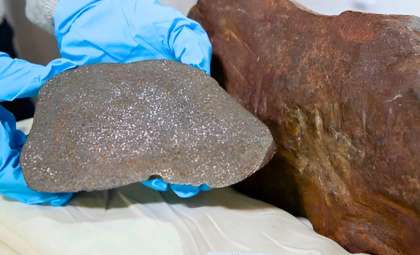
The OSIRIS-REx mission by NASA keeps revealing astonishing details about the solar system's infancy, with fresh analyses uncovering ingredients critical for life. Recent investigations of material from asteroid Bennu have uncovered the presence of vital sugars, an unusual gum-like compound, and surprisingly large amounts of dust from supernovae. Published in top scientific outlets, these revelations enhance our understanding of how life’s fundamental components formed and evolved in space.
Vital Sugars Found in Samples From Bennu
The investigation into Bennu samples has distinguished itself by identifying sugars indispensable to life. In a landmark study led by Yoshihiro Furukawa of Tohoku University and featured in Nature Geoscience, researchers detected ribose and glucose—two sugars that are vital for biological activity on Earth.
Ribose, an essential five-carbon sugar within RNA, and glucose, a primary energy source, were found in these samples. The discovery supports the notion that life's fundamental molecules may have been widely distributed across the early solar system.

“All five nucleobases used to construct both DNA and RNA, along with phosphates, have already been found in the Bennu samples brought to Earth by OSIRIS-REx,” said Furukawa. “The new discovery of ribose means that all of the components to form the molecule RNA are present in Bennu.”
This finding strengthens the idea that RNA could have been the original molecule carrying genetic information in primordial life forms.
Interestingly, deoxyribose, another sugar critical to DNA structure, was not detected. This absence may hint that ribose was predominant in the early solar environment, lending support to the “RNA world” theory, which suggests RNA predates DNA as the key biopolymer.
“Present day life is based on a complex system organized primarily by three types of functional biopolymers: DNA, RNA, and proteins,” explains Furukawa. “However, early life may have been simpler. RNA is the leading candidate for the first functional biopolymer because it can store genetic information and catalyze many biological reactions.”
A Puzzling ‘Space Gum’ Emerges
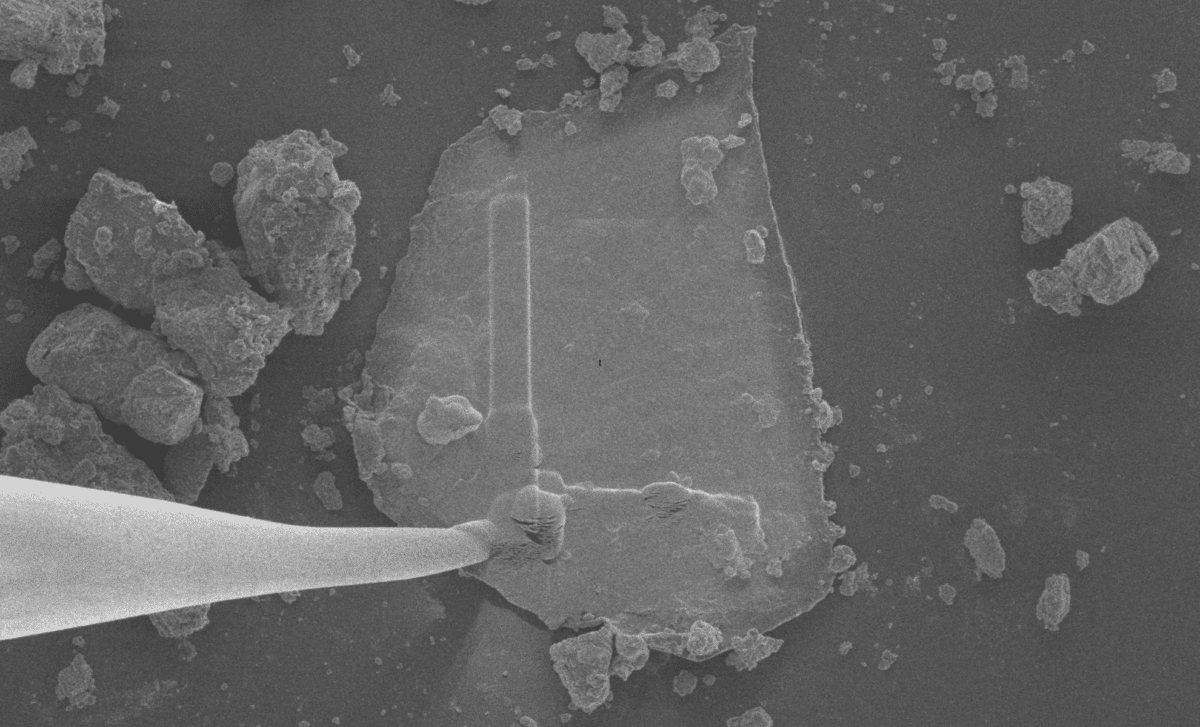
Among the surprising discoveries is a sticky, gum-like substance within Bennu’s samples, a material unlike any previously seen in meteorites or asteroid debris. Scientists believe this compound formed as Bennu's parent asteroid warmed during the early solar system, rich in nitrogen and oxygen. This indicates it might have contributed to primordial chemical reactions on Earth, possibly linked to the origins of life.
Scott Sandford, a principal investigator of this research, commented,
“With this strange substance, we’re looking at, quite possibly, one of the earliest alterations of materials that occurred in this rock. On this primitive asteroid that formed in the early days of the solar system, we’re looking at events near the beginning of the beginning.”
This gum-like matter likely developed in a warm setting prior to the presence of substantial water on Bennu’s parent body, sharing some chemical resemblance to polyurethane found on Earth, which helps shed light on early prebiotic chemistry.
“We knew we had something remarkable the instant the images started to appear on the monitor,” said Zack Gainsforth, a collaborator at NASA’s Ames Research Center. “It was like nothing we had ever seen, and for months we were consumed by data and theories as we attempted to understand just what it was and how it could have come into existence.”
Notably, the gum-like compound remains soft and flexible in environments free from radiation and can offer insights into the complex organic molecules that might have been present on Earth before life emerged.
Stardust Points to Bennu’s Cosmic Origins
Another significant revelation involves a wealth of supernova dust in Bennu’s material. Led by Ann Nguyen from NASA’s Johnson Space Center, the examination of presolar grains — particles older than our solar system — revealed that Bennu contains six times more supernova dust than previously studied meteorites. This suggests Bennu’s parent body accreted in a region rich in stellar debris from exploding stars.
“These fragments retain a higher abundance of organic matter and presolar silicate grains, which are known to be easily destroyed by aqueous alteration in asteroids,” said Nguyen. “Their preservation in the Bennu samples was a surprise and illustrates that some material escaped alteration in the parent body. Our study reveals the diversity of presolar materials that the parent accreted as it was forming.”
The prominence of supernova dust offers clues about Bennu’s origins and the degree to which its parent asteroid underwent transformation. Despite extensive alteration by water in many parts, some primordial material remains unaltered, preserving ancient conditions from the solar system’s formative era.
- Categories:
- Science






0 comments
Sign in to Comment