
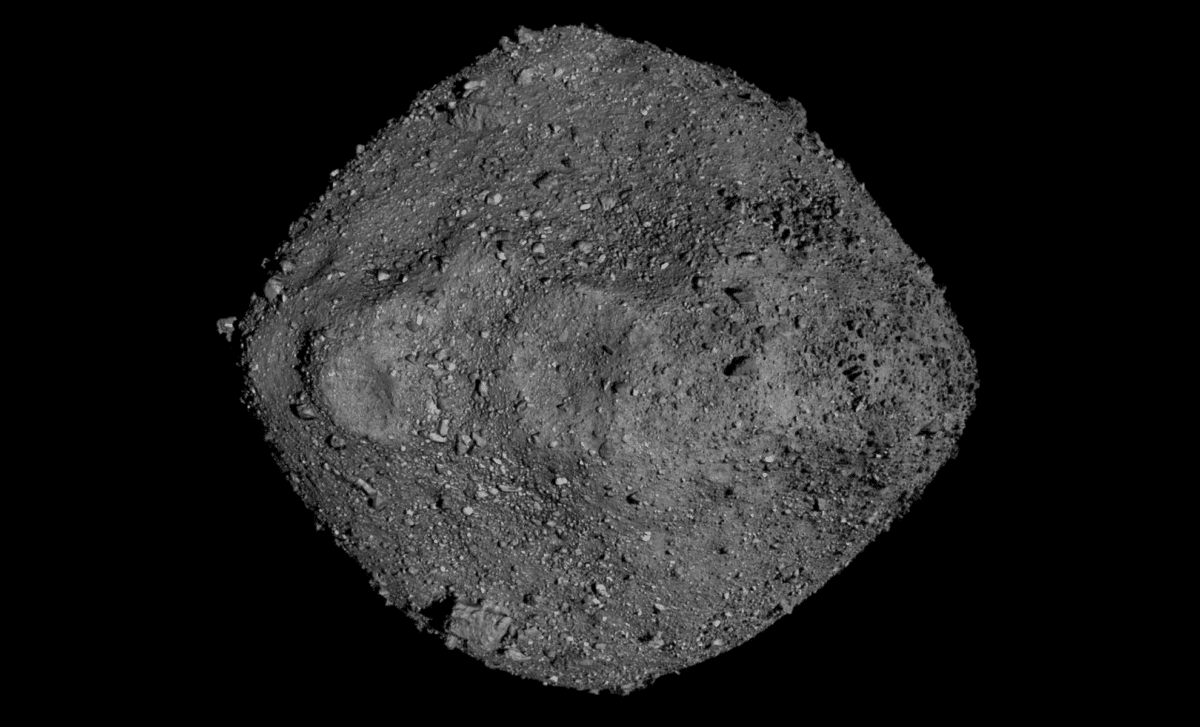
NASA’s OSIRIS-REx mission has uncovered a remarkable clue towards understanding how life began. Samples retrieved from asteroid Bennu have revealed traces of tryptophan, an intricate amino acid seldom detected in extraterrestrial sources. This is the inaugural discovery of tryptophan on an asteroid specimen, carrying profound implications beyond our planetary neighborhood.
Described in a recent publication in the journal PNAS, the finding bolsters theories that the essential components for life might have been transported to Earth intact by ancient space rocks.
Decoding a Complex Signature from Space
Detecting tryptophan within samples directly extracted from asteroid Bennu marks an exceptional advancement in planetary chemistry. Tryptophan is among the twenty amino acids critical to protein formation in all known living organisms. Its discovery in a pristine space object—free from Earth's atmospheric alterations—opens a fresh perspective on the molecular environment of the early solar system and the beginnings of life.

“Finding tryptophan in the Bennu asteroid is a big deal, because tryptophan is one of the more complex amino acids, and until now it had never been seen in any meteorite or space sample,” said José Aponte, an astrochemist at NASA’s Goddard Space Flight Center.
Coauthor of the research, Aponte contributed to the study published in PNAS, which examined a mere 50 milligrams of material from Bennu—smaller than a fingernail but packed with vital clues.
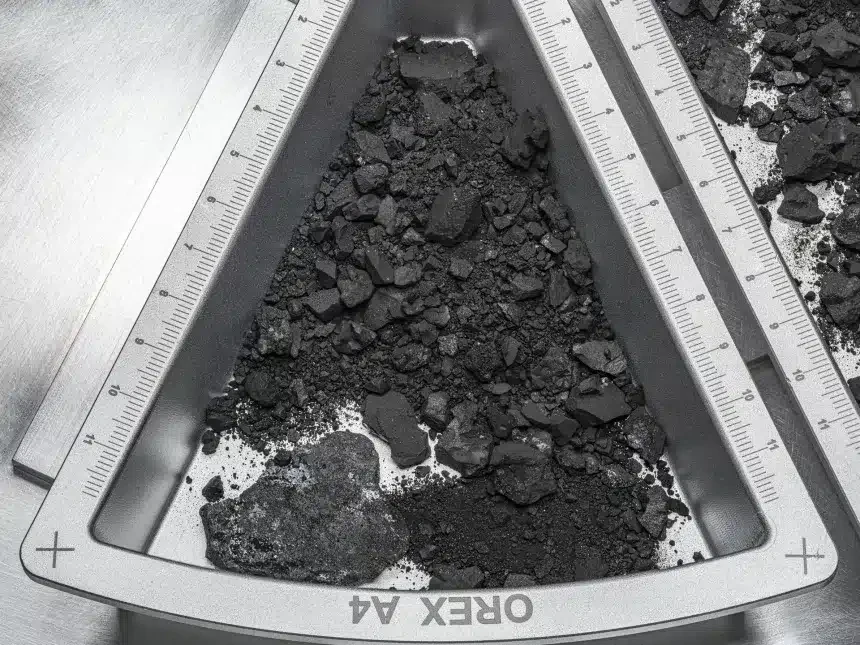
Tryptophan is categorized as an essential amino acid—one that humans cannot synthesize internally and must obtain through food. Its novel identification in Bennu is especially important because its structural complexity led many scientists to doubt that it could naturally form in outer space environments. This discovery disputes that assumption.
The ramifications of this finding influence the field of astrobiology profoundly: if space can produce such intricate organic molecules, the basic elements for life may be more abundant across the cosmos than previously recognized.
Stellar Origins of Life’s Components
One major advantage of the OSIRIS-REx mission is the uncontaminated state of the Bennu samples. Unlike meteorites, which experience intense heating upon entering Earth's atmosphere, material from Bennu was delivered in a pristine condition. “Because OSIRIS-REx returned these samples pristine, we’re finally seeing the fragile salts, minerals, and organics that meteorites lose on entry,” said Dante Lauretta, planetary scientist and coauthor from the University of Arizona.
This exceptional preservation offers a chemical record from the dawn of the solar system over 4.5 billion years ago. “Bennu showcases a variety of chemical environments that indicate small bodies in space were rich in organics long before life took root on Earth,” Lauretta added.
Bennu likely originated in the asteroid belt between Mars and Jupiter, separating from a larger parent asteroid up to 2 billion years ago. Having orbited near Earth for approximately 1.75 million years, it is now regarded as a “time capsule” preserving planetary origins.
The addition of tryptophan extends the count of 15 protein-building amino acids identified in Bennu samples, close to the full set of 20 known in Earthly life, suggesting asteroid chemistry resembles that of early Earth more than previously thought.
Prebiotic Organic Amino Acids as Assembled Components
Organic substances detected on Bennu, such as ammonia and related compounds, strengthen the hypothesis that asteroids may have delivered life’s foundational molecules to early Earth. This theory is supported by previous findings from missions like Japan’s Hayabusa2, which collected samples from the asteroid Ryugu containing various amino acids.
“They’re like jigsaw pieces that are not yet assembled,” said Angel Mojarro, lead author of the new PNAS study and an organic geochemist at NASA Goddard. “What this is telling us is that many, many of the building blocks of life can be produced naturally within asteroids or comets, and finding tryptophan expands the alphabet of amino acids that are produced in space and could have been delivered to the Earth.”
Current understanding suggests these organic molecules may have formed prior to the solar system's birth, created in the intense environments of dying stars—supernovae—and subsequently altered by cosmic processes such as radiation and collisions over billions of years.
These discoveries are transforming established notions about how life originated, proposing that life’s biochemical ingredients might have been partly synthesized before arriving on Earth, ready to engage in the complex chemistry that eventually led to living organisms.
- Categories:
- Science









0 comments
Sign in to Comment