

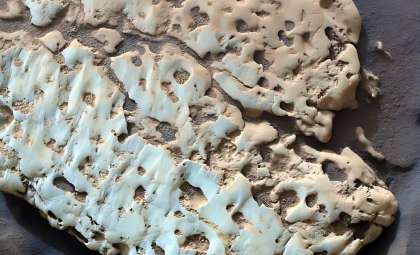
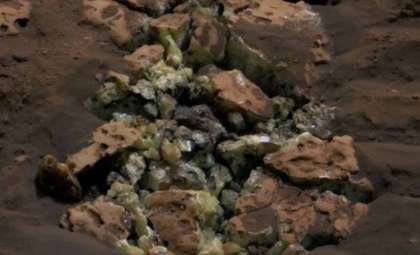
The Perseverance rover, operated by NASA, has detected nearly pure quartz crystals on Mars, a finding that may transform our understanding of the planet’s potential to support life in the distant past. These crystals, along with minerals like opal, were located within Jezero Crater, a site renowned for its historical presence of water.
Researchers suggest these quartz formations likely originated in hot hydrothermal settings, environments that could have nurtured microbial ecosystems billions of years ago.
Perseverance’s Trailblazing Find
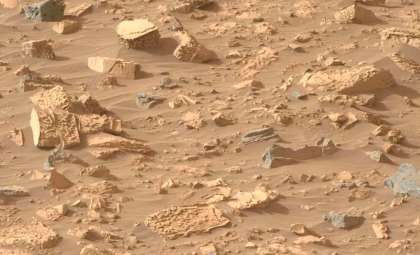
Since its touchdown at Jezero Crater in 2020, the Perseverance rover has been investigating this locale to uncover signs of Mars’ ancient aquatic history. This crater, thought to be the remnant of a former lake, formed following an asteroid collision. Over time, water likely carved through the region, depositing a variety of sediments and minerals.

Perseverance initially concentrated on sampling the ancient lakebed surface to detect organic compounds and potential indicators of life. However, in 2023, the rover ascended beyond the lake's floor to the crater rim, where it stumbled upon a remarkable discovery: sizable, flawless quartz crystals encased in Martian rocks. This marks the first confirmed detection of such crystals on Mars.
The Importance of Quartz in Astrobiology
As reported by the NewScientist, quartz is a widespread Earth mineral that often forms where hot water rich in dissolved silica is present.
On our planet, hydrothermal environments—such as those at Yellowstone National Park or deep-sea vents—are known hotspots for microbial life. These mineral-laden, high-temperature habitats support diverse microbial communities. If similar hydrothermal conditions ever existed on Mars, they could have provided suitable habitats for primitive life forms.
Crucially, quartz crystals can entomb biological materials, preserving them for millions or even billions of years. This means that if life ever thrived in Martian hydrothermal niches, biological traces—organic molecules, microfossils, or chemical biosignatures—might still be securely trapped within these minerals.
Opals, Historical Water, and Life Potential
Alongside quartz, Perseverance also found opal, a mineral that forms in watery environments. Opals consist of hydrated silica, containing water molecules embedded within their structure. This evidence strengthens the hypothesis that Jezero Crater endured extensive wet periods, potentially long after the majority of Mars’ surface water disappeared.
Earlier research has proposed that subsurface water reserves might have lingered on Mars well beyond the drying of its surface.
The presence of opals corroborates this, hinting that underground water habitats might have remained stable for millions of years, potentially allowing life processes to initiate and evolve.
Advancing Our Understanding of Mars
The findings of quartz and opals represent exciting clues, though conclusive evidence of Mars’ ancient life will need additional research. Scientists anticipate that the Mars Sample Return mission, a collaboration between NASA and ESA, will retrieve these samples to Earth for thorough analysis.
Using state-of-the-art microscopes and advanced lab methods, researchers hope to detect microscopic fossils, chemical biosignatures, or preserved organic substances that could illuminate Mars’ biological history.
- Categories:
- Space










0 comments
Sign in to Comment