
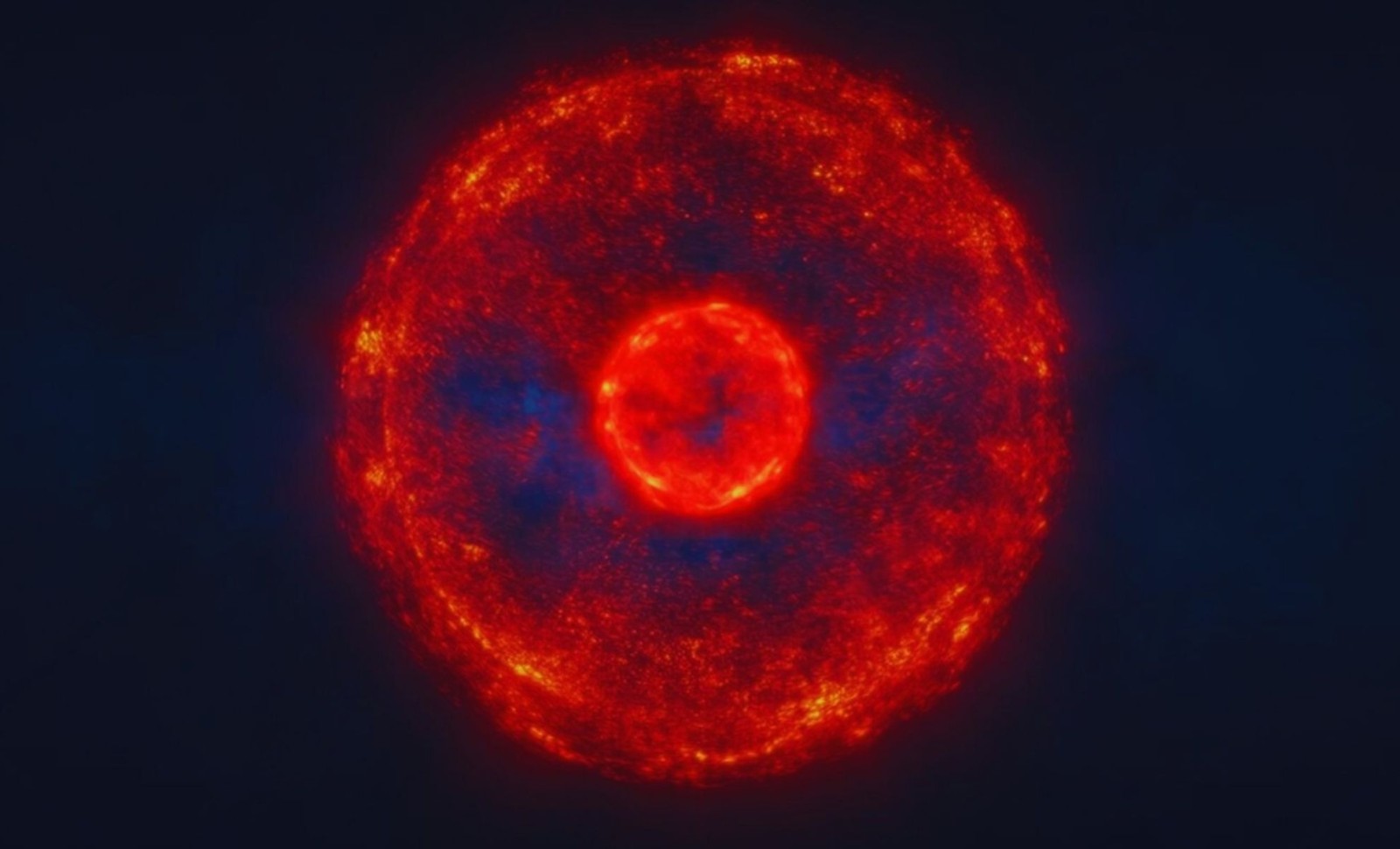
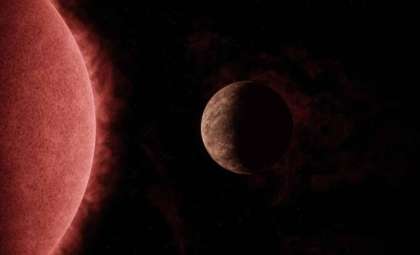
In a remarkable astronomical find, NASA has detected a mysterious red orb named CWISE J1249 shooting through our galaxy at an astonishing velocity exceeding one million miles per hour. This rare object has stirred considerable debate among scientists as it challenges current understandings of cosmic structures and origins. Its distinct composition and unprecedented speed make it stand out in the cosmic landscape.
Discovered by the Wide-field Infrared Survey Explorer (WISE) telescope operated by NASA, CWISE J1249 quickly piqued the interest of astrophysicists. Its odd characteristics do not match any known category of celestial bodies, making it a subject of intense study.
Unveiling a Peculiar Sphere in Swift Flight
The discovery of CWISE J1249 began when NASA’s WISE telescope spotted a remarkably bright spot moving rapidly across space. Further analysis revealed its speed was far beyond anything previously documented.

“I can’t describe the level of excitement,” said Martin Kabatnik, a citizen scientist from Nuremberg, Germany. “When I first saw how fast it was moving, I was convinced it must have been reported already.”
While most rogue planets drift at much slower paces, CWISE J1249’s velocity surpasses a million miles per hour—several times faster than even the fastest runaway stars traveling at around 200,000 to 500,000 miles per hour. This extraordinary pace suggests it was launched by a tremendous force, possibly gravitational or explosive, drawing keen interest from researchers worldwide.
Spectroscopic data shed more light on this mysterious object. NASA’s findings indicate that CWISE J1249 has a significantly low mass, much less than typical stars. Its low metal abundance implies it may be very old or primitive in nature. Additionally, its infrared signature is unlike anything recorded in known stars, planets, or substellar objects.
Tracing the Origins
As reported by Times of India, experts have suggested two primary theories to explain CWISE J1249’s roots. One theory posits that it is a fragment from a white dwarf star catapulted at high velocity by a supernova explosion. Its low metal content and extreme speed support this idea, indicating it could be debris from a past cosmic explosion. Nevertheless, some of its features don’t quite match typical supernova remnants, leaving room for doubt.
Another possibility is that CWISE J1249 is a failed star, such as a brown dwarf, or even a rogue planet expelled from its home system. If it is a failed star, it might belong to a group of bodies that never initiated sustained nuclear fusion. Alternatively, gravitational forces could have ejected it from an original orbit, making classification complex. Regardless, CWISE J1249 continues to intrigue astronomers around the globe.
- Categories:
- Space







0 comments
Sign in to Comment