

In 2024, global sea levels experienced an unexpected surge, coinciding with the year being documented as Earth's warmest since temperature records began.
A comprehensive assessment by NASA attributes this increase mainly to unprecedented ocean warming coupled with meltwater from glaciers, highlighting the intensifying effects of climate change on marine environments.
Sea Levels Climb Faster Than Models Predicted
Recent NASA data reveal that sea levels rose by an estimated 0.23 inches (0.59 cm) throughout 2024, exceeding the earlier forecasted rise of 0.17 inches (0.43 cm). This notable upward shift indicates that ocean level increases are accelerating beyond previous expectations.
These measurements were primarily obtained via satellite technology, particularly through the Sentinel-6 Michael Freilich satellite, operational since 2020 and dedicated to tracking changes in sea levels.

Josh Willis, a scientist at NASA’s Jet Propulsion Laboratory, remarked on the concerning trend: “Although annual sea level changes vary, it’s clear the ocean continues to rise at an accelerating pace.”
Thermal Expansion Emerges as Leading Contributor
Previously, the primary driver of rising seas was the melting of polar ice sheets. However, NASA’s 2024 report identifies a shift wherein thermal expansion caused by warming oceans accounted for around two-thirds of the sea level increase, with glacial meltwater playing a smaller part.
This alteration corresponds to record-high ocean temperatures, fueled by escalating greenhouse gas emissions. Experts caution that if this pattern persists, ocean levels may rise quicker, escalating risks faced by coastal urban centers and island nations.
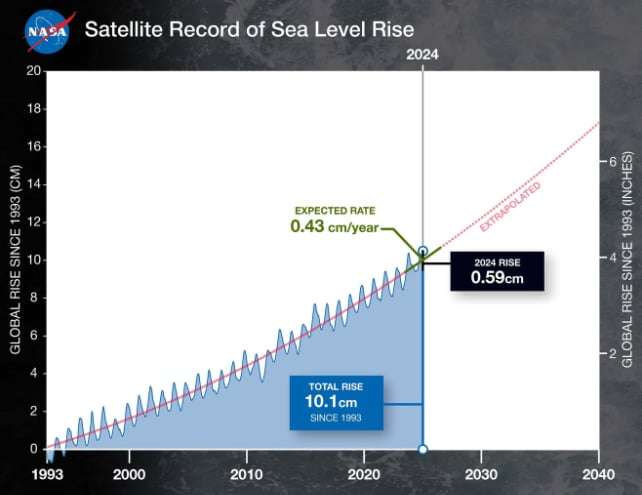
Evidence Points to Accelerating Long-Term Sea Level Rise
Data spanning the last 30 years shows that sea levels have increased by roughly 4 inches (10 cm), per NASA's documented records. Alarmingly, the pace has doubled over this period, indicating earlier climate models may have underestimated how rapidly sea levels would climb.
Should greenhouse gas emissions remain unchecked without reductions, the coming years could witness amplified storm surges, coastal erosion, and extensive flooding, endangering millions worldwide.
The Growing Risks to Coastal Urban Areas
Increasing sea levels pose threats that extend beyond just shoreline inundation, as scientists warn that the continued rise will worsen various hazards. Elevated water levels intensify the severity of storm surges and high tides, raising the likelihood of devastating floods in exposed coastal communities.
Additionally, the encroachment of saltwater into freshwater aquifers threatens vital drinking water resources, reducing availability for many coastal residents. The loss of key ecosystems such as mangroves, wetlands, and barrier islands aggravates the issue by eroding biodiversity and removing natural protections that reduce shoreline erosion and shield against storm impacts.
- Categories:
- Climate change






0 comments
Sign in to Comment