
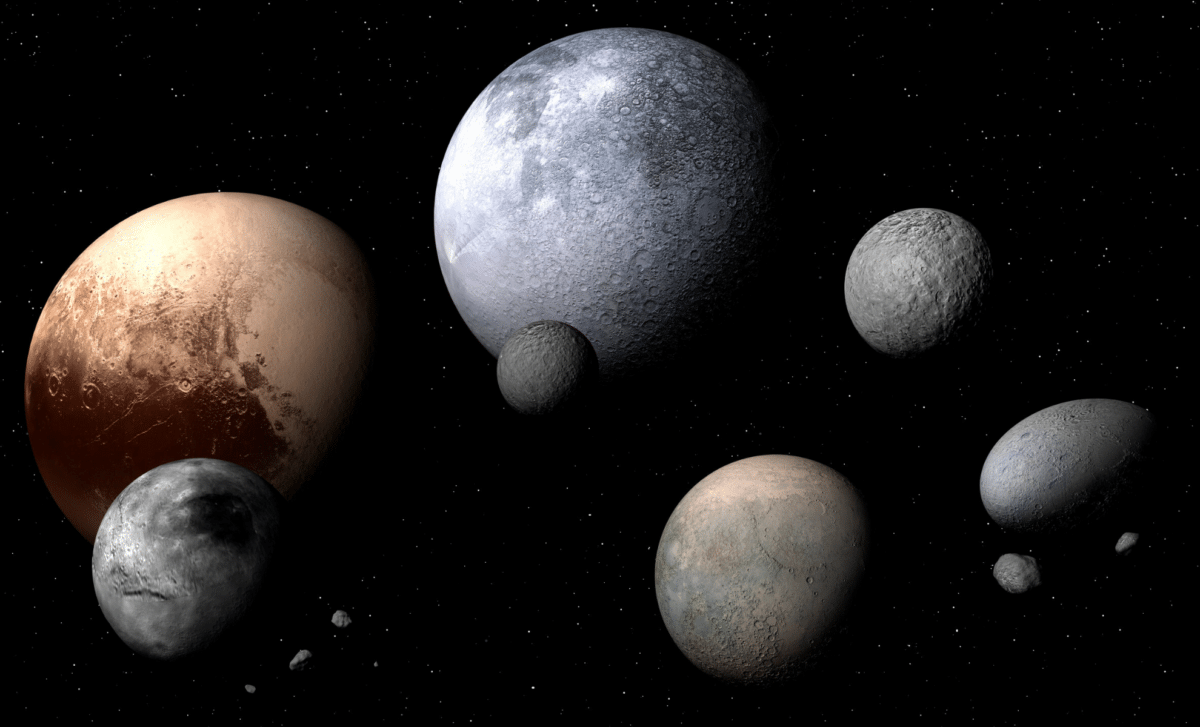
In 2025, researchers identified more than 100 previously unknown moons orbiting various planets within our solar system, a remarkable achievement shedding light on planetary formation. As highlighted by New Scientist, these discoveries include a newly detected moon around Uranus and numerous additional satellites circling Saturn, deepening our insight into moon formation dynamics and the evolutionary history of our cosmic neighborhood.
Unveiling an Unexpected Abundance of Moons
The scientific community celebrated a monumental find in our solar vicinity with the addition of over 100 moons never before recorded. This influx of identified moons significantly broadens our knowledge about planetary evolution and interactions. According to New Scientist, the standout revelation includes 128 newly observed moons around Saturn, which now boasts an impressive total of 274 moons. These results were achieved using advanced methodologies such as combining multiple long-exposure photographs from the Canada-France-Hawaii Telescope, enabling the detection of extremely faint celestial bodies.
Cataloging these moons represents more than a numeric update; it's essential for piecing together the complexities of how planets and their satellites develop. Lead scientist Edward Ashton remarked,

“Everybody always likes to find new moons and everybody always likes to think about what they’re going to call them. It’s an exciting moment. It’s a bit of a legacy.”
Given the sheer number of moons orbiting Saturn, naming conventions have shifted, with many moons designated by numbers rather than traditional mythological monikers.
The vast population of Saturn’s moons underscores the gas giant’s complicated satellite system. Discovering these additional moons helps astronomers enhance their models of planetary development and satellite interactions.
An Enigmatic New Satellite of Uranus
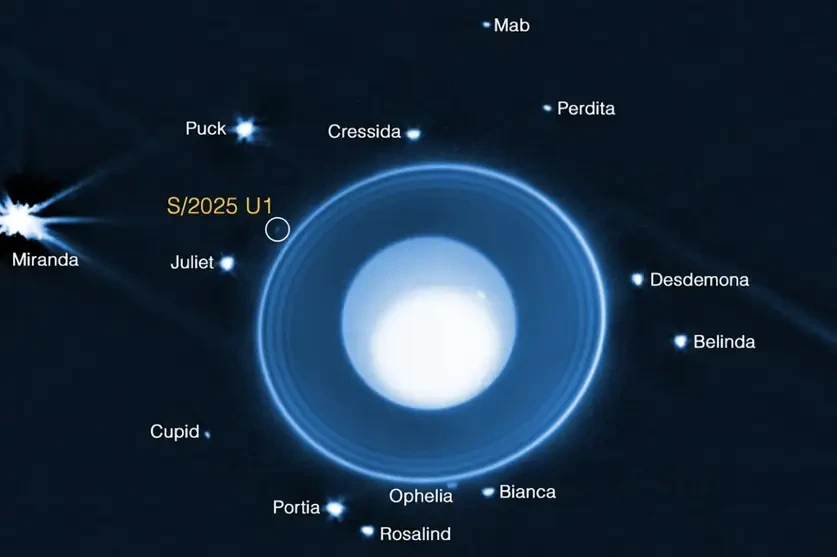
Among the discoveries, one of the most captivating is the identification of a new satellite around Uranus, officially named S/2025 U1. Detected through the James Webb Space Telescope, this tiny and faint moon eluded detection by traditional optical instruments. Its addition brings Uranus’s total known moons to 29.
Discovering this moon highlights both technological progress and the dedication of astronomers. Utilizing long-exposure infrared imagery, the Webb Telescope has enabled a clearer view far into space. Though unnamed beyond its provisional designation, S/2025 U1 may eventually receive a name consistent with Uranus’s naming tradition, often inspired by Shakespearean characters like Titania and Oberon—a practice dating back to the 18th century.
Nigel Mason of the University of Kent emphasizes the importance of such findings in understanding planetary systems. He considers the number of moons yet to be uncovered, particularly those revolving around Neptune and Uranus, stating,
“Why are there so many? What is it that triggered [planets] to make 40, 50, 60 of such varying shapes and sizes? That’s why they’re exciting. It’s not just stamp collecting. It really is ‘wow’.”
The Vital Influence of Moons on Planet Formation
Moons captivate interest beyond their numbers, playing a critical role in revealing the mechanisms behind planetary formation. Identifying new moons supplies crucial data that deepen our grasp of how planets and their satellite systems arise. The wide range of sizes and forms of moons orbiting Saturn, Uranus, and others prompts key questions about their origins.
As Mason notes, studying these moons is more than categorization.
“Really surprisingly, the whole planet-formation process is not as well understood as we think.”
Discovering moons with diverse features challenges and improves existing theories on moon formation, whether these bodies form through capture, collisions, or other means.
Additionally, moons offer insight into the histories of their host planets. The gravitational and tidal interactions between moons and their planets provide valuable knowledge about the dynamic processes shaping celestial bodies. Each newly found moon adds to the intricate story of planetary systems.
- Categories:
- Astronomy



0 comments
Sign in to Comment