
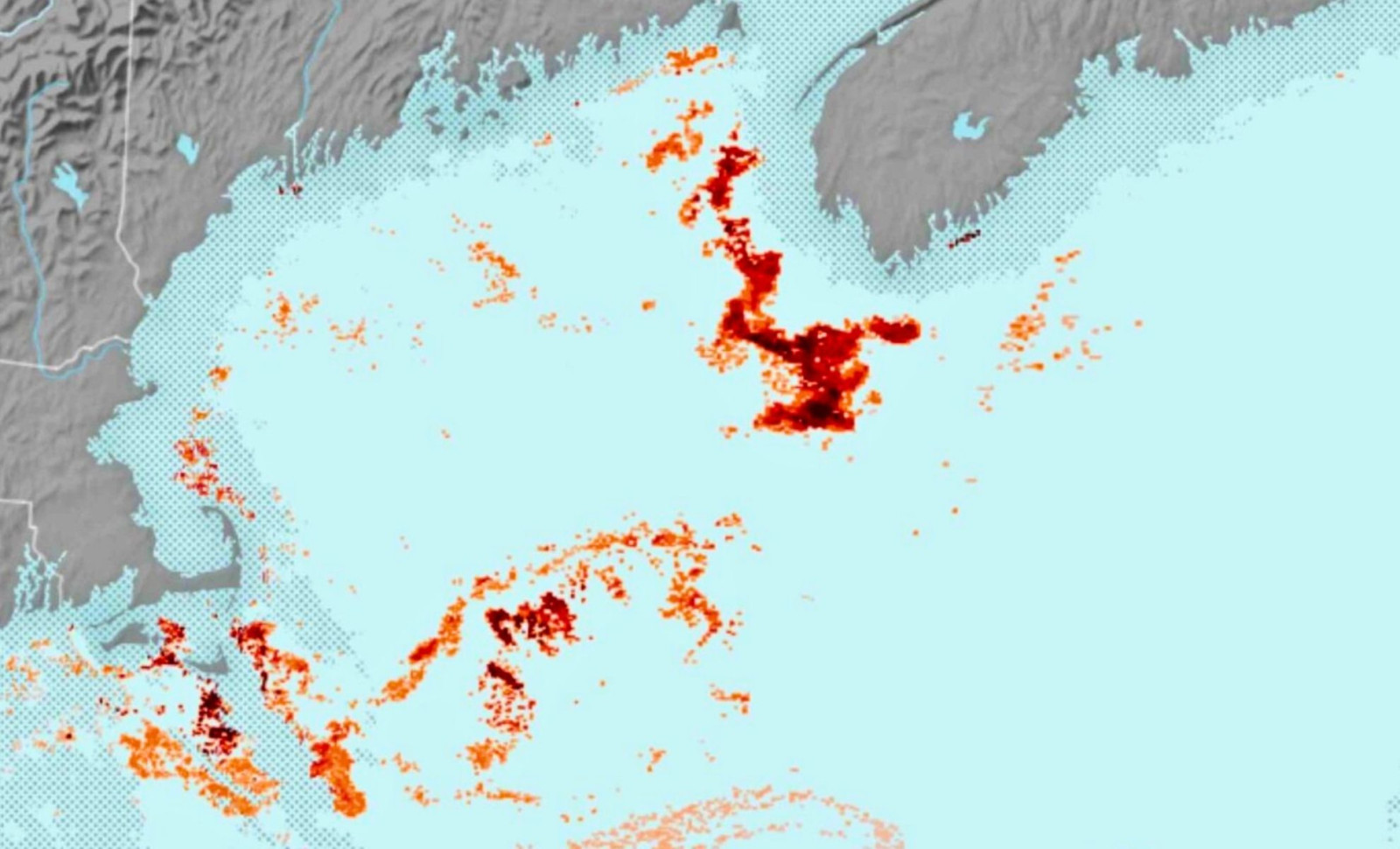
Far out in the North Atlantic Ocean, the critically endangered North Atlantic right whale, numbering fewer than 370 individuals, continues to alter its migratory routes while searching for food. Monitoring and protecting these whales remains challenging, as vessel collisions and fishing gear entanglement persist as major threats. Effective prevention hinges on predicting their future locations.
The trigger behind their shifting movement patterns is often invisible. Unlike the large whales, their main meal consists of microscopic creatures widely dispersed and until recently, almost impossible to track live. Traditional physical sampling of zooplankton has been limited by geographic reach and timing, risking that entire feeding areas become overlooked before they can be studied.
More recently, satellite-based innovations are transforming this landscape. Researchers can now observe not the whales, but the tiny red plankton they consume from hundreds of kilometers above sea level. This advancement creates new possibilities for tracking vital food sources, with important consequences for marine wildlife preservation and ocean management.

Central to this progress is Calanus finmarchicus, a small red copepod whose ecological role far exceeds its size. Detecting this species from orbit opens strategic opportunities to mitigate dangers affecting whales as well as the wider marine ecosystem.
Satellite Identification of Dense Zooplankton Aggregations
Oceanographer Rebekah Shunmugapandi's team at the Bigelow Laboratory for Ocean Sciences has shown that optical sensors on satellites can pinpoint surface clusters of Calanus finmarchicus by detecting unusual ocean color patterns. These copepods contain the red pigment astaxanthin, which modifies light reflection on the water’s surface. When they accumulate in large numbers, the resulting signal is visible from space.
The use of NASA’s MODIS instrument aboard the Aqua satellite enabled processing of enhanced RGB images over the Gulf of Maine. Correlating these images with direct zooplankton measurements from the Continuous Plankton Recorder (CPR) confirmed that red anomalies coincide with massive plankton concentrations. Observed densities reached an impressive 150,000 individual copepods per cubic meter.
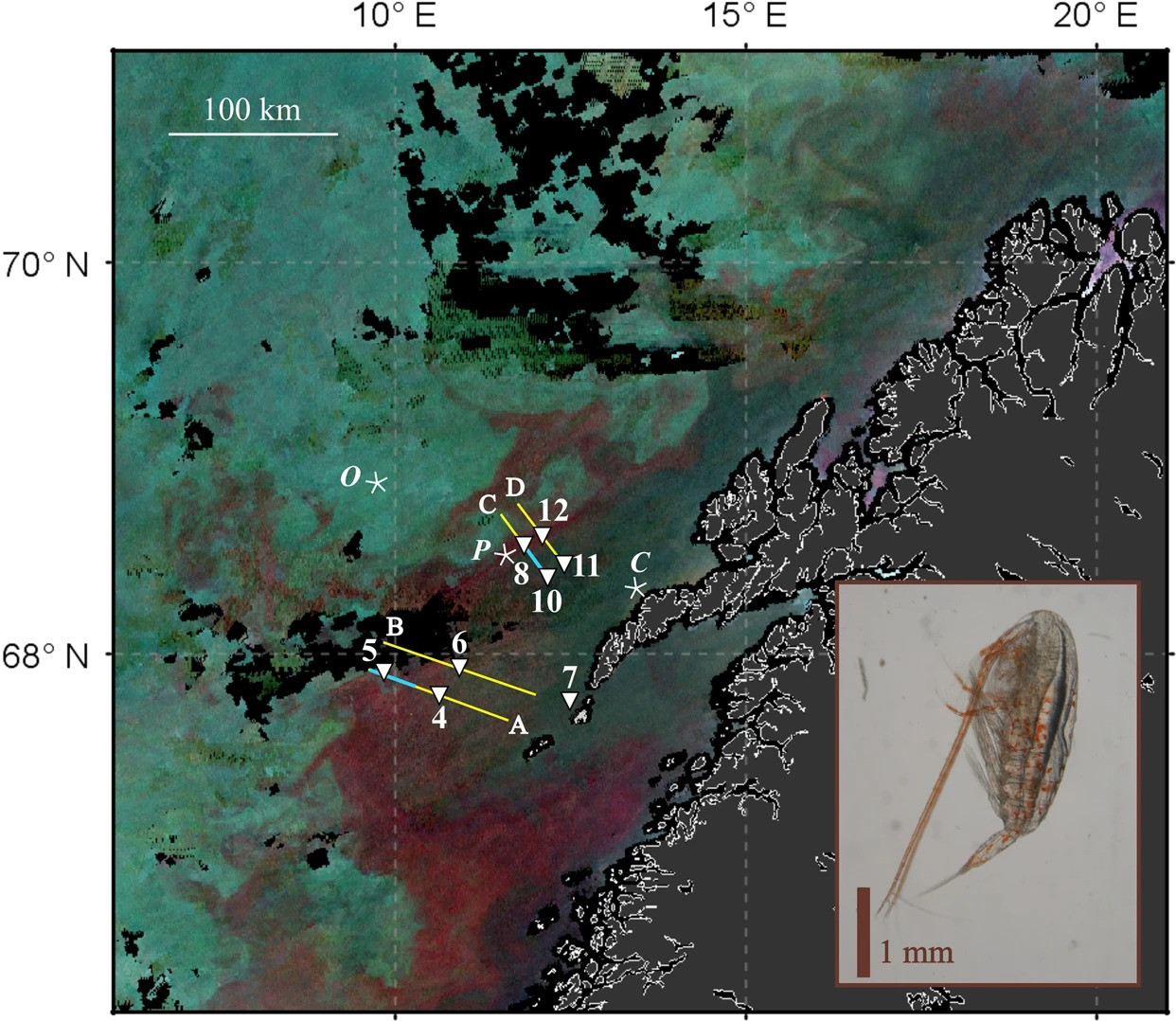
Building on prior research in the Norwegian Sea, similarly large Calanus blooms spanning over 1,000 square kilometers were detected using satellite observation. In both regions, satellite imagery reliably matched biological survey data, revealing that prolific zooplankton aggregations strongly influence surface light reflectance and enable a novel ecological monitoring tool from orbit.
Protecting North Atlantic Right Whales Through Food Source Monitoring
For endangered North Atlantic right whales, the presence of Calanus finmarchicus is crucial for survival. These whales depend almost exclusively on dense aggregations of these copepods to accumulate the fat reserves required for migration and successful reproduction. When plankton densities decline or relocate, whales frequently move into zones with heavy human maritime activity.
Tracking Calanus via satellites could offer early alerts about these shifts, allowing authorities to enforce temporary speed limits for vessels, adjust shipping lanes, or impose fishery closures as preventative measures. A report on Earth.com described integrating satellite data with real-time sightings of whales to support rapid decision-making for conservation efforts.
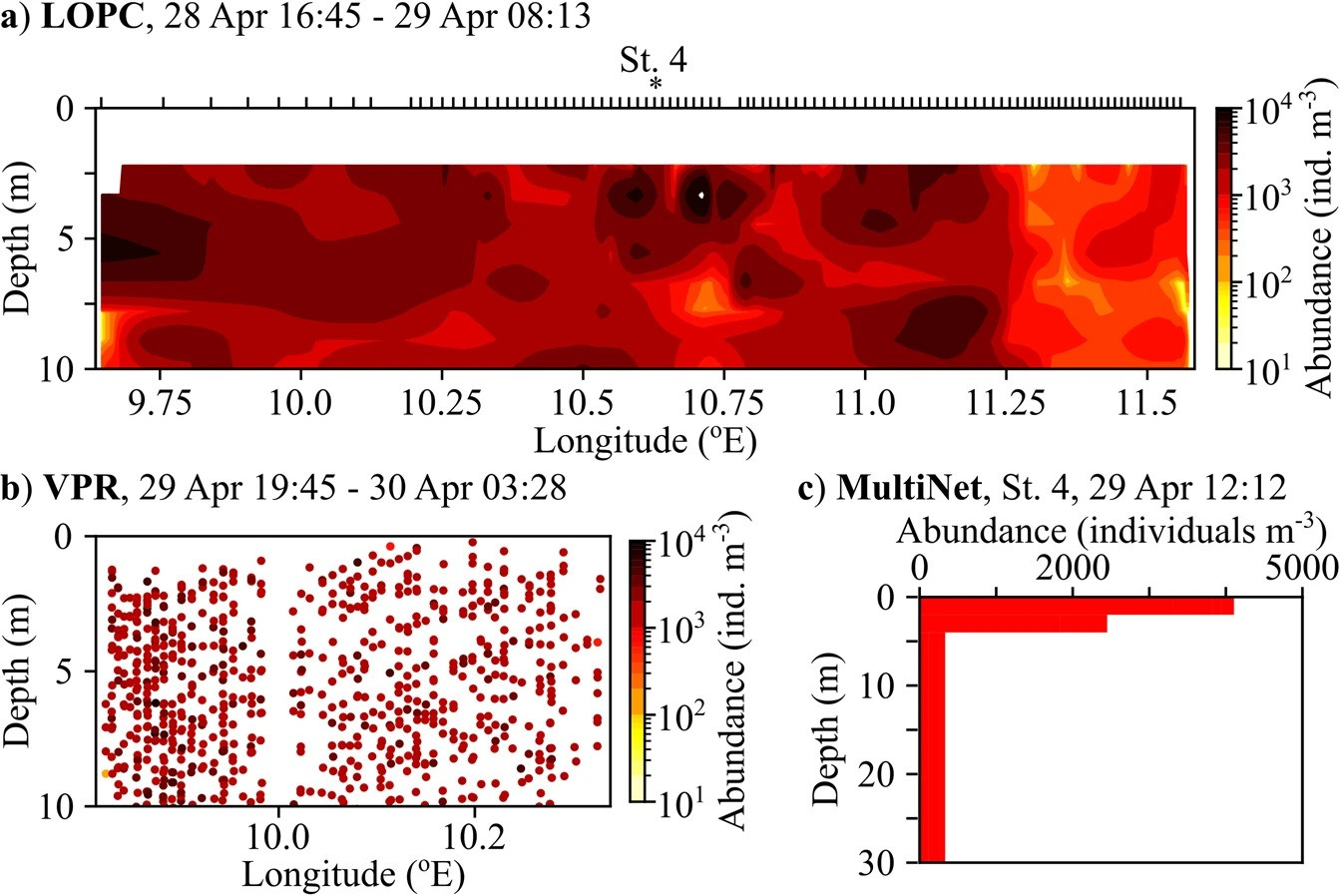
This satellite approach also corresponds with ecological findings that right whales are typically found where Calanus densities exceed 10,000 individuals per cubic meter. The space-based observations cover vast areas surpassing the scope of traditional ship-based plankton sampling, enhancing our capability to monitor whale habitats.
Challenges in Species Detection and Accuracy
Although astaxanthin serves as a useful spectral indicator for Calanus finmarchicus, it is not exclusive to this copepod. Other crustaceans like Centropages and several phytoplankton species including Tripos muelleri also produce red pigments that can affect surface reflectance readings.
In peer-reviewed analyses published in Frontiers in Marine Science, researchers examined the detection method’s precision. One case revealed unexpectedly high Calanus signals during autumn when the species typically descends deeper and becomes inactive. Another noted that blooms of Tripos muelleri caused false positive detections in the algorithm. Despite improvements in spectral analysis to focus on Calanus, some misclassifications remain.
The study authors emphasize that without detailed local data and species-specific optical profiles, the detection system primarily acts as a general astaxanthin sensor, and exact species identification requires complementary biological measurements or on-site sampling.
- Categories:
- News











0 comments
Sign in to Comment