
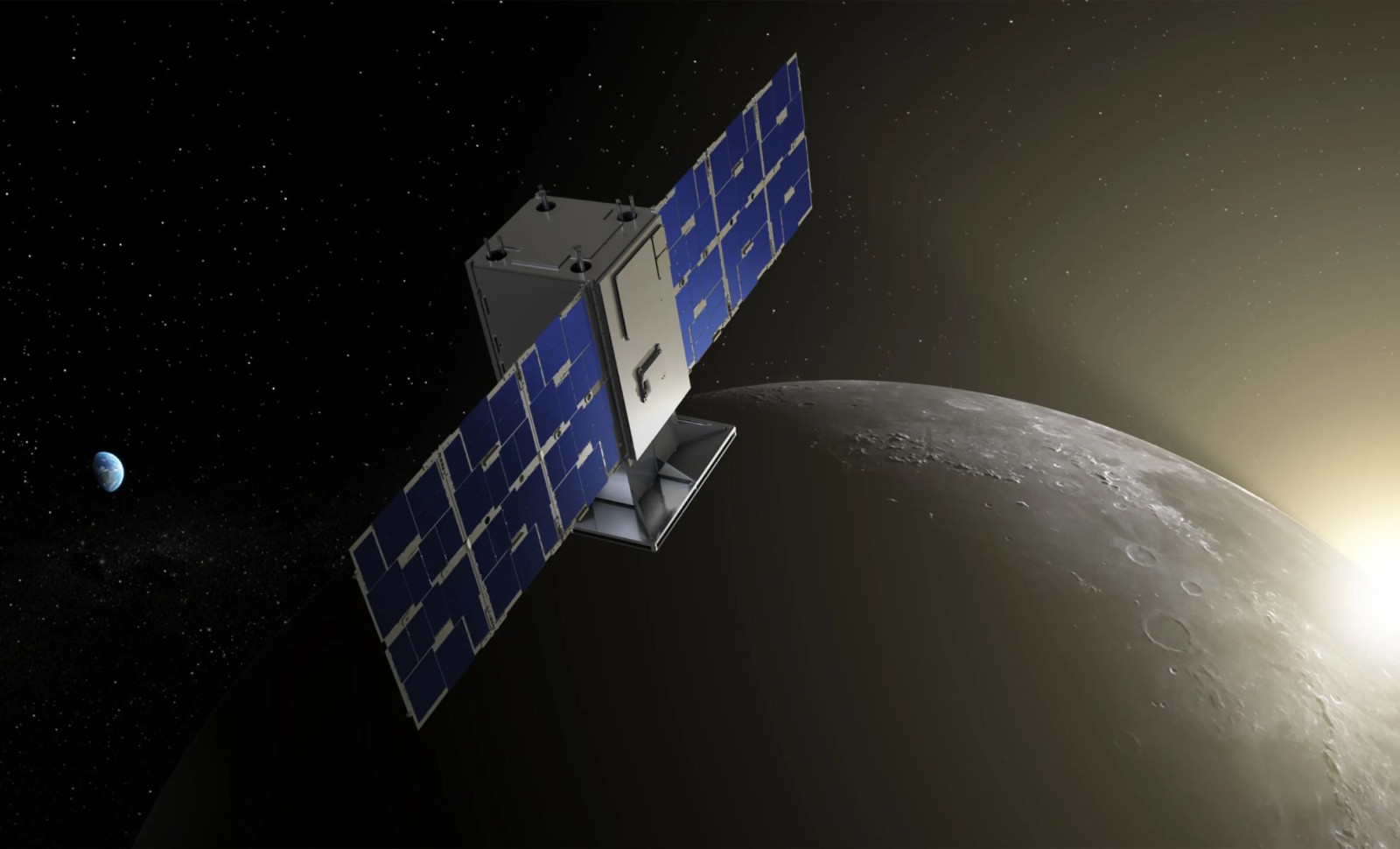
NASA’s CAPSTONE spacecraft has successfully wrapped up an extended mission focusing on autonomous navigation and deep-space communication technologies aimed at supporting future lunar exploration efforts. This compact spacecraft showcased how lunar missions might operate with increased independence from Earth-based control.
An Innovative Spacecraft Paving The Way For Lunar Exploration
Launched in June 2022, the CAPSTONE (Cislunar Autonomous Positioning System Technology Operations and Navigation Experiment) mission marked the first U.S. commercial journey to the Moon. It was designed to test critical technologies that will enable upcoming lunar missions and NASA’s plans for sustained human presence on the Moon.
Developed and operated by Advanced Space, CAPSTONE was placed into a unique orbit influenced by the gravitational forces of both Earth and the Moon. This orbits’ stable configuration reduces fuel consumption and offers valuable insights for future missions.

This mission was the first to successfully fly in and study this type of three-body lunar orbit, yielding data essential for upcoming scientific and exploration activities.
Following the achievement of its initial goals, CAPSTONE was granted a 15-month mission extension to serve as a versatile technology testbed for new software and communications systems in the lunar environment.
NASA opted to utilize this existing spacecraft as an economical platform, avoiding the need to launch separate missions for individual technology trials.
The extended mission was conducted under NASA’s Research and Technology Mission Directorate, with the agency's SCaN (Space Communications and Navigation) Division overseeing the technology demonstrations.
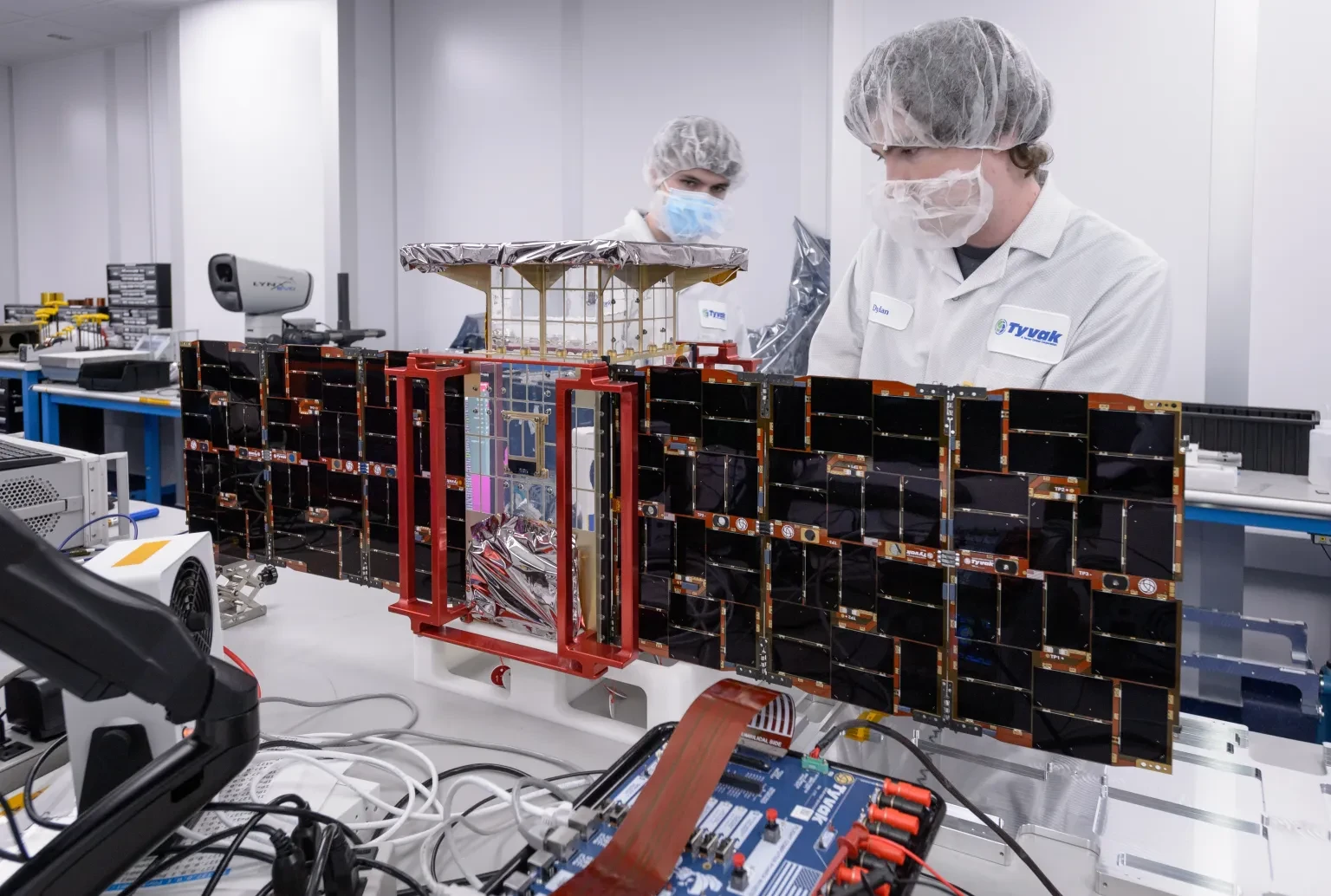
Advancing Autonomous Navigation Beyond Earth Orbit
A primary objective during the mission’s extension was to evaluate autonomous navigation software called autoNGC (autonomous Navigation, Guidance, and Control), which enables spacecraft to determine their position, plot routes, and adjust trajectory independently, without constant input from Earth-based mission control.
While this technology had been previously tested in orbit around Earth, CAPSTONE’s mission represented its inaugural trial near the Moon.
Scientists observed how the autonomous system performed under limited communication conditions. At times, CAPSTONE could only communicate with Earth a few times per week because NASA’s Deep Space Network was supporting other missions, including the Artemis II crewed flight test.
The constrained communication schedule produced a realistic scenario for evaluating spacecraft autonomy.
CAPSTONE employed an onboard star tracker camera to monitor celestial bodies such as the Earth and Moon, enabling it to estimate its position without relying solely on ground tracking systems.
“To really demonstrate that something works, you have to fly it,” said Sun Hur-Diaz, the principal investigator for autoNGC at NASA’s Goddard Space Flight Center in Maryland. “The real environment is key.”
Enhancing Lunar Communication Reliability
In addition, CAPSTONE tested a novel approach to deep-space communications called delay/disruption tolerant networking (DTN), intended to handle the unique challenges of space networks, such as long delays, intermittent connectivity, and variable links.
DTN technology allows the spacecraft to store data during communication blackouts and automatically transmit the information once the signal is re-established.
During one experiment, CAPSTONE started sending data to Earth just before its communication window closed. Instead of losing any part of the message, the spacecraft retained the remaining data and resumed transmission during the next available contact.
Ultimately, all data reached Earth successfully.
This test paves the way for communication systems robust enough to support astronauts and robots navigating difficult lunar terrains.
“You can imagine an astronaut walking behind a lunar hill or descending into a crater and temporarily losing connectivity,” explained Ben Anderson, a systems engineer at NASA’s Goddard Space Flight Center. “This technology ensures that information is automatically retransmitted when connections return.”
These advancements are vital for missions where explorers operate beyond direct Earth communication lines.
Leveraging CAPSTONE As A Versatile Technology Platform
NASA’s extended use of CAPSTONE highlighted the advantages of repurposing operational spacecraft to conduct multiple technology experiments, allowing developers to observe how new systems perform in real lunar conditions without the cost of launching new missions.
“Running several experiments on the same spacecraft lets NASA assess how these innovations function together in an active lunar environment,” said Greg Stover, director of the Advanced Research and Technology Division at NASA Headquarters in Washington. “Investing in autonomous operations and resilient communications is crucial for maintaining U.S. leadership as lunar exploration expands.”
Findings from CAPSTONE will influence future lunar missions that need spacecraft to operate more independently with enhanced navigation and communication systems.
The technology demonstration phase concluded in June 2026, after nearly four years of continuous development and testing. Advanced Space will keep using the spacecraft as a testbed for emerging space technologies.
Constructed by Terran Orbital, CAPSTONE has delivered valuable insights to NASA and its partners as they prepare for the next stage in lunar exploration, where dependable autonomous navigation and communication infrastructure will be essential.
- Categories:
- Nasa







0 comments
Sign in to Comment