
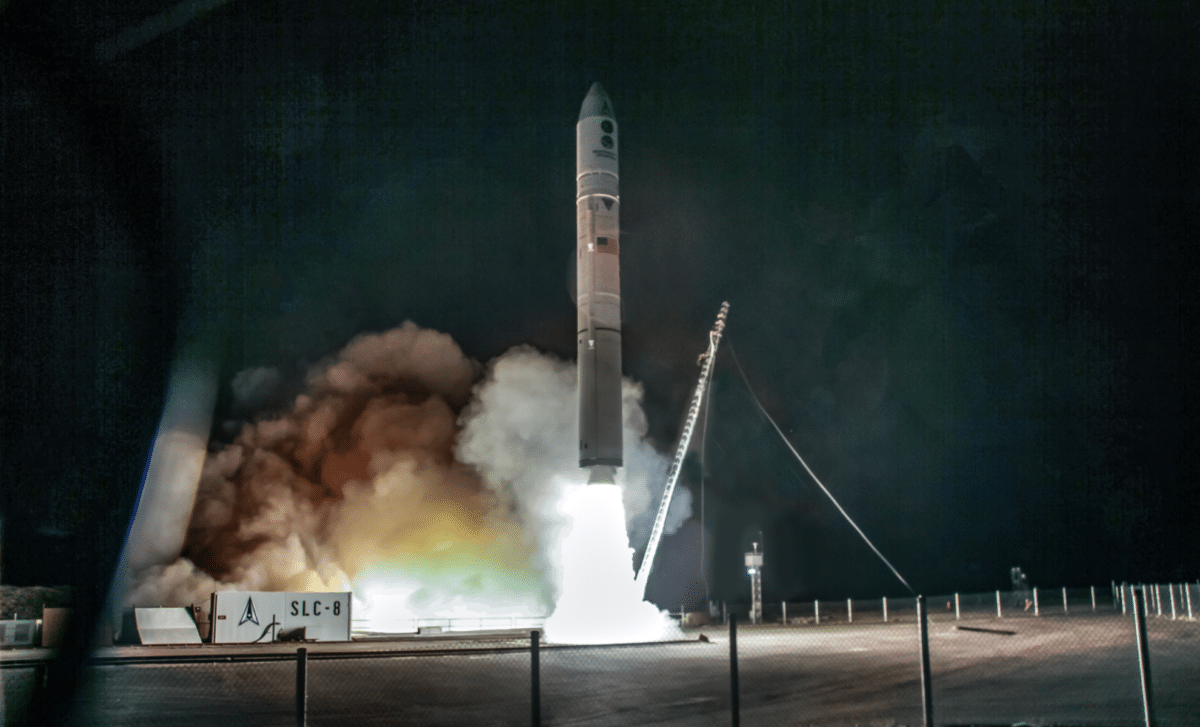
NASA’s newest CubeSat project, CANVAS, has started investigating the journey of radio waves produced by lightning and human technology as they travel from Earth’s surface into space. Launched on April 7, this mission aims to deliver critical knowledge about the space environment, enhancing ways to safeguard both orbital assets and Earth-based infrastructure from space weather disturbances.
Exploring New Dimensions in Space Weather Science
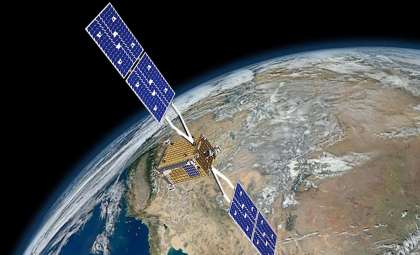
NASA’s CANVAS (Climatology of Anthropogenic and Natural VLF Wave Activity in Space) mission represents a groundbreaking step in understanding space phenomena. The compact satellite, launched via a Minotaur IV rocket under the U.S. Department of War’s Space Test Program, is designed to investigate very low-frequency (VLF) radio waves in the Earth’s magnetosphere, influenced by natural events like lightning and human transmissions.
What distinguishes CANVAS is its capacity to observe how VLF waves move through the Earth’s ionosphere into the magnetosphere, a region shaped by solar and cosmic radiation. This data collection bridges surface events such as thunderstorms with the intricate space environment interactions.

Revealing Insights into Earth’s Near-Space Environment
The mission primarily seeks to clarify the effects of VLF waves on high-energy electrons within Earth’s radiation belts. These electrons normally remain trapped by the planet’s magnetic field but can occasionally escape into the atmosphere. This process, influenced by both lightning and artificial radio sources, is significant for assessing threats to satellites, communication networks, and terrestrial power systems.
By tracing the movement and energy transfer of these waves, CANVAS aims to improve space weather forecasting. Real-time measurements of VLF wave intensity and frequency will inform models predicting space weather hazards like geomagnetic storms.
Technical Capabilities and Measurement Techniques of CANVAS
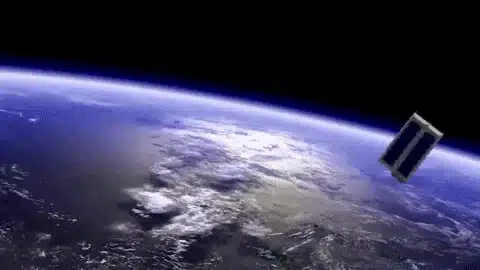
To fulfill its research goals, CANVAS carries two advanced sensors: a three-axis search coil magnetometer alongside a two-axis AC electric field detector. These tools measure the strength and direction of VLF waves, enabling scientists to monitor the influence of lightning and terrestrial transmitters on the ionosphere.
The satellite’s onboard computing system processes the collected data, helping researchers compare lightning occurrences with records from the World Wide Lightning Network. This comparison enhances the understanding of lightning’s role in space weather phenomena.
NASA’s CubeSat Launch Initiative: Empowering Small Satellite Missions
CANVAS is a key part of NASA’s CubeSat Launch Initiative (CSLI), which offers affordable launch opportunities for innovative scientific missions via small satellites. Beyond advancing space weather studies, this program provides educational benefits, engaging students, educators, and scientists in hands-on space research experience.
By lowering the barrier to space access, NASA’s CubeSat Launch Initiative allows universities and research groups to send experiments into orbit with reduced cost and complexity compared to traditional spacecraft.
- Categories:
- Nasa








0 comments
Sign in to Comment