
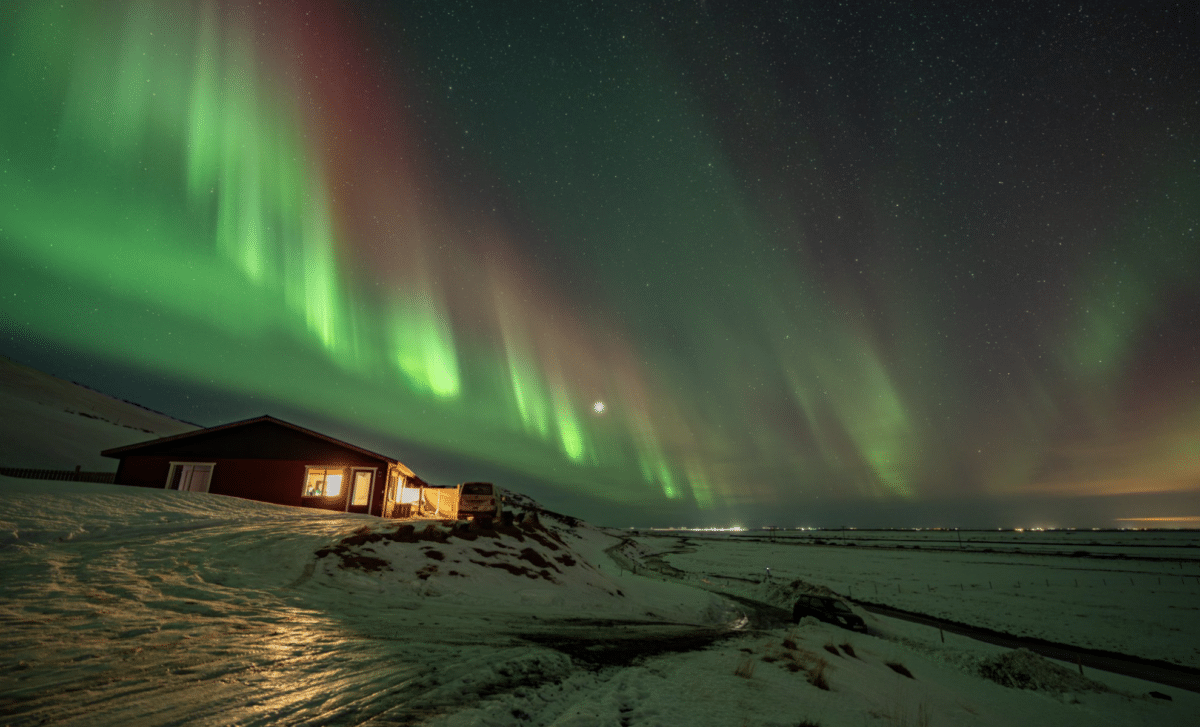
Helmed by the University of California – Berkeley, the CINEMA project is paving the way for groundbreaking discoveries about the auroras that grace our skies and the enigmatic region known as Earth’s magnetotail. This initiative aims to unravel how space weather, shaped by the interplay between solar wind and our planet’s magnetic shield, influences both Earth's environment and modern technology. CINEMA is expected to deliver the most comprehensive data yet, shedding light on auroral behavior and its wider effects on space weather forecasting.
Decoding the Magnetotail’s Influence on Our Planet
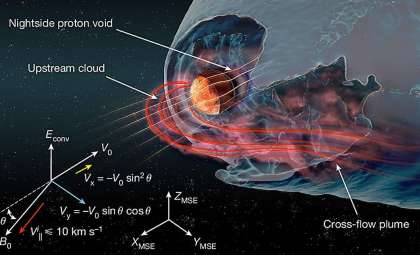
The magnetotail, a vast, largely unexplored area of Earth’s magnetosphere, spans millions of miles away from Earth and is crucial in the solar wind’s interaction with our magnetic field. Robyn Millan, a physics and astronomy professor at Dartmouth College and the leading scientist on CINEMA, emphasizes, “Cataclysmic events within the magnetosphere can severely impact our technology.” Despite numerous investigations, much about the magnetotail’s actions—especially when it releases stored magnetic energy and how intensely it affects Earth—remains uncertain. This study, part of CINEMA, led by the University of California – Berkeley, seeks to deepen our grasp of these phenomena and their role in space weather.
CINEMA’s objective is to clarify these mysteries by observing the magnetotail remotely. By examining how the magnetosphere reacts to solar wind and the resulting energy discharges, scientists aim to enhance space weather forecasting—vital for safeguarding satellites, communications, and electrical grids. Improved understanding of these events could lead to stronger defenses against space weather hazards, increasingly critical as reliance on space-based technology grows.

Exploring the Complexity Behind Auroral Structures
Auroras have captivated humanity for centuries with their vibrant colors and shifting forms that brighten polar skies. Yet, the detailed mechanisms behind their shapes remain largely unknown. “People often ask why auroras display such varied forms, and honestly, it’s still unclear,” remarks Ledvina, a leading researcher on CINEMA. Although the fundamental processes of aurora formation are understood, the finer details and patterns are still subjects of investigation.
One primary focus of CINEMA is to capture high-resolution images of auroral activity, providing unprecedented views from an innovative observational platform. This mission’s auroral imager aims to uncover factors shaping these luminous displays, paying close attention to plasma flow dynamics and whether specific frequencies within these flows trigger distinct auroral phenomena. As assistant research physicist Yen-Jung Wu from SSL explains,
“I hope we’ll learn whether there’s a particular frequency in the plasma flow that guarantees that a streamer will emerge.”
By identifying these triggers, researchers may predict auroral forms more accurately, contributing to a broader understanding of space weather’s interactions with Earth.
The Enigma of Substorms Explained
Among space weather’s enduring puzzles is the phenomenon of substorms: sudden spikes of magnetospheric energy that drastically alter auroral displays and the surrounding environment. “Substorms have been known for over five decades, yet they remain poorly understood,” states Mende, a core CINEMA scientist. These explosive events often cause dramatic auroras, but their origin and timing are still elusive.
CINEMA’s goal is to explore the roots of substorms by tracking how the magnetotail responds to solar wind variations. Insights gained could pinpoint the exact conditions triggering these bursts. Understanding substorms is essential because they can disrupt critical technology, including GPS systems and communication satellites, by causing signal interference.
Advances in Auroral Imaging Technology
CINEMA’s capability to capture distinct auroral images from orbit marks a major technological feat. Engineering an imaging system that simulates optical distortions, spacecraft motion, and environmental noise was particularly challenging.
"Developing an imager simulation that realistically accounted for optical distortion, spacecraft motion, and noise was a big challenge," says Claire Gasque, an assistant researcher at SSL and a member of the auroral imaging team. "It was a relief when auroras emerged clearly in our simulated images. That gave us confidence that the imager will successfully capture the specific forms we’re targeting."
This advanced imager will yield fine-grained data vital for dissecting auroral dynamics, enabling scientists to observe subtle variations in auroral structures that have so far remained hidden. CINEMA’s fresh perspective promises to revolutionize how we understand auroral formation and their interactions with Earth's magnetospheric environment.
CINEMA’s Pivotal Contribution to Space Weather Science
The CINEMA initiative is set to significantly enhance scientific knowledge of space weather phenomena impacting Earth. Concentrating on the magnetotail, auroras, and substorms, the mission addresses critical knowledge gaps in these complex systems.
"We’re going to be able to provide unprecedented measurements that enable the entire heliophysics community to do all different kinds of science," says Millan.
The influx of new data will not only deepen auroral science but also bolster our ability to forecast and mitigate the effects of space weather on vital technological networks.
CINEMA’s findings will be instrumental in protecting satellites, communication infrastructures, and power systems from the unpredictable consequences of solar disturbances. Its contributions will lay the groundwork for future innovations aimed at shielding Earth from the increasing threats posed by solar activity.
- Categories:
- Science







0 comments
Sign in to Comment