
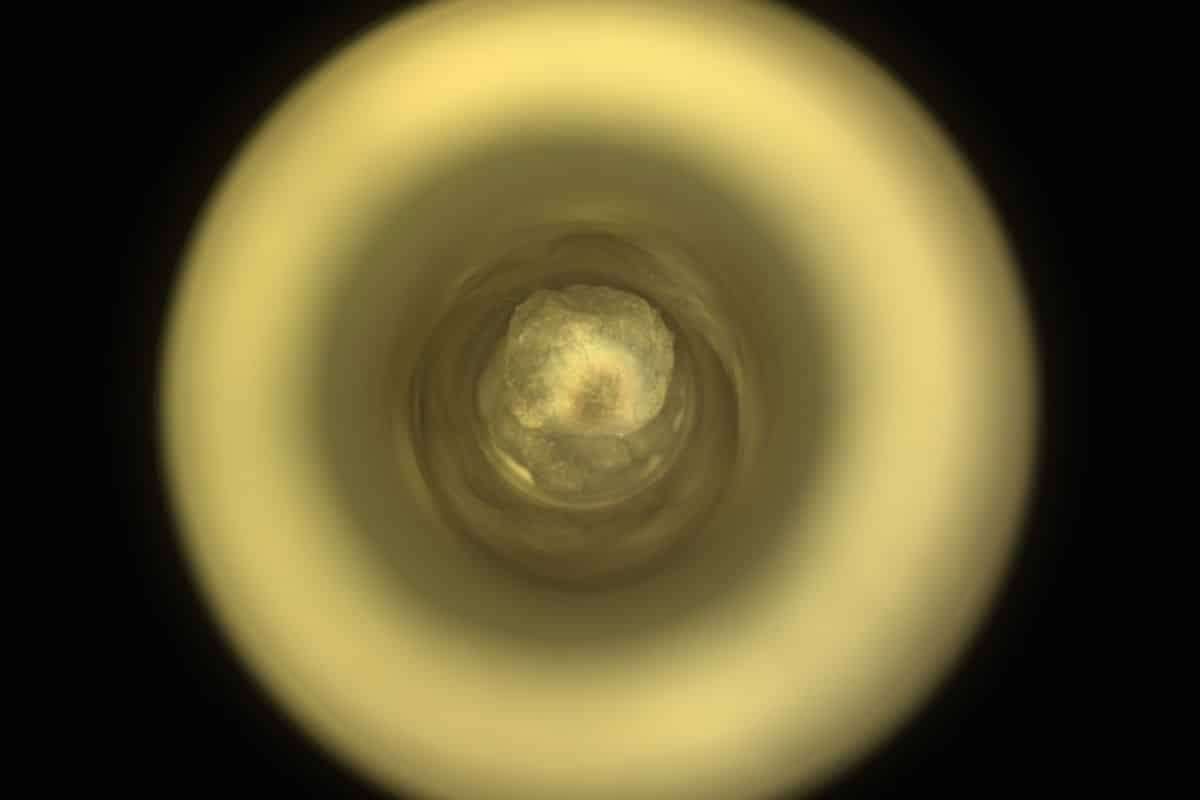
NASA’s Perseverance rover has successfully gathered its 26th rock core from the surface of Mars, specifically from Jezero Crater. This small rock, dubbed “Silver Mountain,” may offer vital evidence about the planet’s volcanic origins and hint at the presence of ancient water. Researchers hope these precious samples will help unravel enduring questions about Mars’ early environment and its potential to have hosted life.
Insights Into Mars’ Geological Story
The sample was taken from a rock containing notable amounts of low-calcium pyroxene, a mineral typically associated with volcanic terrains. This finding promises to deepen our knowledge of Mars’ geological transformations and the effects of impact events on its crust.
Sharing the excitement on social media, Perseverance’s official X account described Silver Mountain as having unique textures never observed before. Each collected core represents a step closer for scientists striving to decipher how Mars has changed across billions of years.

Possible Evidence of Past Water
Nearby the recent sampling site, scientists detected serpentine minerals, which form when water interacts with certain rocks. This discovery raises the possibility that liquid water once flowed beneath Jezero Crater.
Should this be confirmed, the presence of serpentine could support the idea that Mars had conditions favorable for microbial life in its distant past. Further analysis is anticipated to refine our understanding of the planet’s habitability and the chemistry below its surface.
Challenges of Returning Martian Samples to Earth
NASA continues to work toward bringing these samples back home, though the mission faces steep financial and technical hurdles. With costs surpassing $11 billion, the Mars Sample Return effort is unlikely to deliver samples before 2040.
Meanwhile, China has unveiled plans for a Mars sample retrieval mission targeted for 2031, intensifying the international competition to transport Martian rocks to Earth. Successfully obtaining these Martian rocks would enable scientists to utilize cutting-edge laboratory tools far beyond the capabilities of instruments currently deployed on the Red Planet.
These rare rocks could dramatically enhance our comprehension of Mars’ ancient environment, geology, and its prospects for supporting life.
Advancements in Mars Exploration Technology
While Perseverance steadily collects samples, future missions may adopt improved methods for efficient sample recovery. NASA’s Ingenuity helicopter—despite rotor damage after completing 72 flights—demonstrated the feasibility of airborne exploration on Mars.
Experts speculate that newer rotorcraft designs could assist upcoming sample return missions by accessing difficult terrains unreachable by rovers and facilitating the transport of collected materials.
Though still theoretical, such innovations have potential to dramatically change how planetary scientists survey and gather data from extraterrestrial surfaces.
International Competition and the Race for Discovery
The pressure to retrieve Martian samples is mounting with each breakthrough. NASA’s ongoing mission is closely monitored by global space agencies. Whether NASA or China captures the first Martian rocks for Earth-based study, the successful return would represent a monumental milestone in space exploration, potentially transforming our understanding of both Mars and the origins of life.
The article was published in Earth. For more information, you can refer to the NASA press release.
- Categories:
- Space










0 comments
Sign in to Comment