
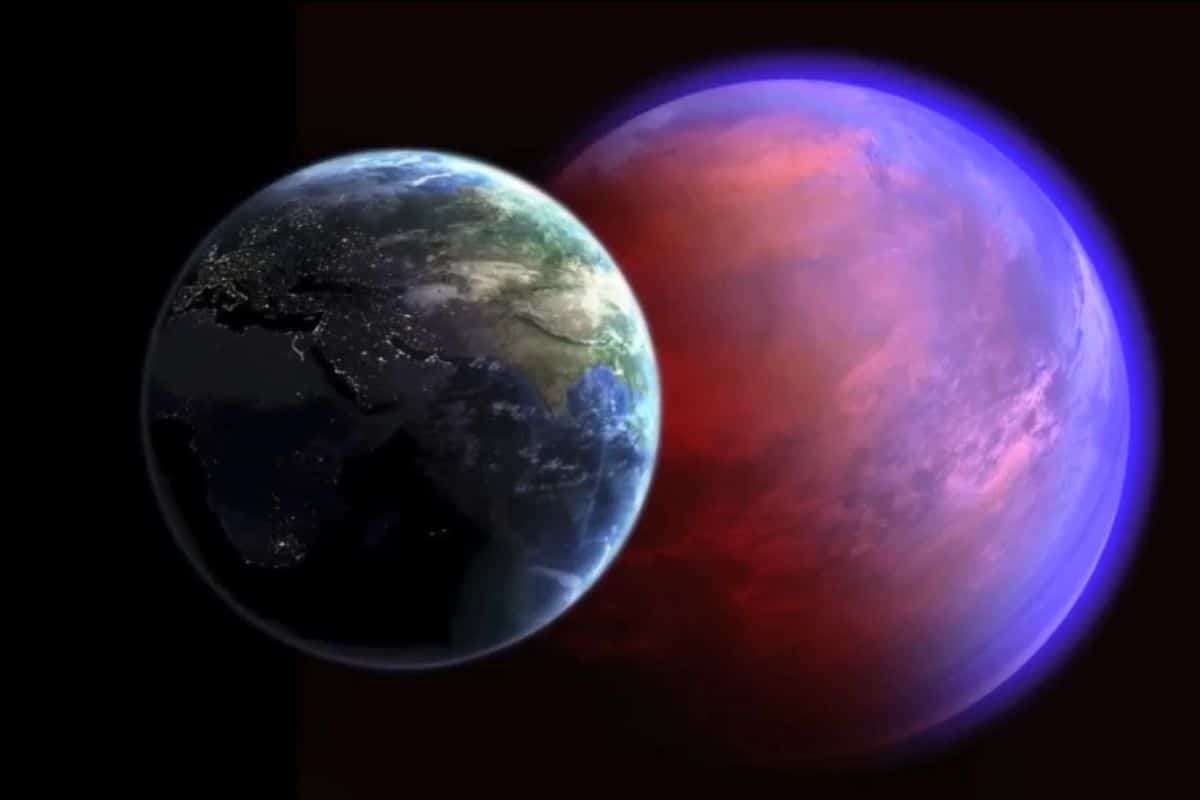
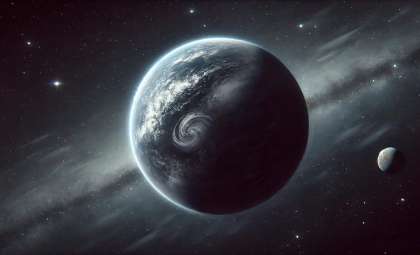
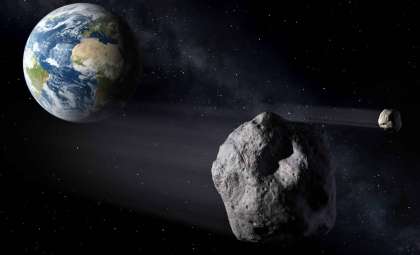
Our solar system, a finely balanced cosmic dance guided by gravity and momentum, stands out among many planetary systems observed across the universe. One striking distinction is the lack of a super-Earth — a planet larger than Earth but smaller than the gas giants like Jupiter. Instead, this region is occupied by the asteroid belt situated between Mars and Jupiter.
But what if a super-Earth had emerged where the asteroid belt now lies? Recent investigations by planetary scientists Emily Simpson and Howard Chen at the Florida Institute of Technology delve into this hypothetical and how it might have influenced the overall architecture of our solar system.
Evaluating the Influence of a Super-Earth
The research examined how placing a super-Earth in the asteroid belt region could impact the orbits and axial tilts of inner planets such as Venus, Earth, and Mars. These orbital properties are crucial to habitability since they affect seasonal cycles and temperature variations.
Simpson and Chen conducted detailed simulations testing planets with masses ranging from 1% up to 10 times Earth’s mass located in the asteroid belt zone. Each scenario was run over millions of years to observe the cascading effects on the solar system’s balance and planetary stability.

Subtle Shifts with Smaller Super-Earths
Findings indicate that relatively small super-Earths—up to twice Earth's mass—would result in only minor disturbances. The orbits of Venus, Earth, and Mars would remain largely stable, though Earth's axial tilt might experience slight shifts.
This could lead to marginally more intense seasons—warmer summers and colder winters—yet it’s probable that terrestrial life could adapt. According to Simpson, “Planets one or two times Earth’s size, although substantial, would still allow our inner Solar System to maintain a hospitable environment.”
Severe Effects from Massive Super-Earths
In stark contrast, larger super-Earths bring dramatic consequences. Introducing a planet five to ten times Earth’s mass into the asteroid belt would exert strong gravitational forces capable of greatly disrupting neighboring orbits.
One simulation revealed that a ten-Earth-mass super-Earth caused Earth’s orbit to drift closer to Venus, potentially moving Earth outside the habitable zone—the Sun’s “Goldilocks” region suitable for liquid water and life. The axial tilt fluctuations could become erratic, triggering extreme seasonal changes that may render the planet inhospitable.
Relevance to Exoplanetary Studies
Beyond our solar system, these insights have wider implications. Numerous star systems have super-Earths orbiting nearby their stars, and understanding the gravitational impacts in such configurations aids astronomers in evaluating exoplanet habitability. Simulating variable scenarios identifies the orbital traits that help planets stay within favorable zones for life over long intervals.
Simpson and Chen’s findings also illuminate why our solar system's lack of a super-Earth in the asteroid belt may have been pivotal for Earth’s orbital steadiness and the emergence of life. This highlights the delicate environmental balance underpinning our planet’s unique status as a cradle of life.
Delicate Cosmic Equilibrium
The study emphasizes how minor modifications in planetary layouts can yield profound effects on habitability potential. The gravitational interactions among planets, moons, and smaller bodies maintain a precarious equilibrium that can be shattered by a massive super-Earth’s presence.
While our solar system’s design may be rare, it has created ideal conditions for life on Earth. The absence of a super-Earth between Mars and Jupiter likely played a key role in preserving the stability necessary for life’s origin and evolution over billions of years.
Advancing the Hunt for Habitable Worlds
As the search for exoplanets continues, grasping the influence of super-Earths on planetary systems becomes increasingly important. While systems hosting large planets near their stars may appear promising, they might hide complexities detrimental to habitability. By applying lessons drawn from our solar system’s formation and stability, scientists can hone their quest for worlds that support life.
“If we find a solar system analogue but with a planet replacing the asteroid belt, whether the inner planets remain hospitable depends heavily on that planet's mass. If it’s too large, it could doom the inner worlds,” Simpson concluded.
- Categories:
- Space







0 comments
Sign in to Comment