
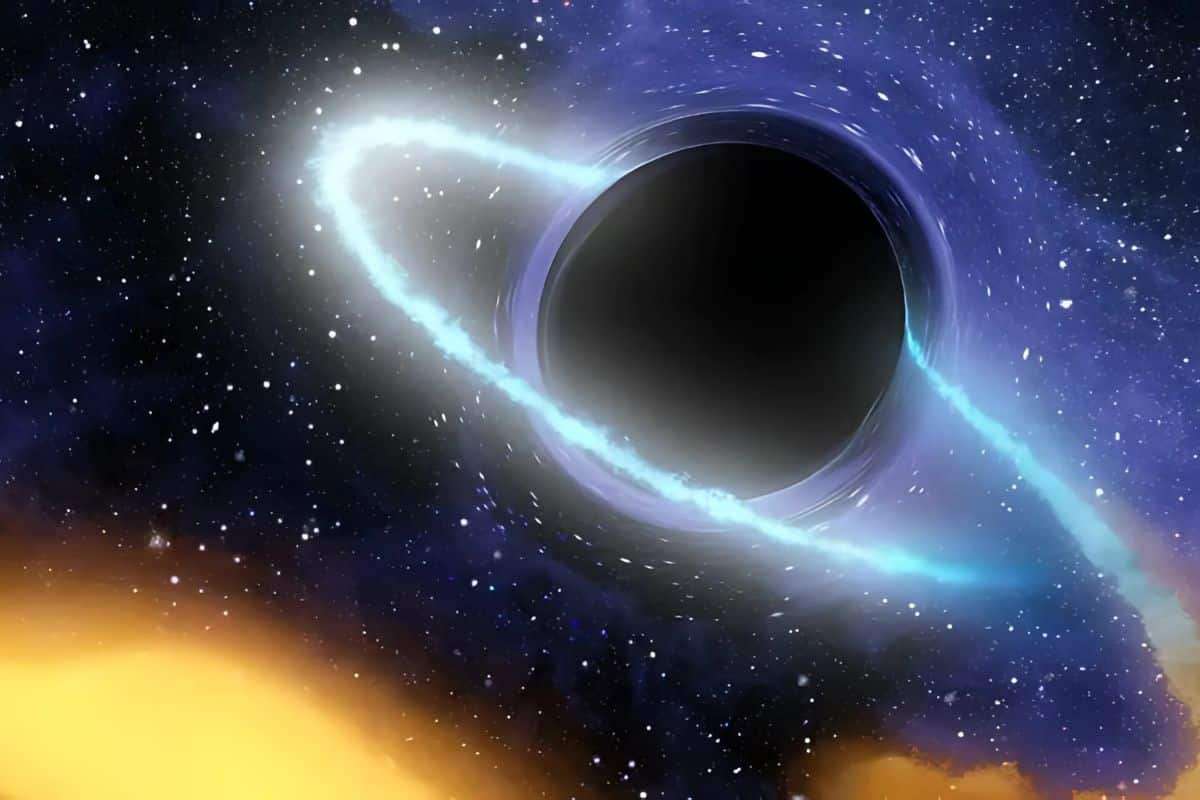
Have you ever pondered the hidden wonders lurking within the cosmos? Beyond the stars, planets, and galaxies that light up our skies, the universe may harbor extraordinary, unseen giants with properties that defy traditional astrophysics. These theoretical phenomena, called boson stars, are unlike any celestial bodies we've observed. Neither conventional matter nor black holes, they represent a novel form of cosmic structure that could hold answers to some of the universe’s most puzzling mysteries.
What sets boson stars apart is their intriguing potential link to dark matter, the mysterious substance accounting for about 27% of the universe’s mass and remaining invisible to current detection methods. Could these stars, comprised of exotic quantum particles known as bosons, be the key to understanding dark matter? If confirmed, their discovery would revolutionize our comprehension of the cosmos and the fundamental nature of reality itself.
Unveiling Dark Matter’s True Nature
Dark matter remains one of the most baffling enigmas in astrophysics. Invisible to telescopes because it neither emits nor reflects light, its presence is inferred mainly through gravitational effects. Constituting nearly 25% of the universe’s mass-energy composition, its exact composition is still a mystery.

For years, scientists looked for WIMPs (weakly interacting massive particles) as potential dark matter candidates. Despite rigorous experiments, no definitive proof of these particles has surfaced.
More recently, axions have emerged as a promising alternative—extremely light particles whose discovery could shift our cosmic perspective significantly.
Defining the Concept of Boson Stars
Boson stars are theoretical structures composed of bosons, a category of particles fundamentally different from the fermions making up normal matter. A distinctive feature of bosons is their ability to occupy identical quantum states simultaneously, enabling them to cluster densely in ways other particles cannot, potentially creating star-like formations.
Unlike visible stars, boson stars do not emit radiation, making them invisible through standard astronomical observation techniques. However, their gravitational effects might subtly influence their cosmic environment, opening paths for indirect detection.
Axions and Their Connection to Boson Stars
Axions, initially proposed to address certain symmetry issues within the strong nuclear force, possess extraordinary traits. These particles weigh far less than neutrinos—the universe’s lightest known particles—and their quantum wave-like behavior enables them to extend across great distances.
Such properties suggest axions could gravitationally assemble into large, coherent bodies theorized as boson stars, varying in scale from sizes comparable to ordinary stars to cores spanning entire galaxies.
The Enigma of Boson Star Creation
Understanding how boson stars come into existence involves their ability to share the same quantum state. This allows bosons to condense under gravity into orders of magnitude denser objects than typical matter, making them strong candidates for the dark matter halos enveloping galaxies.
Although purely theoretical, boson stars might produce detectable outcomes. They could influence nuclear fusion within familiar stars or instigate violent bursts known as bosenovas due to their collapse, which may serve as indirect proof for their presence.
Obstacles in Identifying Boson Stars
Despite their fascinating role as a possible explanation for dark matter, uncovering boson stars is exceptionally challenging. Their lack of interaction with electromagnetic radiation or ordinary matter makes direct observation nearly impossible. However, future advancements in gravitational wave technology and refined astrophysical measurements could someday expose their hidden signatures.
Moreover, boson stars might clarify why dark matter clusters around galaxies in specific patterns, offering a natural mechanism behind the gravitational phenomena observed on a cosmic scale.
Exploring a Cosmos Filled with Hidden Stars
Considering boson stars expands the way we view the universe. Their hypothetical existence hints at a cosmos potentially brimming with these silent, invisible bodies. Some may wander interstellar voids alone, while others might anchor entire galaxies, influencing their development for billions of years.
These stars also illustrate the interplay between quantum mechanics and astrophysics, showing how emerging physics concepts can illuminate the universe’s deepest secrets, from particle symmetries to galactic architecture.
The Road Ahead in Boson Star Investigation
The study of boson stars is still emerging but holds great promise for revealing the universe's profound enigmas. These speculative objects, formed from exotic quantum particles called bosons, challenge existing frameworks and could provide a vital explanation for dark matter, which constitutes an enormous portion of cosmic mass. While still theoretical, their potential discovery could transform our understanding of the cosmos.
With ongoing advancements in ultra-sensitive gravitational wave detectors, sophisticated simulations, and enhanced observational instruments, scientists are edging closer to identifying signs of boson stars. Whether through detecting subtle gravitational effects, uncovering indirect astrophysical evidence, or pioneering theoretical insights, the pursuit of boson stars could soon revolutionize our grasp of dark matter, spacetime, and the universe’s origins.
- Categories:
- Space







0 comments
Sign in to Comment