
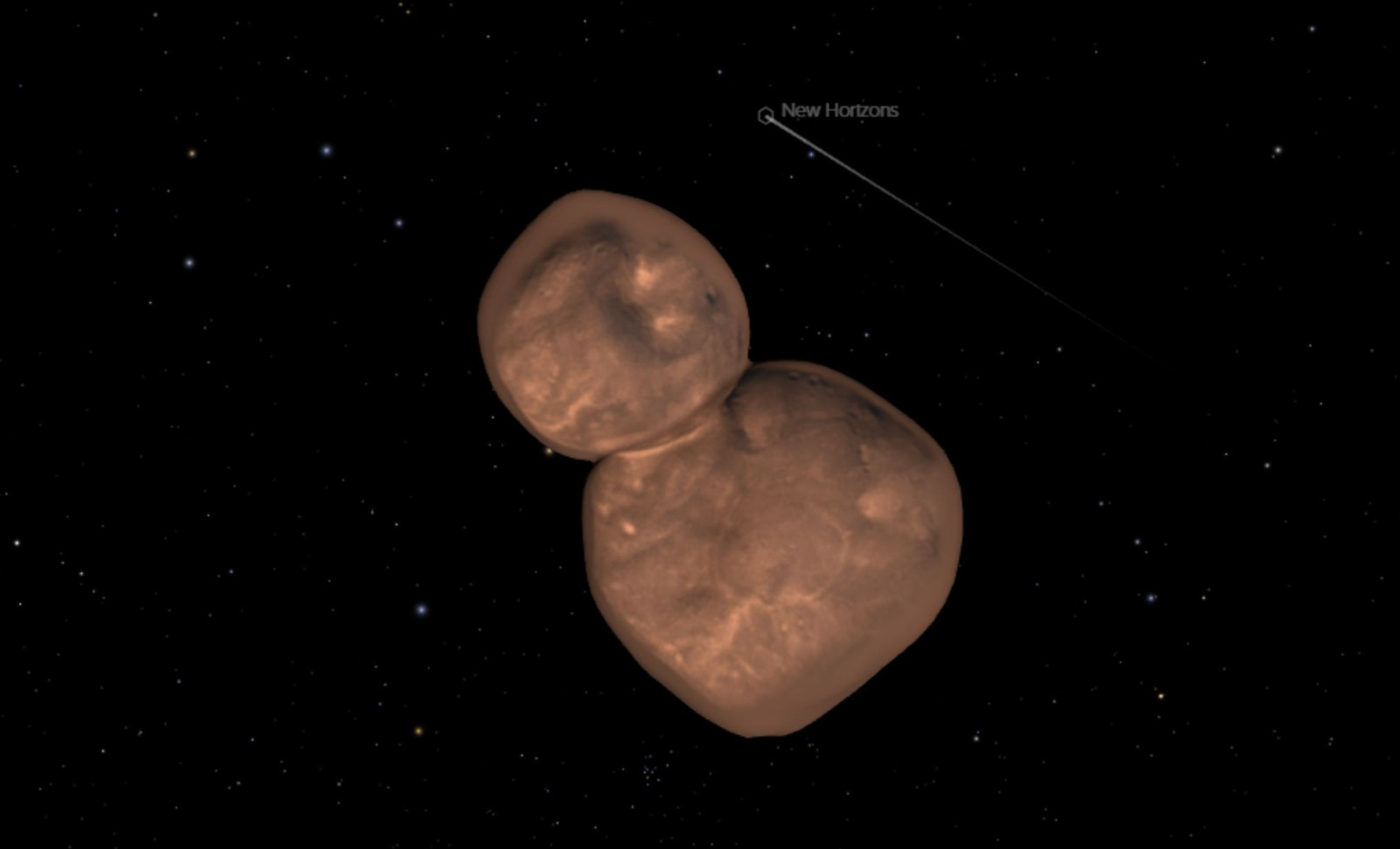
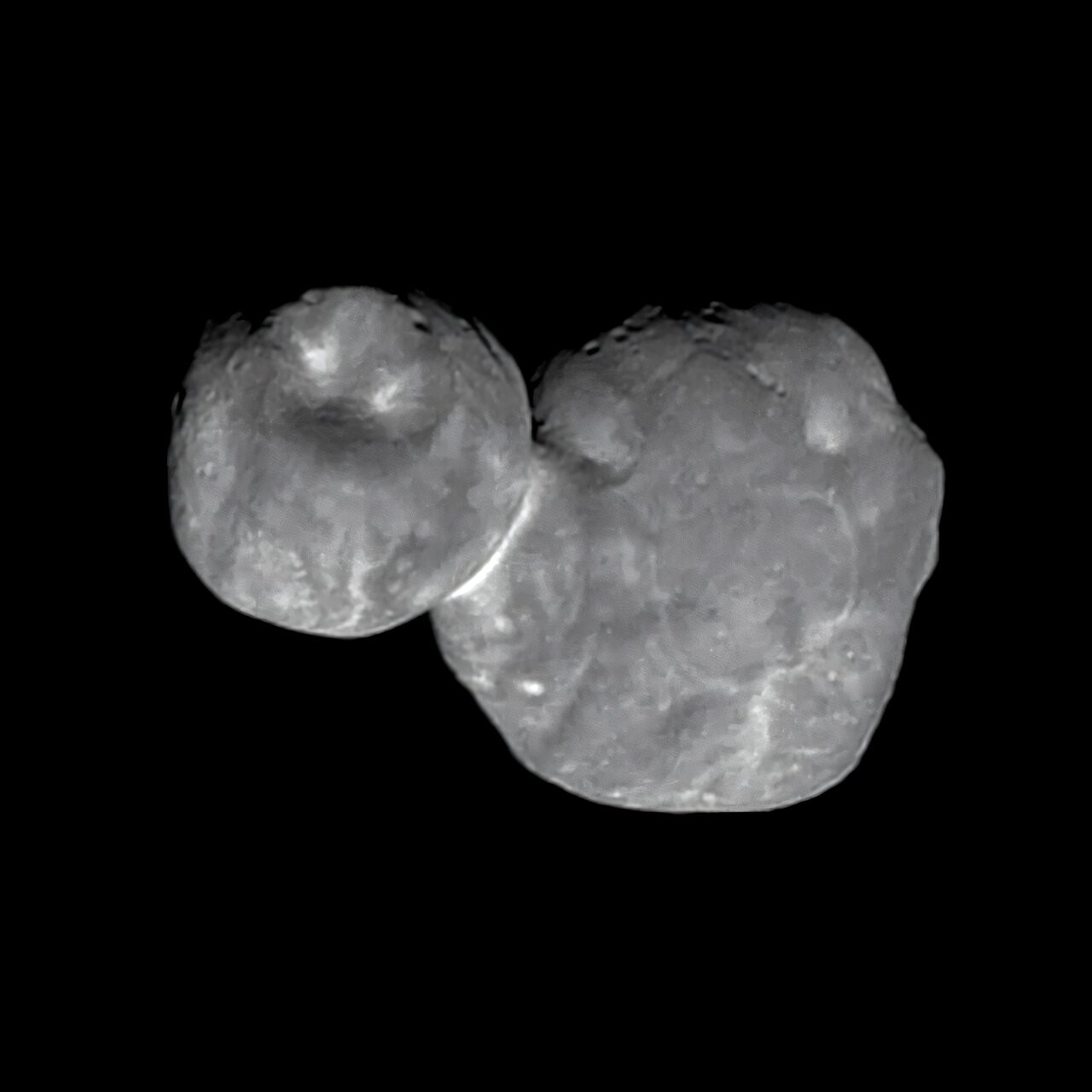
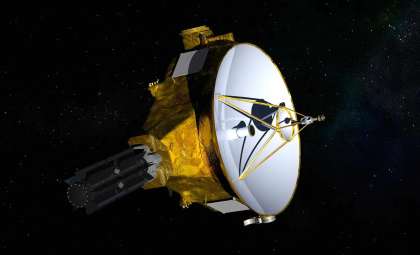
Since NASA’s New Horizons spacecraft encountered the unusual peanut-shaped Kuiper Belt object Arrokoth in 2019, astronomers have been captivated by its unique form. Recent research provides fresh insights into the origins of this distinctive two-lobed shape.
Arrokoth is a contact binary composed of two separate lobes that merged gently. Researchers have debated whether this form arose from gradual changes over billions of years or from fundamental early solar system processes. A new paper in the Monthly Notices of the Royal Astronomical Society proposes that contact binaries like Arrokoth may have formed directly via the gravitational collapse of pebble-sized particles in the nascent solar system.
Arrokoth’s Distinctive Structure: A Dual-Lobed Puzzle
Situated approximately a billion miles beyond Pluto, this distant body is around 20 miles in length and features two lobes with almost identical sizes. Both lobes exhibit similar volatile ices and relatively unscarred surfaces.

The delicately slow merging of these lobes gives Arrokoth its iconic snowman-like silhouette, which was closely examined by NASA’s New Horizons. Lead author Jackson Barnes, a graduate student at Michigan State University, remarked:
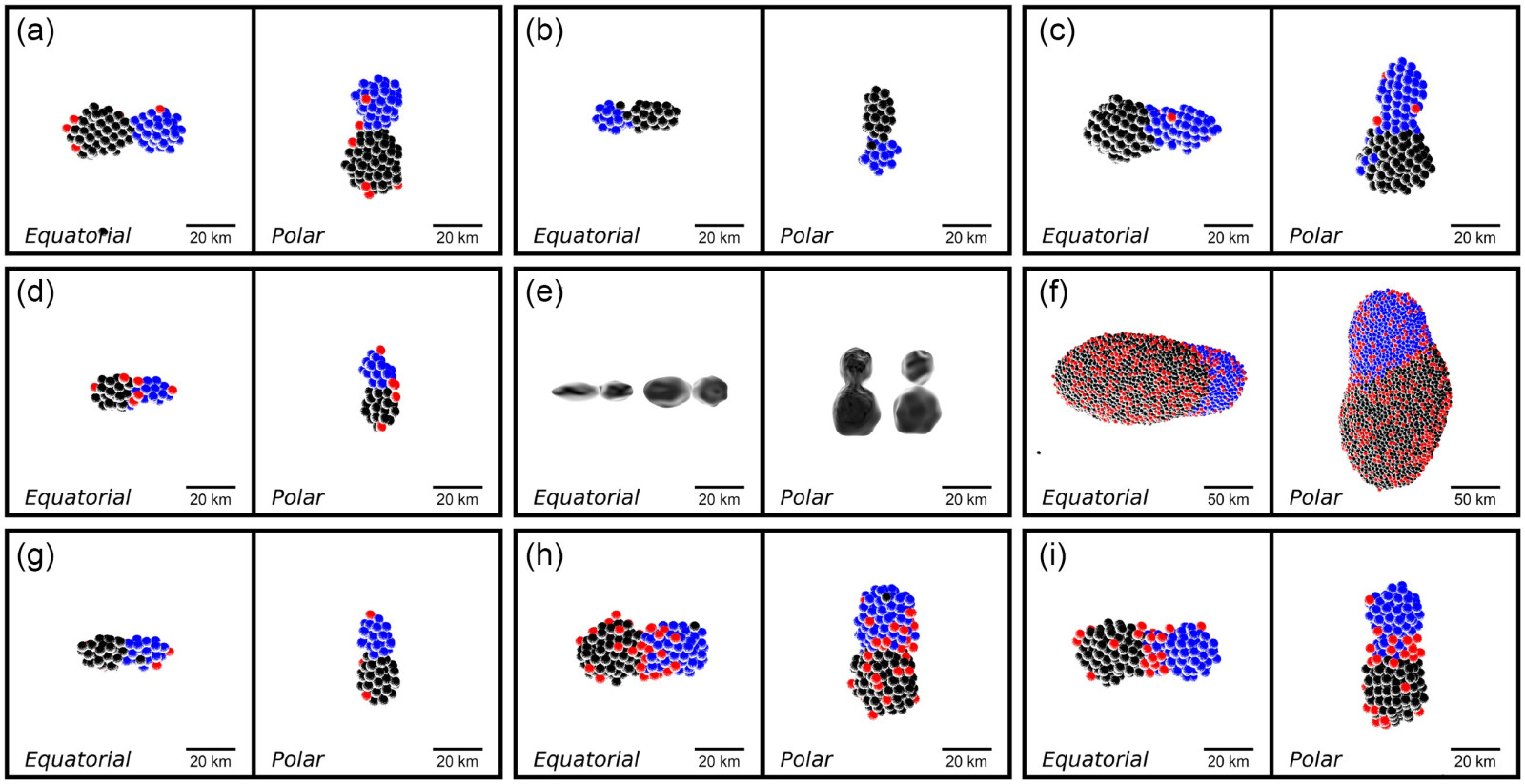
“When we first saw the results of our simulations, we were very excited.” he added, “It was even more exciting to see that it was not unique, and we had in fact created many of these bilobed objects with different lobe shapes and sizes.”
The two lobes of Arrokoth did not collide violently; instead, they gradually coalesced at a gentle pace of roughly 6 meters per second (20 feet per second). Barnes suggests that such slow mergers may be more common than once believed. Their study indicates that contact binaries could naturally emerge during the early phases of planetary formation.
Gravitational Collapse: Key to Arrokoth’s Creation
Earlier models posited that external influences like gravitational interactions or gas drag were necessary to reunite the lobes of objects such as Arrokoth. However, this new research suggests a more straightforward mechanism: the direct gravitational collapse of tiny pebbles within the solar protoplanetary disk.
Through conducting 54 numerical simulations, Barnes and colleagues explored this concept. Out of 834 resolved objects in their models, 29 evolved into contact binaries. Numerous bodies featured two lobes akin to Arrokoth, with some matching its proportions. The team concluded that such contact binaries can form inherently through collapsing assemblies of small particles, bypassing inefficient sticking phases later in accretion.
Exploring Kuiper Belt Mysteries: Frequency of Contact Binaries
Though observations hint that contact binaries may be more prevalent than once thought, precise counts remain elusive. Due to the vast distance of Kuiper Belt objects, astronomers often infer shapes indirectly by tracking brightness variations as the object rotates.
This method has limitations, especially if an object's rotational axis is tilted, which can distort brightness-based shape interpretations. Consequently, researchers still face challenges in accurately determining how many Arrokoth-like bodies exist in the outer solar system. Nonetheless, the discovery that such structures can form more effortlessly than assumed opens new avenues for understanding the solar system’s infancy, as seen in recent findings.
- Categories:
- Space






0 comments
Sign in to Comment