
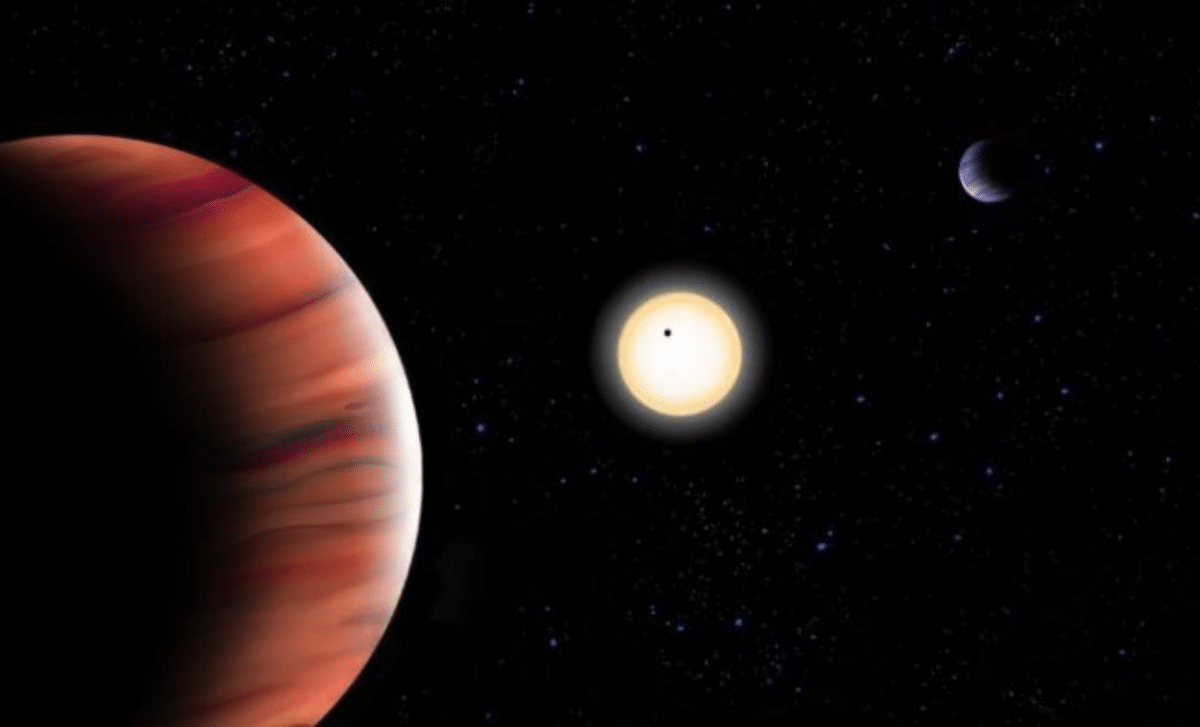
NASA’s Transiting Exoplanet Survey Satellite (TESS) has identified an extraordinary planetary system that defies traditional ideas about planetary development and sustainability. Central to this discovery is TOI-201 c, a substantial brown dwarf traveling in an unusually stretched orbit around its star. Published in Nature, this finding uncovers a system where planets appear to have emerged and persisted under conditions that conventional models deem highly unlikely. Instead of hindering planet formation, the strong gravitational forces of this unusual companion may have driven a unique evolutionary trajectory, giving scientists a rare chance to observe planetary resilience in extreme environments.
Brown Dwarf: A Star That Didn’t Ignite
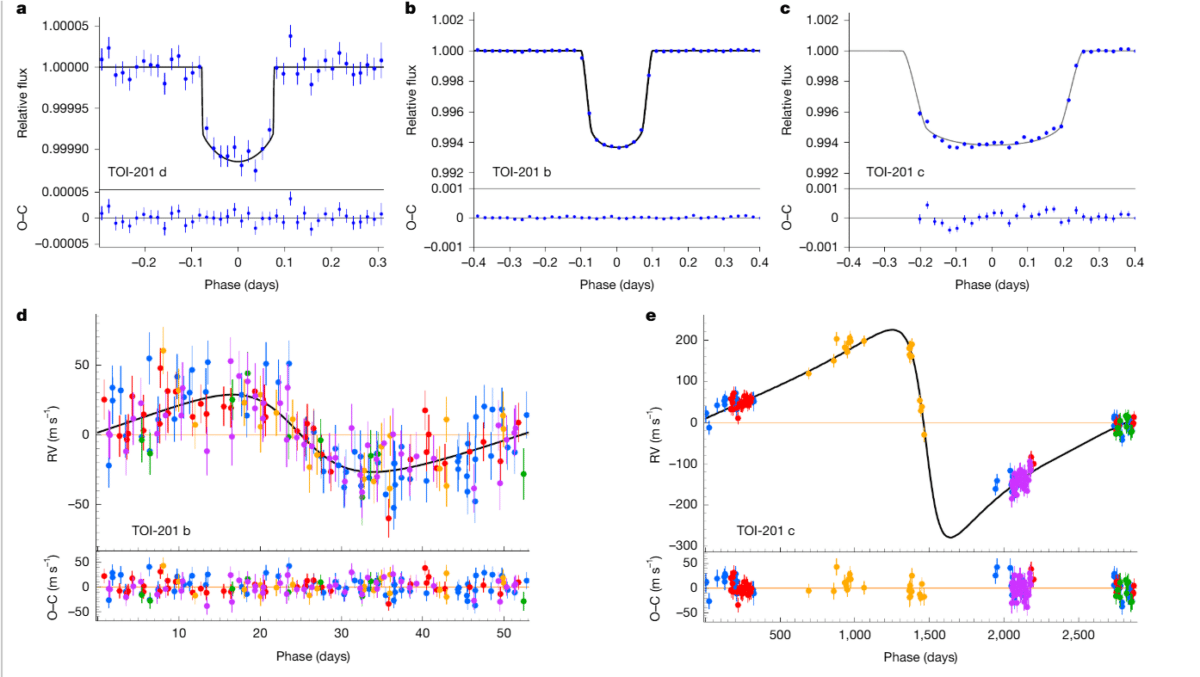
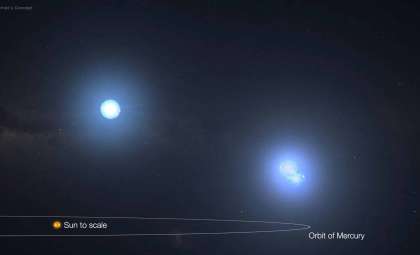
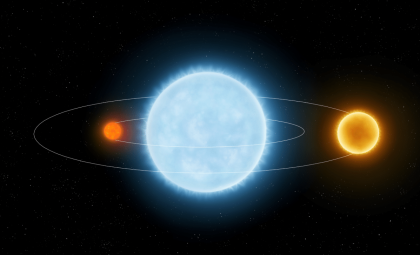
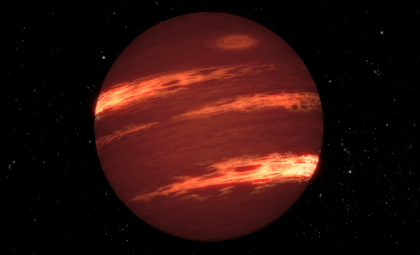
Brown dwarfs occupy an intriguing place between planets and stars, forming similarly to stars through collapsing clouds of gas and dust but lacking enough mass to sustain hydrogen fusion. This places them in a middle category often dubbed "failed stars." The brown dwarf TOI-201 c stands out even among these objects, completing its orbit around the star over an extensive 2,881-day period with a markedly eccentric path.
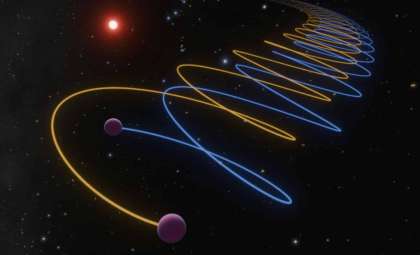
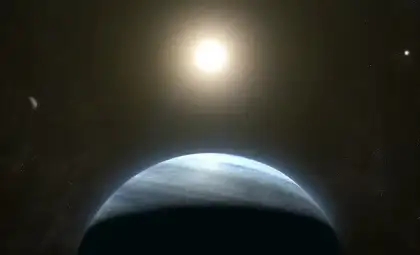
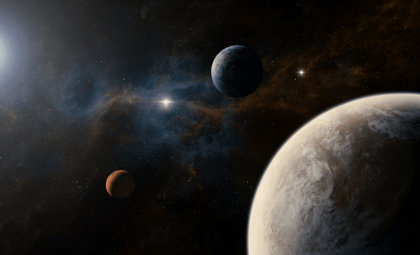
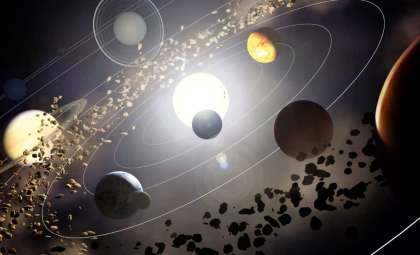
Remarkably, two planets managed to assemble in this mechanically challenging system. The rocky super-Earth TOI-201 d orbits every 5.8 days, while the larger warm Jupiter TOI-201 b circles the star every 53 days, both located inside the orbit of the brown dwarf. According to prevailing models, such gravitational disruption should make forming planets in these zones difficult. However, this system displays a surprisingly stable configuration that appears to have persisted for millions, if not billions, of years.

“This finding sheds light on the incredible ability of planets to form around massive bodies with eccentric orbits,” explained INAF researcher Aldo Bonomo in a statement.
These observations imply planetary systems may be more flexible than previously thought. Instead of being annihilated by the brown dwarf’s gravity, these planets found ways to endure in an environment once considered hostile.
How Gravity Shaped a Restricted Zone for Planet Formation
A standout feature of this system is the apparent restriction of planet formation to the innermost orbitals. The elongated orbit of the brown dwarf likely triggered gravitational disturbances across most of the protoplanetary disk, the cloud of gas and dust that spawns planets. Traditionally, such turbulence would obstruct the aggregation of matter crucial for planet building.
Scientists theorize the planets emerged near the star because these inner zones offered the most gravitationally stable environments. This perspective portrays a young planetary system shaped by intense gravitational forces that confined planetary development to a tiny, stable space.
“The brown dwarf’s elongated orbit compelled the planets to form and survive at the hottest and closest edges of the primordial disk,” noted National Institute for Astrophysics (INAF) team member Luca Naponiello.
These insights challenge conventional planet formation models which often assume giant planets appear farther from their stars in regions favorable for accumulating massive material. The TOI-201 system supports the idea that planets may sometimes be forced to form in unexpected zones, helping explain the diversity seen in Milky Way planetary systems.
An Ongoing Gravitational Interaction
The system’s intrigue isn’t limited to its formative stage. Current observations reveal dynamic interactions between the brown dwarf and the warm Jupiter that continue to influence orbital behavior. As TOI-201 c approaches its star during its orbit, its gravity impacts the warm Jupiter’s trajectory in detectable ways.
Astronomers noted shifts in the timing of the warm Jupiter’s transits—occur when the planet crosses the star from our vantage point. These timing fluctuations serve as valuable clues in understanding gravitational effects from massive companions within the system.
“Furthermore, the data show that during the close approach of the brown dwarf, the warm Jupiter undergoes strong and sudden variations in its transit timing, bearing witness to an intense and vigorous dynamic interaction currently underway between the two giants.”
Such real-time observation provides a unique window into gravitational interactions rather than a static snapshot. This ongoing interplay helps reveal planetary masses, orbital changes, and the overall stability of the complex planetary arrangement.
A Challenging Discovery That Tested TESS’s Capabilities
This remarkable discovery began with the detection of a rare mono-transit event, where an object crosses the star only once during an observing period. Unlike short-period planets that transit repeatedly, objects with long orbits like this only show a brief, singular signal.
Following the initial TESS observation, astronomers conducted a comprehensive ground-based campaign to verify the object’s identity and measure its mass. This was crucial since brown dwarfs with large, eccentric orbits are notoriously difficult to study.
The research, detailed in Nature, illustrates the power of combining space-based monitoring with terrestrial follow-ups. This multi-pronged approach helped scientists piece together the structure and dynamics of a system that a single method alone would likely miss.
Ultimately, this system ranks among the most peculiar planetary configurations observed recently, highlighting how exoplanet explorations continue to unveil surprises.
The Longest Transiting Orbit with a Known Mass
Beyond its unique influence on planet formation, TOI-201 c sets a record by being the transiting object with the longest known orbital period verified by mass measurement. Such distant bodies are extraordinarily tough to confirm due to rare transit opportunities and complex characterization requirements.
Researchers confirmed this distinction among known transiting companions.
“It [TOI-201 c] is the transiting object with the longest orbital period for which the mass is known,” said Naponiello.
This distinction adds significant value to the discovery. Alongside the system’s unusual layout, it offers a natural laboratory to probe the limits of how planets can form and interact gravitationally. As astronomers reveal more exotic worlds, the TOI-201 system serves as a striking example of the diverse and surprising planetary configurations the universe can produce, prompting renewed examination of planetary system development across our galaxy.
- Categories:
- Astronomy


0 comments
Sign in to Comment