
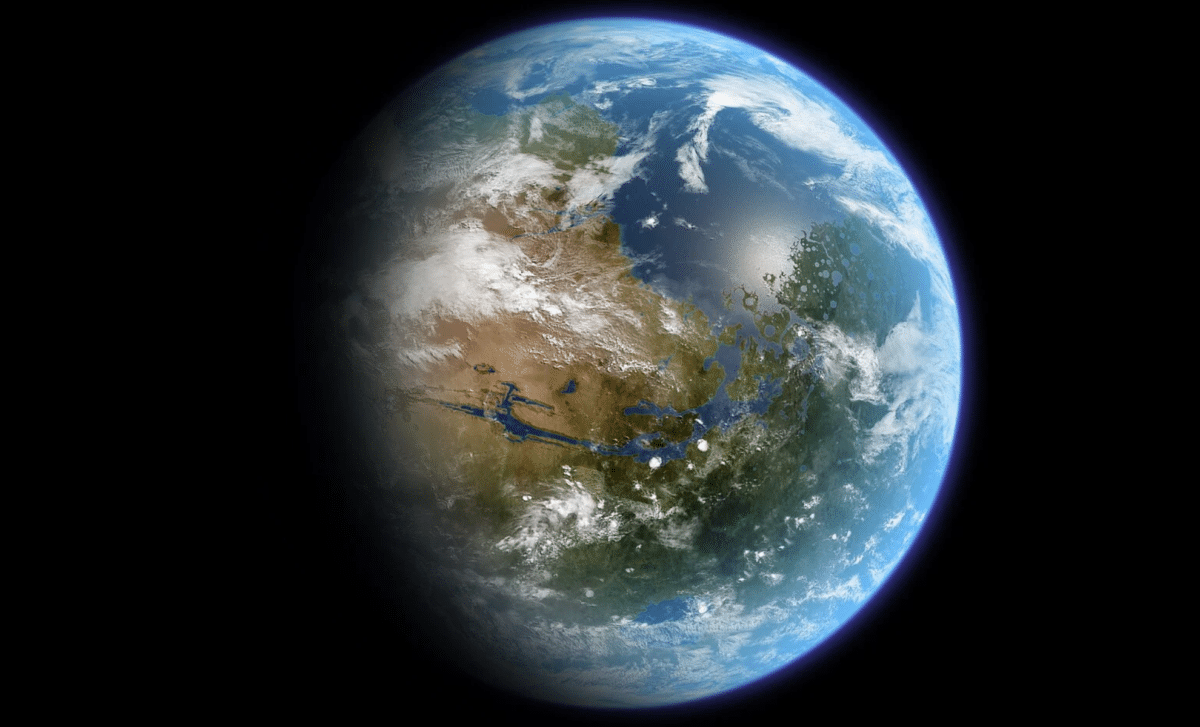
For decades, the idea of reshaping Mars into a livable world has fascinated space scientists and visionaries alike. Transforming the Red Planet into a place where humans can thrive is an inspiring goal that offers hope for humanity’s future beyond Earth. Still, a recent analysis by Dr. Slava Turyshev of NASA’s Jet Propulsion Laboratory, posted on arXiv, casts serious doubts on the feasibility of terraforming Mars anytime soon. The project demands enormous quantities of energy, gases, and materials, far surpassing our current industrial reach.
Reimagining the Vision of Mars Terraforming
The proposition of terraforming Mars often appears as a visionary answer to Earth's environmental pressures and population growth. It centers around modifying the Martian climate, atmosphere, and pressure to suit human needs. Over years, many ideas surfaced aimed at warming Mars and thickening its atmosphere, yet skepticism remains among researchers, largely due to the enormous technical hurdles involved.
As reported by Universe Today, terraforming discussions date back to the 1940s with pioneers like Carl Sagan contemplating planetary climate modification. The core strategy involves increasing surface pressure, raising temperatures, and adding breathable oxygen. Yet, according to Dr. Slava Turyshev, the ambitions of these plans encounter nearly insurmountable physical and logistical challenges when reviewed in comprehensive detail.

Five Key Phases Toward Changing Mars
Dr. Turyshev’s research describes five developmental stages for turning Mars from a hostile environment into a human-supportive one. These milestones span Mars’ current inhospitable state to an Earth-like atmosphere that supports life without life-sustaining gear.
The initial stage reflects Mars as it is today—frigid with an almost negligible atmosphere, unsuitable for humans without extensive protective equipment. Next is reaching just above the water triple point at about 6.1 millibars, permitting water to exist as ice, liquid, and vapor, essential for further developments.
The third step envisions a “shirtsleeve greenhouse” scenario, where agriculture thrives inside controlled domes shielding organisms from the unforgiving surface conditions. A succeeding stage involves increasing the atmospheric pressure to 62.7 millibars, enough to prevent human blood from boiling at normal body temperatures. Ultimately, the fifth milestone requires producing an atmosphere of nitrogen and oxygen at roughly 500 millibars—enabling unprotected human survival.
The Overwhelming Scale of Effort Required
The dimensions of this endeavor are staggering. Raising atmospheric pressure by a mere 1 millibar would necessitate nearly 3.89×10¹⁵ kilograms of gas—about the mass of Mars’ tiny moon Deimos. To reach a breathable atmosphere, gas quantities would jump to about 10¹⁸ kilograms, comparable to Janus, one of Saturn’s smaller moons. Although such matter exists within our solar system, the challenge lies in securely transporting and deploying these vast resources onto Mars, well beyond current human capabilities.
Heating Mars also poses daunting obstacles. To sustain liquid water and warmer conditions, its average temperature needs to rise approximately 60℃. Suggested approaches include dispersing sunlight-absorbing nanoparticles or releasing massive amounts of carbon dioxide. Dr. Turyshev’s analysis adds that accomplishing this would require constructing reflective surfaces totaling over 70 million square kilometers to concentrate sunlight—an industrial feat unprecedented in scale.
Securing Oxygen and Water for Life Support
Oxygen production remains a fundamental challenge for making Mars breathable. According to the study, generating around 8.2×10¹⁷ kilograms of oxygen is essential. The simplest method involves extracting oxygen through electrolysis from water, yet this demands roughly six cubic meters of water per square meter of the Martian surface.
Fortunately, Mars harbors substantial frozen water reserves. About 20% of the accessible ice could supply enough water to support oxygen requirements. Nevertheless, harvesting and converting this ice in the volumes needed presents massive engineering and energy obstacles.
Energy: The Greatest Barrier to Terraforming
Arguably the toughest limitation is the unimaginable energy input needed. Dr. Turyshev estimates that splitting sufficient water into oxygen over a thousand years demands 1.2×10²⁵ joules, equating to a steady power output of approximately 380 terawatts—roughly 20 times today’s total global energy consumption. Current technology falls dramatically short of this scale, and even advanced future tech may find this a tremendous hurdle.
While breakthroughs or new energy sources could eventually alter this outlook, such advancements remain speculative for now.
A Practical Alternative: Paraterraforming
Given the immense obstacles for complete planetary transformation, Dr. Turyshev emphasizes that smaller, enclosed biospheres—or paraterraforming—might offer a more attainable near-term goal. This approach focuses on localized habitats like greenhouses, where plants and humans could live together safely without changing the planet’s surface environment extensively.
This notion appears in fictional works such as Kim Stanley Robinson’s Mars Trilogy, presenting a realistic stepping-stone toward human presence on Mars. Though not an Earth replica, paraterraforming provides a feasible foundation for future Mars exploration and settlement.
- Categories:
- Astronomy





0 comments
Sign in to Comment