
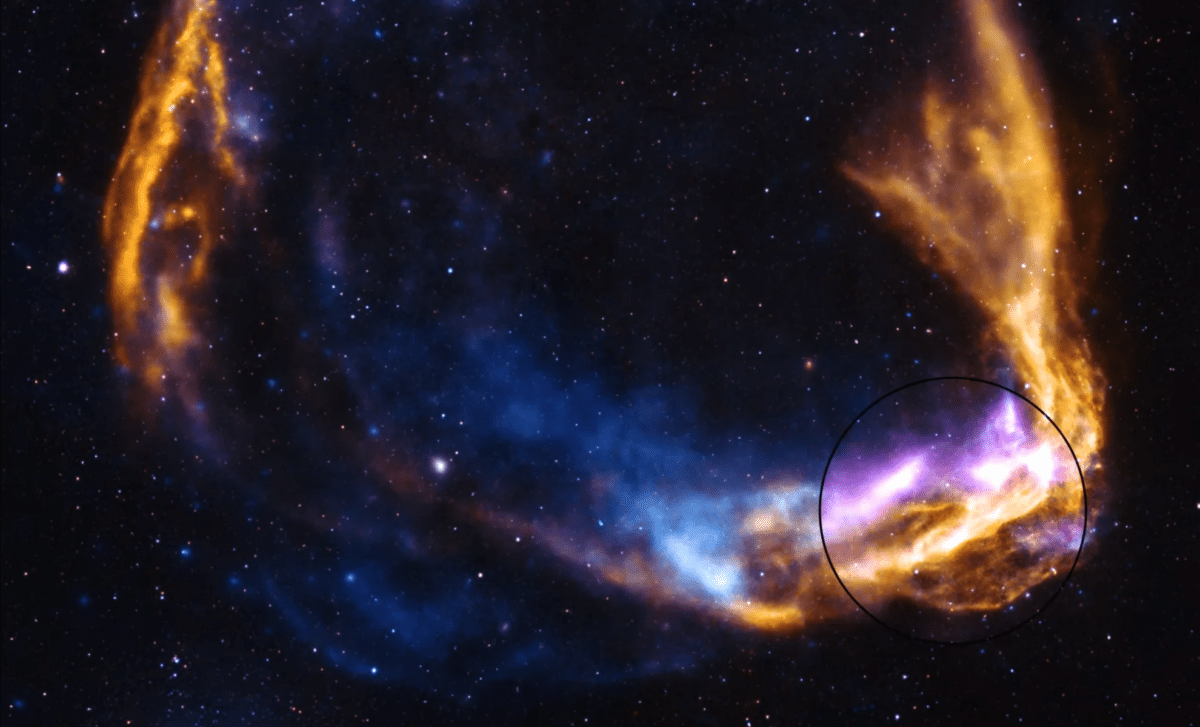
A recent investigation by NASA has uncovered that a supernova, seen almost two thousand years ago, expanded within a pre-existing cosmic bubble, providing compelling clues about the type of star explosion responsible. This discovery changes how researchers interpret one of the earliest documented supernovae and enriches our knowledge of how stars end their lives.
Revisiting an Ancient Cosmic Explosion
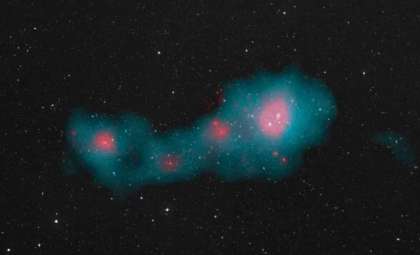
The focus of this study is RCW 86, an expansive supernova remnant in our galaxy, historically linked to a "guest star" recorded by Chinese astronomers in 185 A.D.. This observation remains one of the oldest human records of a star’s explosive death. Now, advanced tools allow scientists to analyze that event with remarkable detail.
By leveraging cutting-edge X-ray technology, experts can effectively reconstruct the explosion’s aftermath by examining the movement of shockwaves through space. These shockwaves still carry energy from the initial blast, heating nearby gases and accelerating particles across the vast interstellar medium. The uneven and intricate shape of RCW 86 once made it challenging to decode the explosion’s history.

The most recent research reveals that this irregular form is linked to the star’s environment prior to detonation. This insight transforms RCW 86 from a simple cosmic relic into a detailed record of the star’s final stages, preserved over nearly two millennia.
Chandra X-Ray Data Reveals a Pre-Explosion Bubble
Findings from NASA’s Chandra X-ray Observatory show that this supernova expanded inside a low-density bubble formed by stellar winds released before the explosion. This cavity acted like a cosmic void, enabling the blast wave to travel more rapidly and extensively than it would have in denser regions.
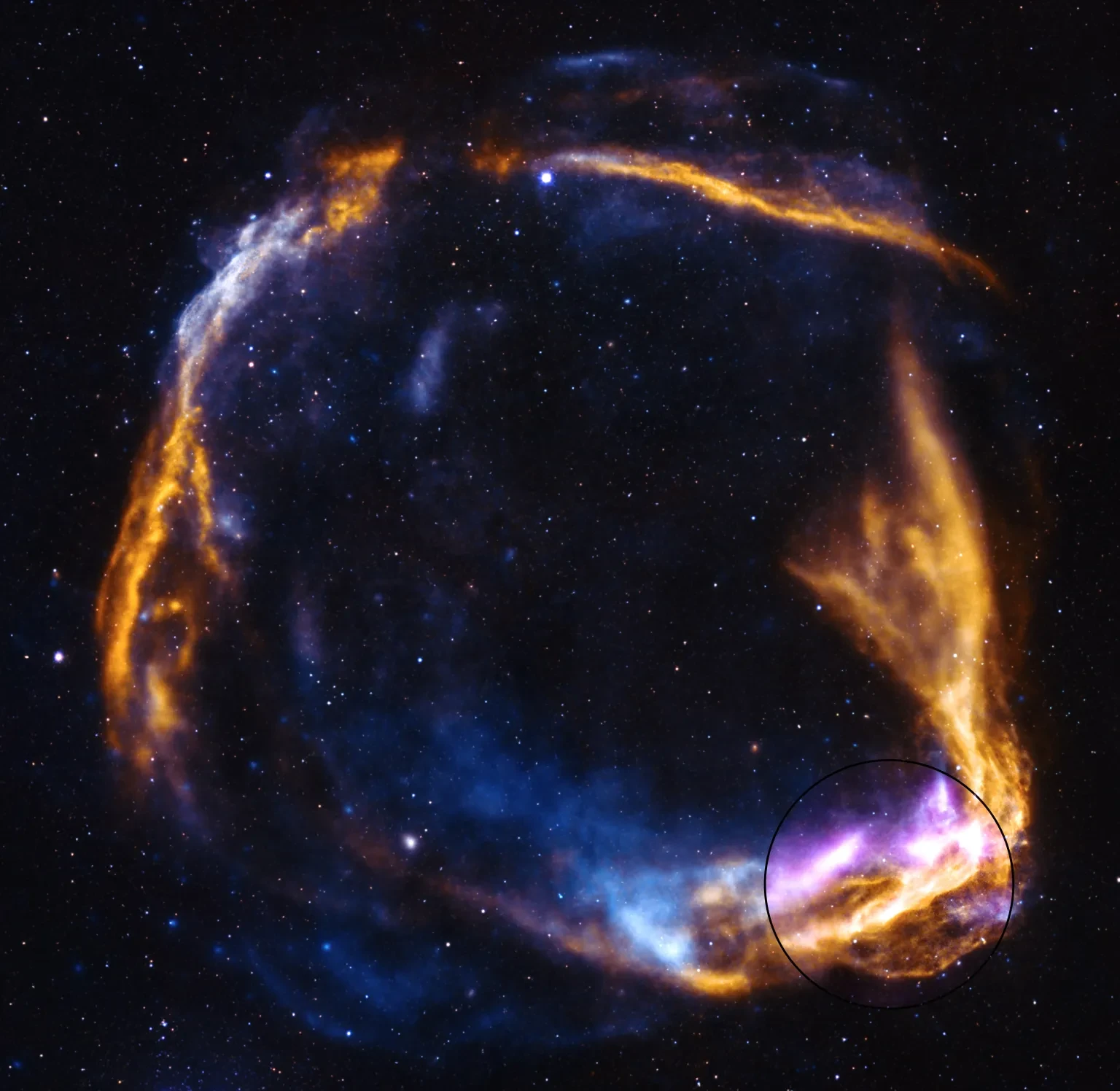
This breakthrough resolves why some regions within RCW 86 exhibit unusually fast expansion. In areas with sparse material, the shockwave encounters less drag, preserving higher speed and energy. Denser zones, however, slow the shockwave, creating the asymmetric form seen today.
The study underscores how activities preceding a supernova can dramatically shape its aftermath. These explosions are not merely endpoints but are deeply affected by the star’s earlier life. The cavity around RCW 86 offers a unique window into pre-explosion conditions.
Clues Point to a Type Ia Supernova Origin
A key finding from this research supports the idea that RCW 86 is the remains of a Type Ia supernova. These explosions happen when a white dwarf star in a binary partnership gathers material from its companion until reaching a critical mass, triggering a thermonuclear blast.
This classification is crucial because Type Ia supernovae serve as cosmic yardsticks, helping astronomers measure vast distances and understand universal expansion. Confirming RCW 86 as Type Ia bolsters models explaining how these explosions evolve over time.
The observed cavity supports the scenario where the white dwarf system shaped the surroundings before detonating, indicating a controlled thermonuclear event rather than a collapse of a massive star. This distinction is vital for grasping how different supernova types contribute to enriching the galaxy’s chemical elements.
A Natural Lab for Studying Extreme Physics
Beyond classifying its origin, RCW 86 functions as a natural laboratory to explore high-energy astrophysics. The supernova’s shockwaves continue to accelerate particles to nearly light speed, adding to the galaxy’s cosmic ray population.
Space-based X-ray measurements from NASA reveal zones where gas is superheated to millions of degrees, emitting high-energy radiation only detectable beyond Earth’s atmosphere. These data enable scientists to investigate energy transfer in interstellar space and interactions between magnetic fields and expanding shock fronts.
With each new observation, researchers gain deeper insights into this dynamic remnant, which is continually evolving as it expands. This ongoing transformation offers precious opportunities to test theories on particle acceleration, plasma dynamics, and cosmic energy distribution.
The renewed focus on RCW 86 exemplifies how modern technology can extract fresh knowledge from ancient cosmic events. What began as a brief stargazing record nearly two millennia ago now serves as a pivotal reference point in astrophysics, linking human history with the energetic phenomena shaping the universe.
- Categories:
- Science






0 comments
Sign in to Comment