

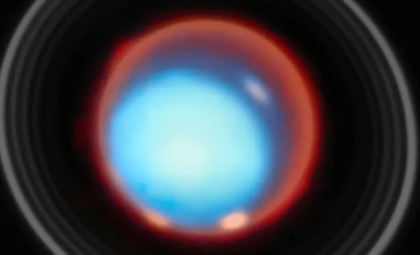
Scientists have recently detected carbon monoxide present deep within the atmosphere of Uranus, offering novel insights into the planet’s concealed composition. This discovery indicates that Uranus likely harbors a significantly larger amount of water ice than previously believed by some experts.
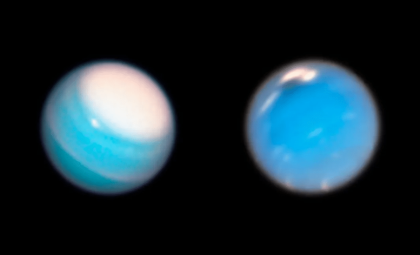
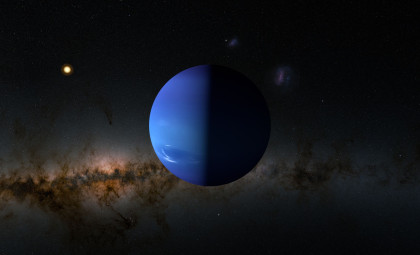
Both Uranus and Neptune are categorized as ice giants, yet their internal structures remain largely enigmatic. Their dense atmospheres obscure direct observation of underlying layers, compelling researchers to depend on indirect evidence to decipher their make-up.
A key question has been whether Uranus differs fundamentally from Neptune. Although Neptune shows clear signatures of water and ice, the scarcity of detected carbon monoxide on Uranus led some scientists to hypothesize a rockier interior. The latest findings challenge that notion.

Carbon Monoxide Detected Deep Within Uranus
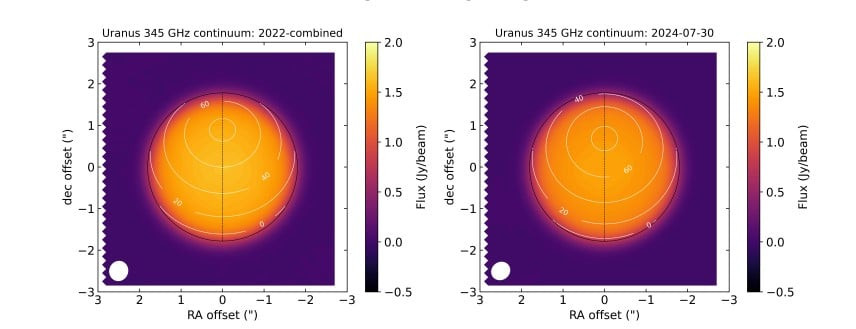
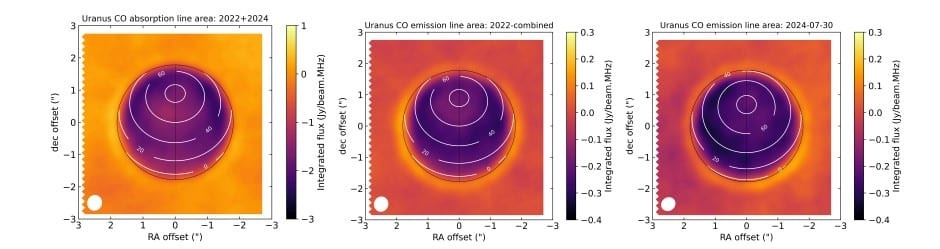
A research group led by Thibault Cavalié at the University of Bordeaux employed the Atacama Large Millimeter/submillimeter Array (ALMA) in Chile to observe Uranus on three occasions between 2022 and 2024.
The study revealed the presence of notable quantities of carbon monoxide in the planet’s lower atmosphere, marking the inaugural detection of this gas in that specific atmospheric layer.
Planetary scientists associate carbon monoxide with deep interior processes of giant planets, using it as an indicator of water-rich materials beneath the gaseous envelope.
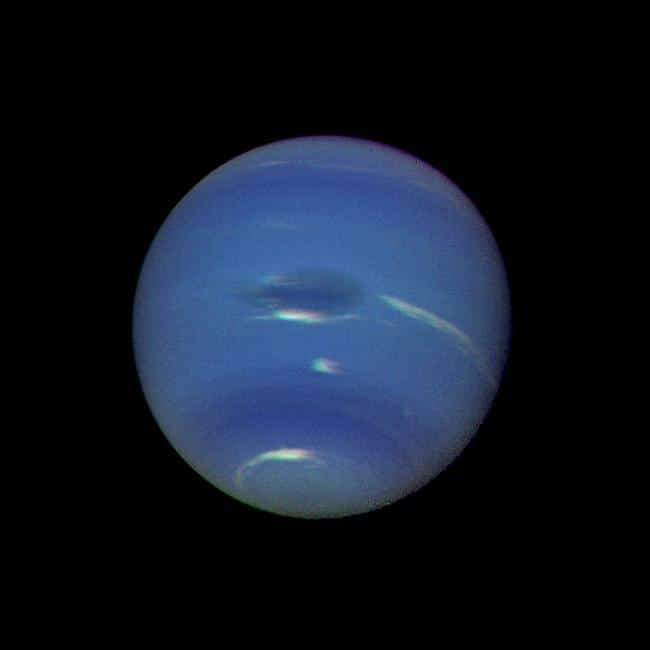
The research highlighted that Neptune has long exhibited abundant carbon monoxide, supporting the notion of an ice-laden interior. Uranus, however, previously lacked such carbon monoxide signatures, raising doubts about its composition.
Models Favor Ice-Dominant Interiors
Following the detection, scientists compared observed data against various computational models simulating Uranus’s interior with varying rock-to-ice ratios.
The findings were compelling: only those models with a high proportion of ice corresponded to the carbon monoxide levels detected. Models with less ice were inconsistent with the observations.
The research, available on arXiv, supports the idea that Uranus hosts considerably more water ice than earlier studies proposed.
“We find that Uranus is more on the ice-giant side than on the rock-giant side,” Cavalié said.
This discovery could reshape theories on the formation of Uranus. A predominantly icy interior would align it closer to Neptune’s composition than some previous hypotheses suggested.
Cavalié notes the findings help resolve long-standing disputes about Uranus’s makeup but cautions that conclusions rely on the accuracy of modeling efforts.
“We have to be careful when we say things like that, because things also depend on modelling, but that’s the feeling we have,” he said.
Debate Continues Among Scientists
Carbon monoxide was also detected in Uranus’s upper atmosphere, but researchers think this may originate from a different source than that of the deeper atmosphere.
Cavalié proposes a comet collision centuries ago might have introduced the gas into the upper layers, meaning this detection does not necessarily represent the planet’s interior composition. Nonetheless, some experts remain cautious about these interpretations. Vanesa Ramirez from Leiden University explains:
“Interpreting atmospheric abundances requires assumptions about chemistry, mixing and internal structure, all of which remain uncertain for Uranus.”
Ramirez maintains that several different ratios of rock to ice can still fit existing data, indicating multiple models remain valid for explaining Uranus’s internal structure.
- Categories:
- Astronomy




0 comments
Sign in to Comment