
Recent research points to an extraordinary event: a supernova eruption potentially bombarded Earth with cosmic rays about 10 million years ago, a phenomenon now recorded in the ocean floor’s metal-rich layers. This finding, emerging from the detailed study of oceanic crust samples, offers new perspectives on ancient cosmic influences on our planet. A paper featured in Astronomy & Astrophysics highlights abnormal beryllium-10 concentrations, revealing a glimpse into distant astrophysical events. Could Earth have been affected by a supernova so long ago?
Mysterious Beryllium-10 Spike in Seafloor Layers
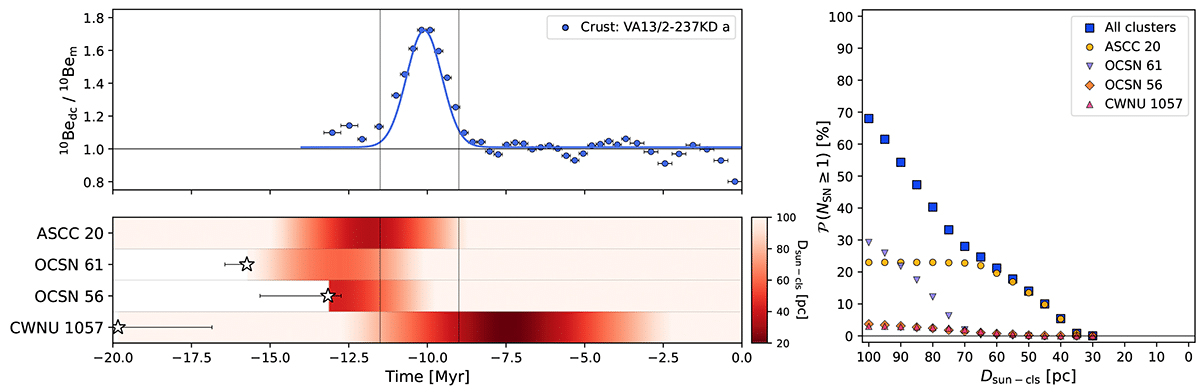
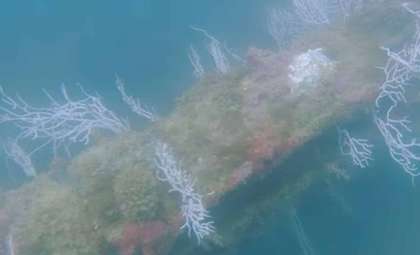
Central to the investigation is a distinct irregularity in beryllium-10 isotope levels detected in the Pacific Ocean’s metal-enriched crust. Beryllium-10 forms through high-energy cosmic particles interacting with atmospheric atoms. Researchers recorded a pronounced increase in beryllium-10 around 10.1 million years ago, prompting the question: was this caused by a nearby supernova unleashing a surge of cosmic rays during that exact era?
Dr. Dominik Koll of Helmholtz Zentrum Dresden Rossendorf (HZDR) underscores the significance, noting beryllium-10 values nearly doubled expectations from this timeframe. The abrupt rise in the geological record hints at an extraordinary external influence, possibly a supernova detonating within our galactic vicinity.

The Role of Supernova Explosions in Space
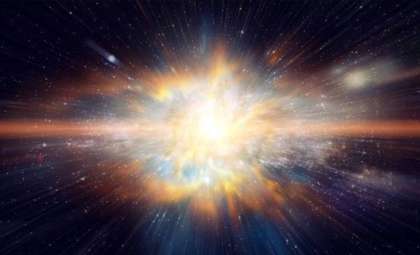
Supernovae mark the violent ends of massive stars, releasing vast amounts of energy, radiation, and cosmic rays. These explosions come in two main forms: core-collapse types, when massive stars collapse after fuel depletion, and Type Ia supernovae, involving white dwarfs in binary systems. Their immense power can briefly outshine whole galaxies and forge heavy elements integral to Earth and life itself.
While generally harmless due to distance, supernovae occurring within about 30 light-years could damage Earth’s ozone layer, heightening ultraviolet radiation exposure and impacting living systems. Even those hundreds of light-years away might tweak Earth’s atmosphere and cosmic ray levels, influencing environmental conditions for thousands of years.
Identifying the Suspected Stellar Origins
To pinpoint the supernova source, scientists analyzed the locations and trajectories of local star clusters using precise data from the European Space Agency’s Gaia mission. Their study indicated a 68% chance that a star within 326 light-years exploded near the beryllium-10 surge, approximately 10 million years ago.
Two candidate clusters emerged prominently: ASCC 20, roughly 110 light-years away, and OCSN 61, about 196 light-years distant. ASCC 20 appears the most plausible source, though the supernova’s distance affects the intensity of cosmic rays reaching Earth. Even a more remote blast might explain the magnetic particle spike detected.
Alternative Explanations: Beyond Supernovae
Despite the compelling supernova theory, other geological or solar system processes might have caused the anomaly. Researchers considered whether shifts in ocean currents could concentrate beryllium-10 in the Pacific without external cosmic events. Verifying this would require additional evidence. Similarly, if the solar system passed through a dense interstellar cloud, fluctuations in the heliosphere’s protective magnetic shield could have allowed more cosmic rays to penetrate.
Nonetheless, the cosmic ray surge remains the strongest explanation for now. Dr. Koll explains,
“Only new measurements can indicate whether the beryllium anomaly was caused by changes in ocean currents or has astrophysical reasons.”
This highlights the challenges in confirming the anomaly’s origin and the importance of further investigation to either support or dismiss the supernova impact hypothesis.
Implications of Cosmic Impacts on Earth’s Past
If confirmed, a supernova’s cosmic rays reaching Earth would mark a notable event in planetary history. Though unlikely to trigger mass extinctions, such radiation surges could subtly modify atmospheric chemistry, potentially weakening the ozone layer or increasing radiation exposure. Still, the supernova’s considerable distance suggests limited ecological damage.
This finding raises the possibility that other similar cosmic phenomena might be recorded in Earth’s geological archives. If the beryllium-10 spike indeed signals supernova-induced cosmic ray events, scientists gain a powerful method to trace the frequency and effects of such distant stellar explosions on our planet over time.
The Sun’s Galactic Journey and Its Effects
The study also places Earth’s cosmic history within the larger Milky Way context. Around 10 million years ago, the Sun was traversing the Radcliffe Wave, a massive undulating structure of gas and young stars key to star formation in our galactic vicinity. This environment likely increased the chance of nearby supernovae events, given its star birth and death rates.
Understanding the Sun’s past path helps reveal how often Earth might have encountered supernova influences. The Radcliffe Wave’s dense star populations may mean Earth has been exposed to more cosmic radiation events than previously recognized.
- Categories:
- News



0 comments
Sign in to Comment