
For many years, scientists have used Einstein’s relativity to describe how the universe expands, operating under the assumption that dark energy—the enigmatic force comprising about 70% of the cosmos—remains unaltered over time. Recent research from the Dark Energy Spectroscopic Instrument (DESI) now implies that dark energy’s influence could be shifting throughout cosmic history, raising questions about our foundational knowledge of the universe.
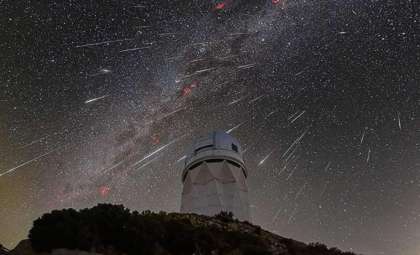
The new insights, shared at a recent meeting of the American Physical Society in California, draw on three years of data gathered from observations of 15 million galaxies and quasars captured by DESI, installed on the Nicholas U. Mayall Telescope at the Kitt Peak National Observatory in Arizona. When integrated with other cosmological datasets, these results point towards a possible gradual decline in dark energy’s strength over billions of years. If validated, this would be a groundbreaking shift in physics, calling for updates to the prevailing cosmological paradigm.
Understanding Dark Energy and Cosmic Expansion: Previous Perspectives
Since the early 20th century, the concept of an expanding universe has been widely embraced, yet the late 1990s brought a startling revelation: the expansion is accelerating rather than decelerating. This unexpected acceleration introduced the concept of dark energy, a mysterious force responsible for driving the universe’s growth faster over time.

The leading cosmological framework, Lambda Cold Dark Matter (ΛCDM), treats dark energy as a constant quantity that doesn’t change as the universe evolves. This notion comes from Einstein’s cosmological constant (Λ), a fixed parameter embedded in his equations that has governed cosmic expansion since the universe’s birth.
Should dark energy indeed be diminishing, as the DESI data suggests, our fundamental cosmological model will require significant revision.
Insights from DESI on the Possible Changes in Dark Energy
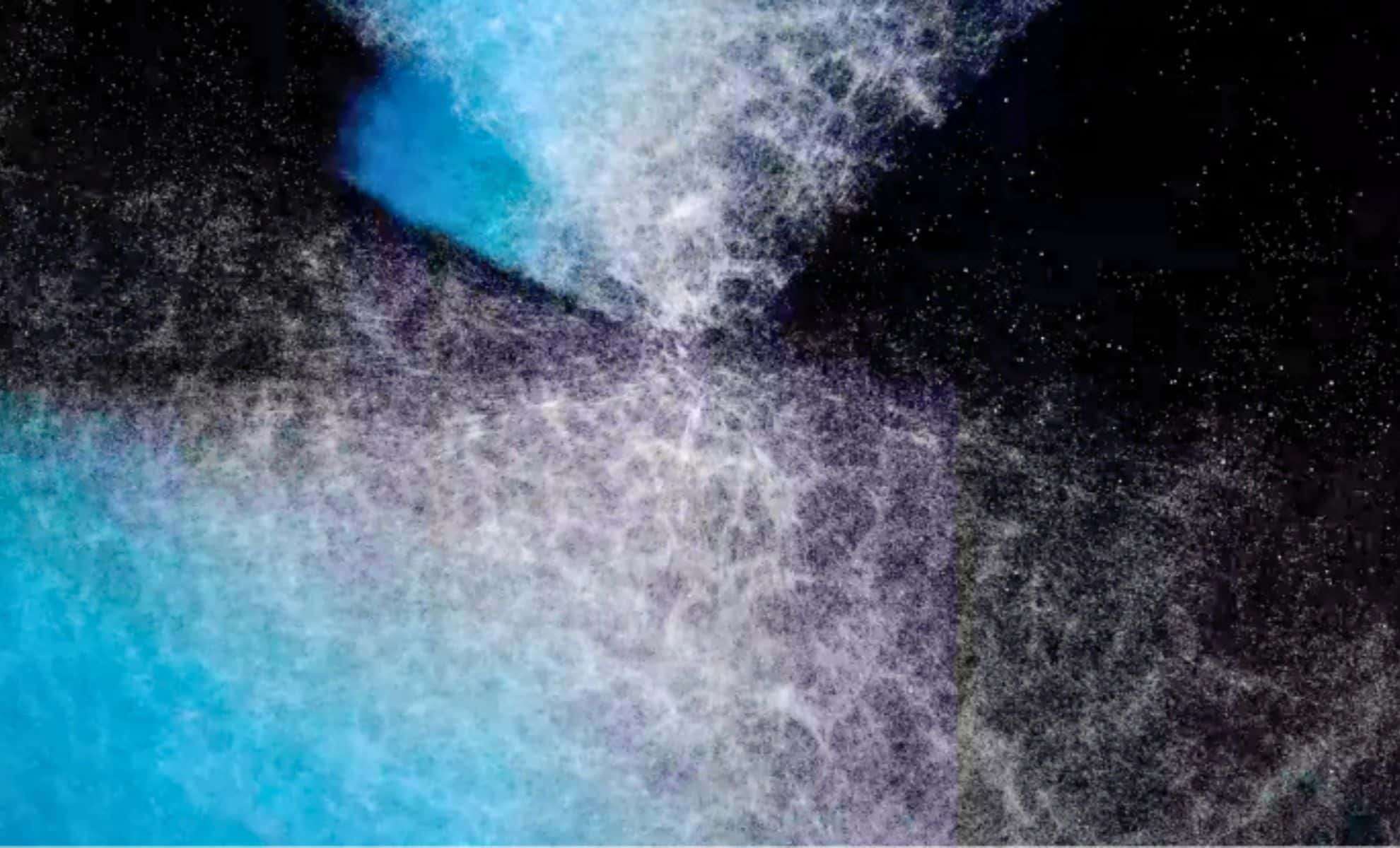
DESI represents a cutting-edge instrument in observational cosmology, with the capability to monitor 5,000 galaxies or quasars at once every 20 minutes through its array of precise optical fibers. This allows researchers to construct an extraordinarily detailed map of the universe’s large-scale structure.
By examining how the distances between galaxies have changed across epochs, the DESI team estimated the universe’s expansion rate at various times. Comparing this with other measurements, such as the cosmic microwave background and supernova data, revealed surprising patterns:
- Dark energy appeared more potent roughly 7 billion years ago.
- Since then, its effect seems to have gradually lessened.
Physicist Arnaud de Mattia, involved in analyzing DESI’s observations, commented:
“When we combine all the cosmological data, it favors that the universe’s expansion was accelerating at a slightly higher rate around seven billion years ago.”
Although this is not definitive evidence of dark energy’s transformation, the indication is compelling enough to motivate continued study through upcoming telescope missions.
Could This Mark a Paradigm Shift in Cosmology?
If these findings withstand further analysis, the consequences could be substantial:
- The current cosmological model would need adjustment to incorporate a dark energy that evolves rather than remains fixed.
- The universe’s long-term trajectory might be different; weakening dark energy could slow cosmic expansion in the future, possibly altering its ultimate destiny.
- Einstein’s cosmological constant might not be truly constant, suggesting new physics beyond the existing model is necessary to explain this variation.
Étienne Burtin, a French physicist and member of the DESI collaboration, highlighted the importance of this potential breakthrough:
“Confirming evolving dark energy would be a revolution on the level of the discovery of accelerated expansion itself.”
- Categories:
- News





0 comments
Sign in to Comment