
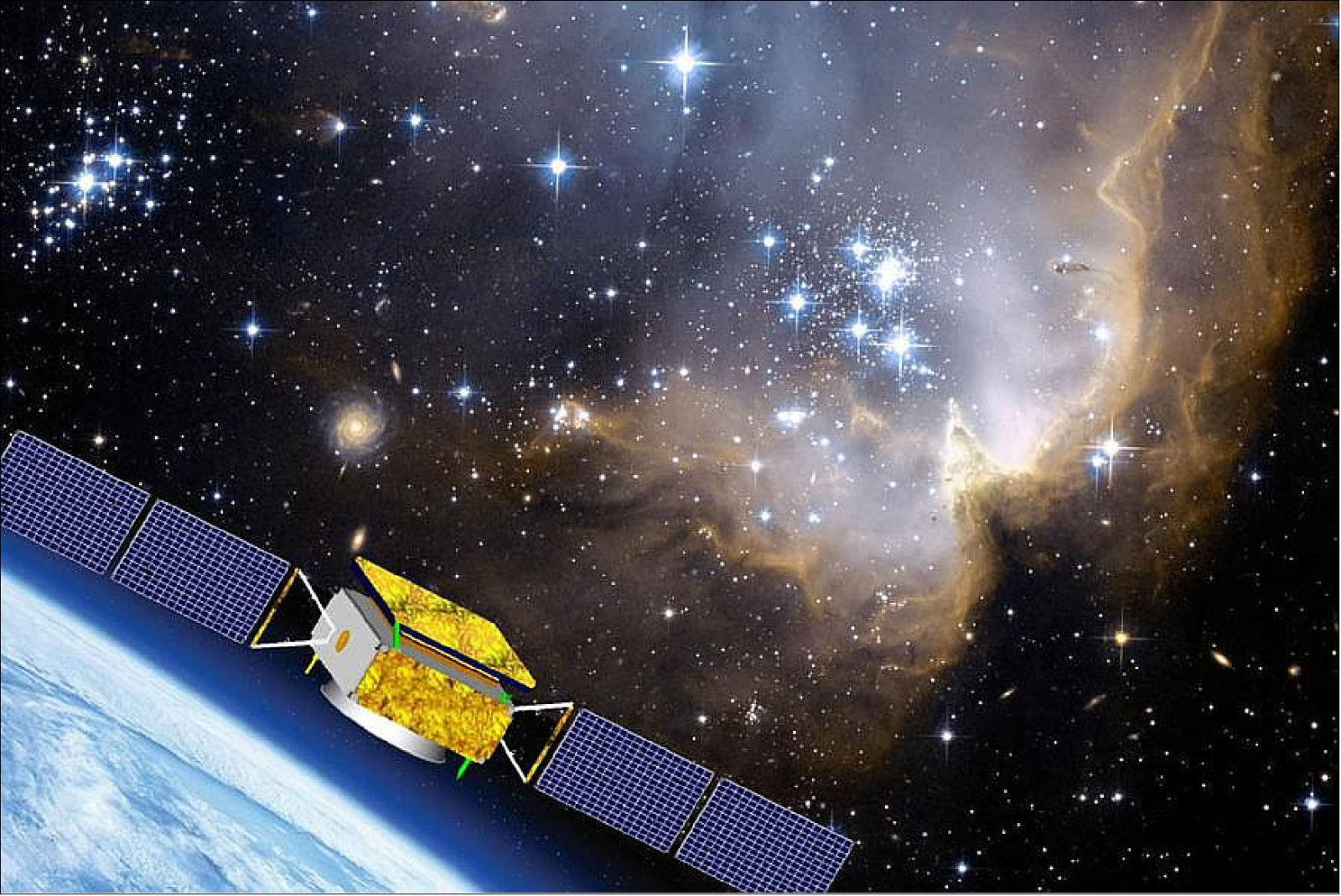
One hundred years after cosmic rays were first identified, scientists may have uncovered a fundamental rule that governs the behavior of these energetic particles throughout the cosmos. Utilizing measurements from the DAMPE space observatory, the team detected a consistent pattern across multiple categories of high-energy cosmic particles, as detailed in a Nature publication.
This discovery could shed light on the processes responsible for the acceleration and movement of cosmic rays through space. For decades, the origin and dynamics of these highly energetic particles have been subject to extensive debate.
Cosmic rays are charged particles that traverse the galaxy at exceptional speeds and energies. Their sources are believed to include cataclysmic cosmic events like supernovae, pulsars, and jets from black holes.

Consistent Cosmic Ray Signature Emerging from Data
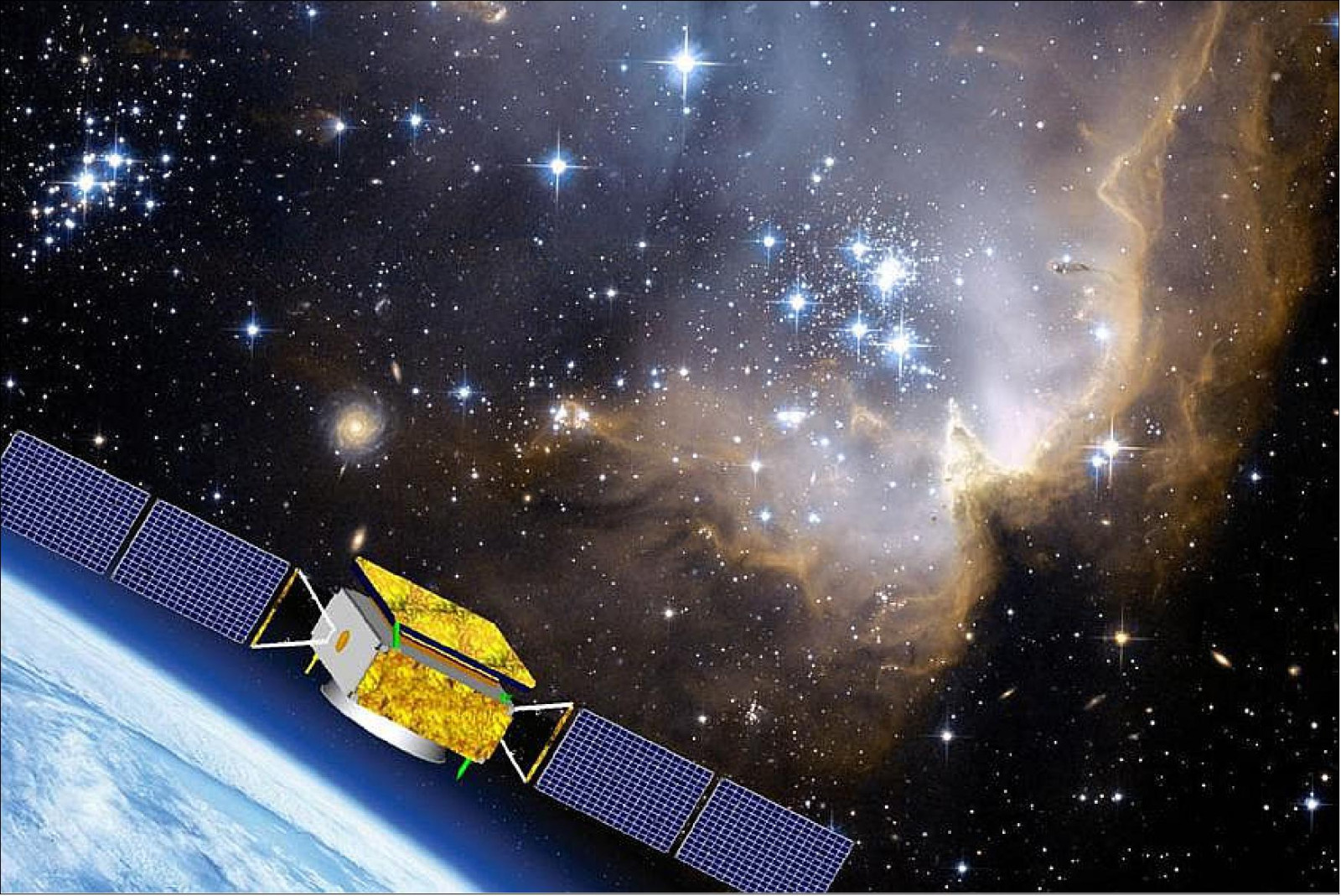
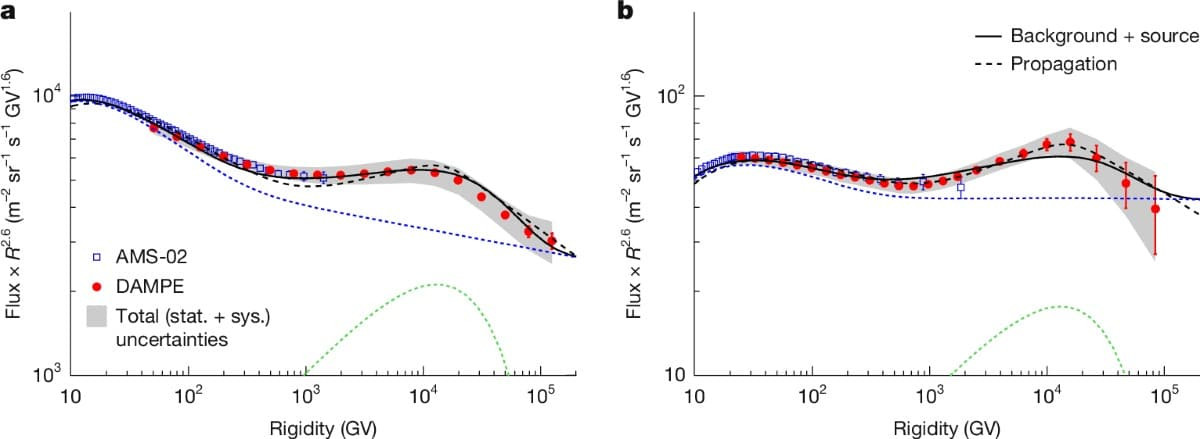
Researchers based their findings on observations made by DAMPE, the Dark Matter Particle Explorer launched in late 2015. They identified an intriguing phenomenon in several cosmic ray nuclei: a sudden reduction in the number of particles detected beyond a specific point, known as spectral softening.
The research, accessible through the original paper, reveals that this pronounced drop occurs near 15 TV (teraelectron-volts). Rigidity quantifies a particle’s resistance to deflection caused by magnetic fields as it travels through space.
Remarkably, this pattern appeared consistently across different particle types, from light protons to much heavier iron nuclei. This caught the attention of researchers who have long sought evidence that various cosmic rays obey the same underlying physical principle, which DAMPE data now strongly supports.
Andrii Tykhonov, associate professor at the University of Geneva’s Department of Nuclear and Particle Physics and a co-author, explained:
“Cosmic rays are primarily composed of protons, but also of helium, carbon, oxygen, and iron nuclei.” He added, “These particles are also categorised according to their energy: low, up to a few billion electron-volts; intermediate, from a few billion to several hundred billion electron-volts; and high, from 1,000 billion electron-volts and beyond.”
Evidence Mounts for the Role of Rigidity in Cosmic Rays
The analysis from DAMPE strongly advocates the theory that cosmic ray behavior depends on rigidity instead of energy per nucleon. According to the researchers, previous models based on energy divided by nucleon number do not align well with the observed data.
The study demonstrates a confidence level of 99.999% rejecting those former models, giving scientists robust grounds to advance their understanding.
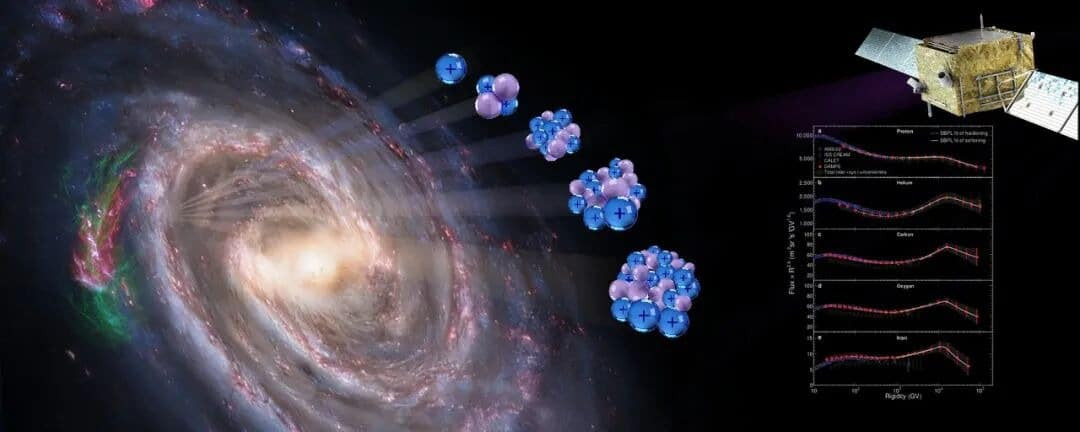
The findings offer tighter constraints on how cosmic rays acquire their extreme energies before journeying through space. They also refine theoretical models concerning particle acceleration in energetic astrophysical environments.
Despite a century of research, the influence of magnetic fields, shock waves, and intense cosmic phenomena remains hotly contested.
Artificial Intelligence Advances Foster Breakthrough
The University of Geneva reports that advanced artificial intelligence methods were developed to reconstruct particle events captured by the telescope.
The Geneva team also played a pivotal role in quantifying proton and helium fluxes and analyzing carbon nuclei data, while spearheading the creation of the Silicon-Tungsten Tracker — a core instrument aboard DAMPE.
This detector maps particle trajectories and precisely measures the electric charge of incoming cosmic rays. Researchers indicate this advanced functionality was crucial to identifying the recently observed spectral softening feature.
- Categories:
- Space





0 comments
Sign in to Comment