
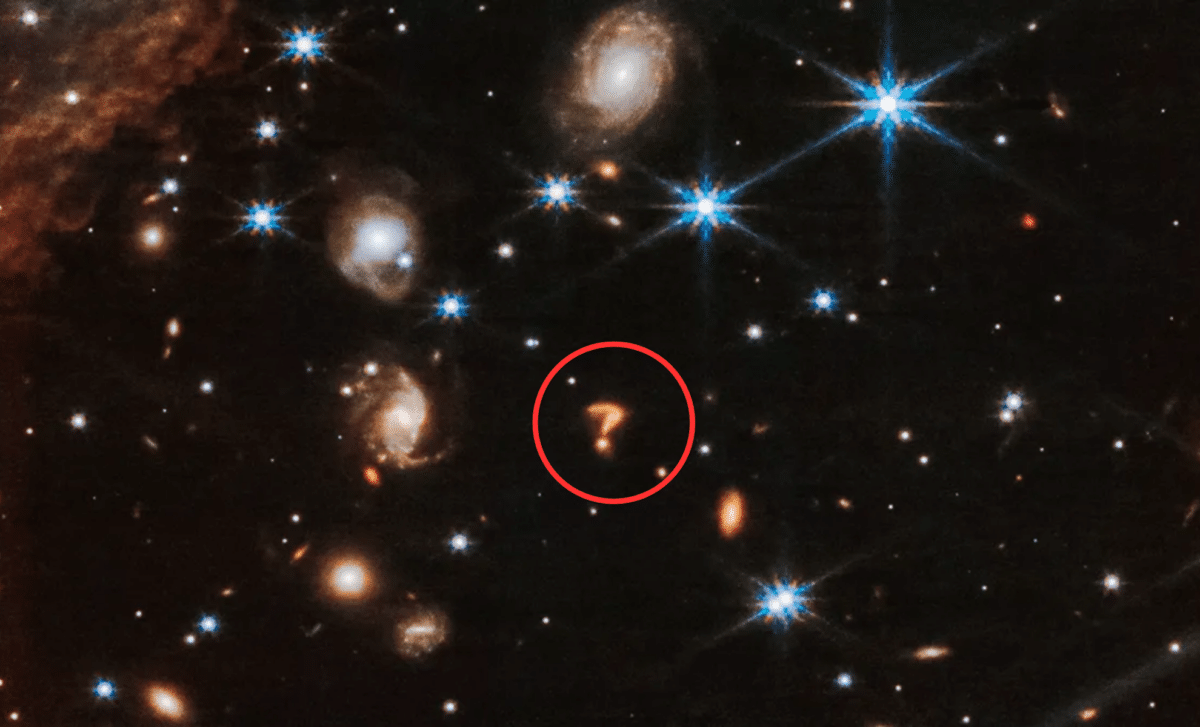
The James Webb Space Telescope (JWST) operated by NASA has unveiled a striking image of a far-off galaxy exhibiting a mysterious shape reminiscent of a question mark. This discovery, detailed in a NASA report, highlights both JWST’s remarkable capabilities and the intriguing cosmic activities triggered by galactic collisions and ongoing evolution. These pictorial "cosmic question marks" are more than just curiosity-driven shapes; they provide essential clues about galaxy formation and the dynamic processes shaping our universe. Investigating these structures enables astronomers to deepen their understanding of galaxy, star, and cosmic force development.
Decoding the Cosmic Question Mark Phenomenon
Images from NASA’s James Webb Space Telescope have revealed a distant galaxy warped into the form of a colossal question mark due to intense cosmic interactions. This unusual feature is not unique and reflects how massive events like galaxy mergers can dramatically alter the shapes of galaxies. The object observed is believed to result from the fusion of two galaxies, a frequent occurrence in cosmic history through which galaxies grow and change. During such mergers, gravitational forces distort the galaxies’ structures, leading to remarkable and sometimes baffling shapes.
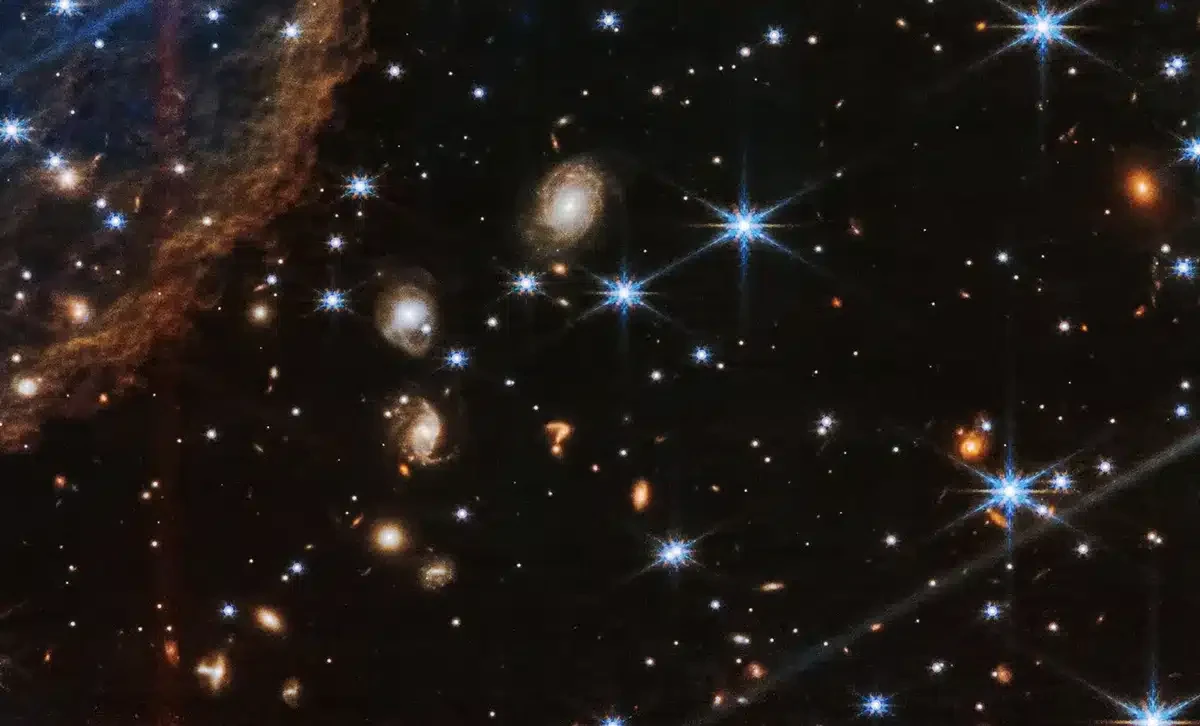
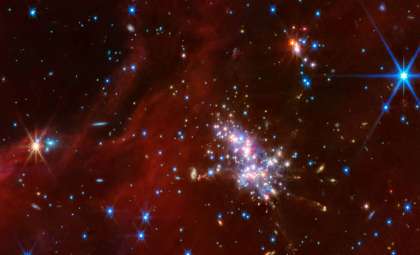
Although the primary focus of the original image was a pair of newly forming stars at its center, it was the distant galaxy’s distinctive question mark shape—produced by the galactic collision—that captured widespread attention from both researchers and enthusiasts.

“This looks like the kind of thing that you get fairly frequently — as galaxies grow and evolve over cosmic time — which is that they sometimes collide with their near neighbors,” explained Matt Caplan, assistant professor of physics at Illinois State University. “And when that happens, they can get distorted into all kinds of different shapes — including a question mark, apparently.”
Galaxy Mergers: Driving Forces Behind Cosmic Change
The merging of galaxies represents a fundamental process that shapes their growth and transformation over billions of years. Such collisions occur regularly as galaxies drift through space and interact gravitationally with neighbors. The formation of a “cosmic question mark” perfectly exemplifies how these mergers can contort galaxies into strikingly unusual forms. As galaxies collide, their stars and interstellar material become stretched and twisted under the influence of immense gravitational forces.
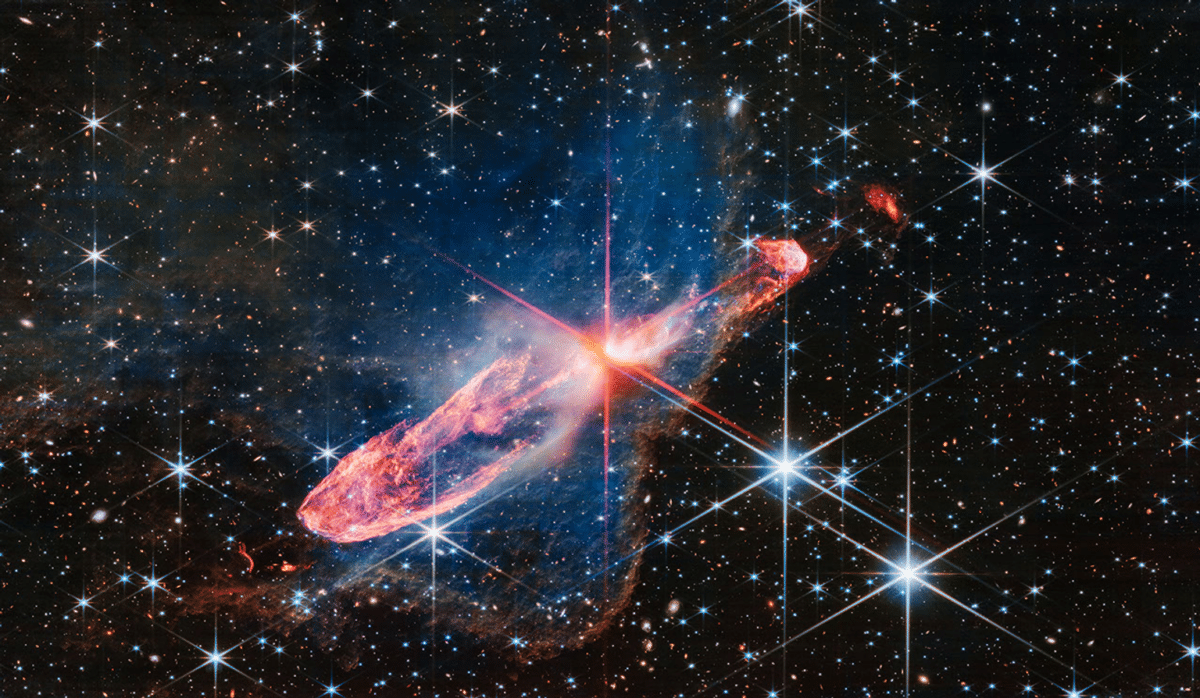
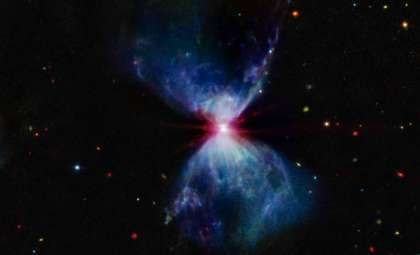
Grasping the significance of such mergers is vital for astronomers aiming to understand galactic evolution. This discovery provides valuable insight into the mechanisms driving galaxy growth and shape alteration. NASA underscores the importance of young stellar objects like Herbig-Haro 46/47, which offers a glimpse into early star formation processes.
“Herbig-Haro 46/47 is an important object to study because it is relatively young — only a few thousand years old. Stars take millions of years to fully form,” NASA explains.
The investigation of these recently formed stellar objects helps researchers better understand the earliest phases of star birth and the origins of stars similar to our Sun.
The Influence of Gravitational Lensing on Cosmic Imagery
Besides collisions, gravitational lensing is another cosmic phenomenon that can yield striking visual distortions. Gravitational lensing happens when massive entities such as galaxy clusters bend spacetime, magnifying and multiplying images of objects behind them. In the case of the “cosmic question mark,” gravitational lensing contributed to the repeated visual patterns of interacting galaxies, shaping the iconic question mark imagery.
The 2024 JWST data captured two distant galaxies interacting while being amplified by the gravitational lensing effect of a massive foreground galaxy cluster.
“Two distant, interacting galaxies — a face-on spiral and a dusty red galaxy seen from the side — appear multiple times, tracing a familiar shape across the sky,” NASA explains.
This lensing effect enhances the visual complexity and scientific intrigue of the cosmic question mark, demonstrating how gravitational distortions can reveal hidden facets of the universe.
JWST’s Infrared Vision: Revealing What Was Once Hidden
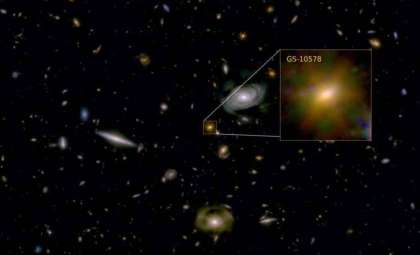
The James Webb Space Telescope stands out for its capacity to observe the cosmos in infrared wavelengths, allowing astronomers to glimpse objects otherwise obscured or too faint for visible light detection. This advantage is especially critical when examining the most ancient galaxies, whose light is redshifted into the infrared spectrum due to their extreme distances.
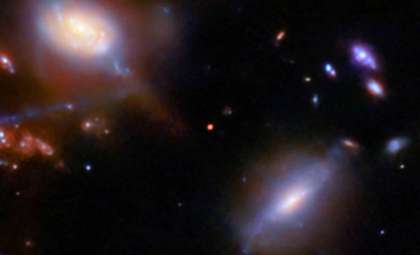
“Blue objects with diffraction spikes are stars, and the closer they are, the larger they appear. White-and-pink spiral galaxies sometimes appear larger than these stars, but are significantly farther away. The tiniest red dots, Webb’s infrared specialty, are often the oldest, most distant galaxies,” NASA explains.
JWST’s infrared imaging sheds new light on the early universe, uncovering galaxies formed billions of years ago. These primordial galaxies, including those involved in creating the cosmic question mark, provide invaluable data about the origins of galaxies, stars, and potentially the foundational elements of life itself.
- Categories:
- Space



0 comments
Sign in to Comment