
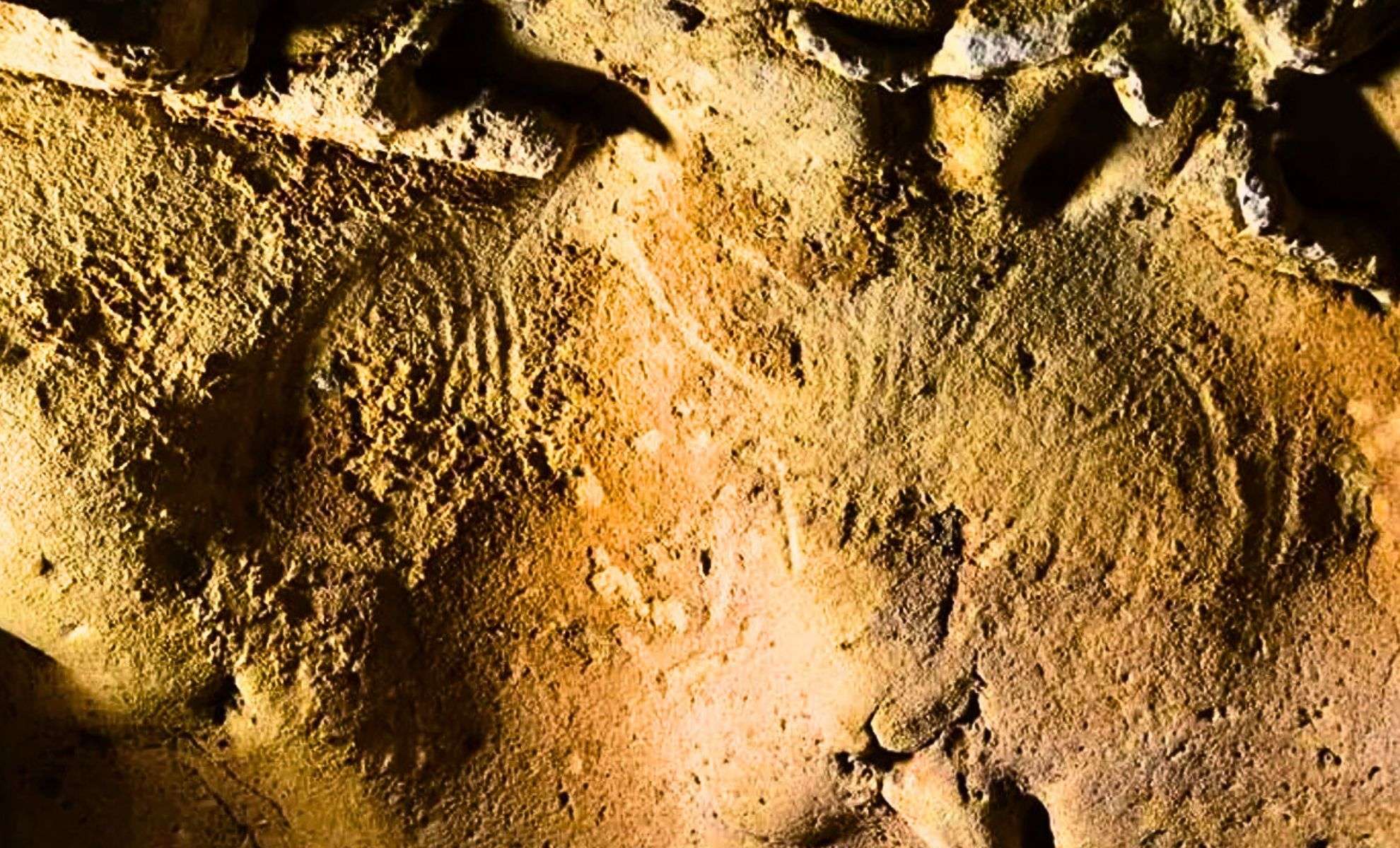
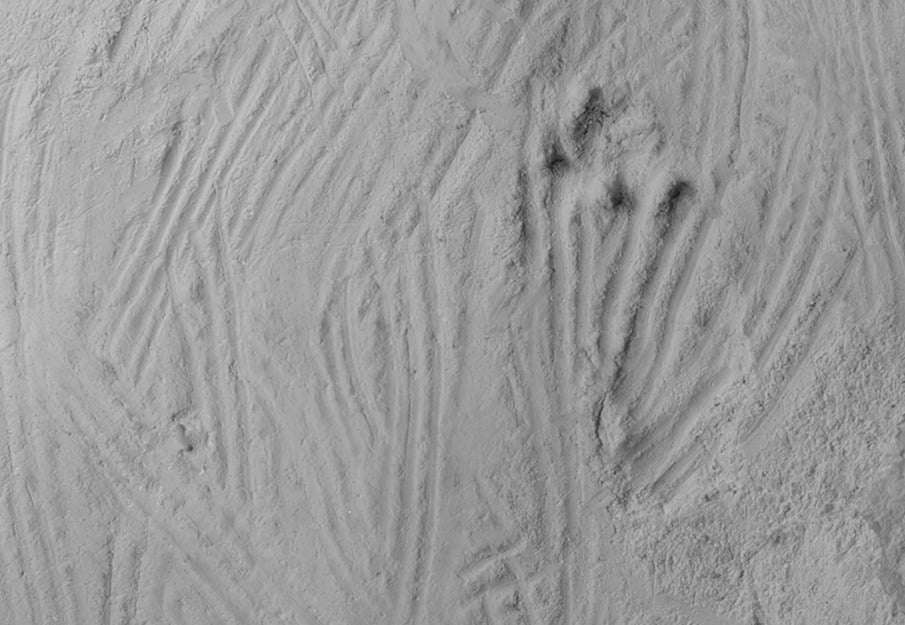
Deep within the winding corridors of ancient caves, faint traces of early human activity persist. These subtle, winding grooves, known as finger flutings, have been preserved on mineral surfaces for tens of thousands of years.
Found etched into soft deposits like clay or moonmilk, finger flutings appear in cave sites spanning Europe and Australia, some linked to Neanderthals from over 60,000 years ago. While their purpose has long intrigued researchers—ranging from possibilities of art, ritual, or primitive communication—a key mystery remained: who exactly created them?
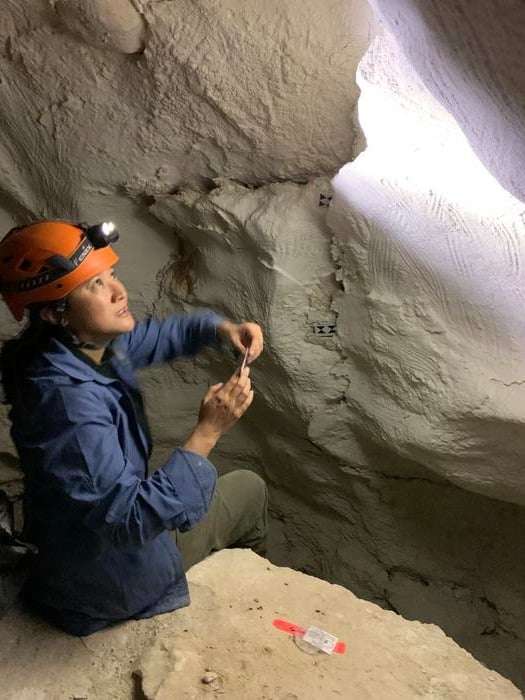
Researchers from Griffith University in Australia embarked on an innovative project to address this question. Leveraging machine learning combined with advanced digital archaeological techniques, they created a methodology to detect the sex of the individuals who made these ancient marks. Their findings, published in Scientific Reports, provide a more objective alternative to previous subjective and imprecise approaches.

"Our goal is to replace guesswork with reproducible analysis," explained Dr. Andrea Jalandoni, the study's lead digital archaeologist. "These flutings represent some of humanity’s earliest symbolic acts, and we’re just beginning to unlock their meanings."
Integrating AI with ancient hand movements
The project constructed its dataset by conducting two experiments with 96 adult volunteers. Each participant made nine finger flutings across two conditions: one physical, where they worked with a clay-like surface resembling cave walls, and one virtual, performed using a Meta Quest 3 VR headset. The tangible trials captured the nuances of real-world finger movements, while the VR sessions tested the effectiveness of digital input methods.
These images trained two deep learning models—ResNet-18 and EfficientNet-V2-S—tasked with discerning biological sex from the flutings. Models learning from physical samples achieved up to 84% accuracy, suggesting that the way fingers press and move carries subtle sex-specific signals.
In contrast, VR-generated flutings produced mixed results with less reliable classification. Researchers attributed this to the absence of real tactile feedback, which influences finger pressure and motion.
However, the analysis revealed an important caveat: the models often overfitted to the specific experimental settings, hindering their ability to generalize to actual prehistoric cave data. The team underscores that these results are preliminary and require further validation.
Reevaluating traditional interpretations
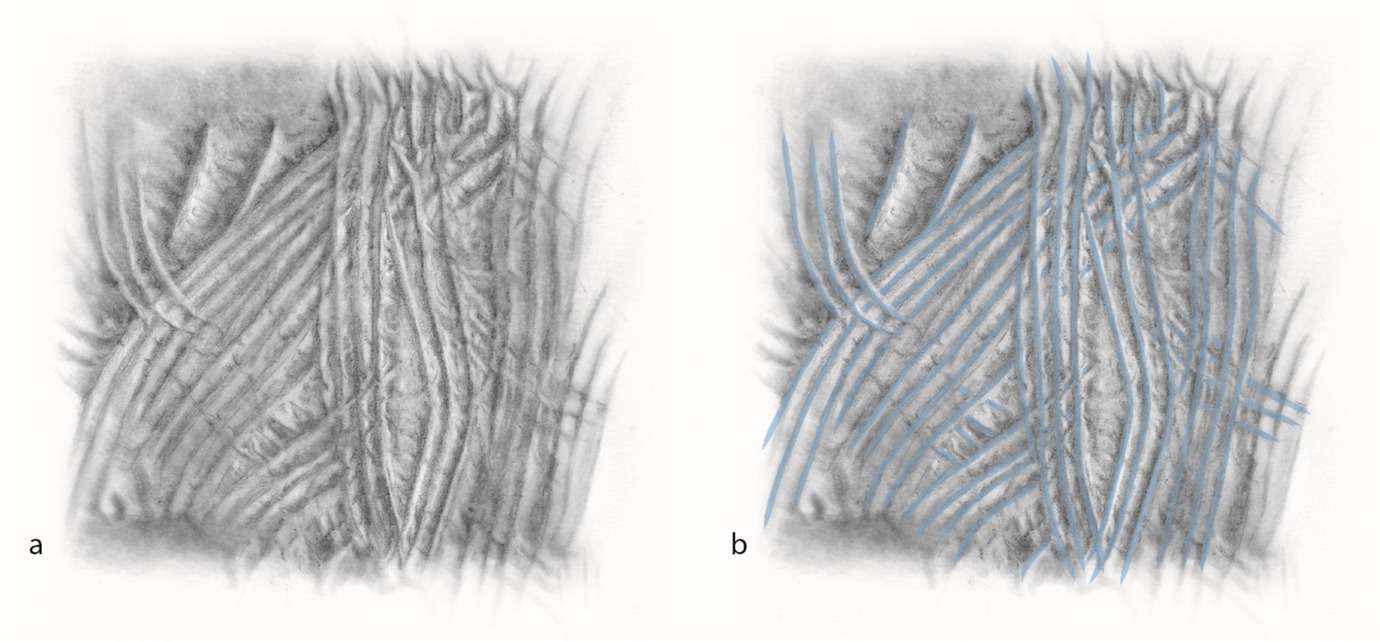
This cutting-edge approach arrives as conventional methods in cave art analysis face scrutiny. Historically, scholars tried to infer the sex or age of creators by examining groove widths or distances between finger marks. But as a recent review in the Journal of Archaeological Method and Theory outlines, these strategies are plagued by inconsistencies.
Factors like uneven cave surfaces, variable finger pressure, and pigment degradation can distort measurements, raising doubts on earlier claims—such as attributing flutings to women or children—which lack strong empirical support.
Co-author and computer scientist Dr. Gervase Tuxworth remarked, "Our study probed whether AI could lend a more objective perspective. Yet, the models still reflect influences of their training environment. There’s considerable progress yet to be made."
Promoting open science in archaeological research
Rather than offering a proprietary tool, the research team released their entire workflow openly. All datasets, algorithms, model checkpoints, and preprocessing tools are freely accessible via GitHub. Resources include Jupyter notebooks for deep learning model training and preprocessing scripts leveraging the SAM2 framework.
"This is a foundation, not a conclusion," emphasized co-author and information scientist Dr. Robert Haubt of the Australian Research Centre for Human Evolution. "By sharing openly, we invite the community to enhance, validate, and extend these methods across varied datasets and archaeological questions."
Transparency and reproducibility are increasingly vital in computational archaeology. The researchers foresee adapting their AI pipeline for analyzing petroglyphs, wear patterns on ancient tools, or reconstructing digital heritage sites.
Ultimately, this work seeks to restore voice and identity to prehistoric individuals long absent from history. In certain Indigenous traditions, such as those in Australia, knowing whether a cave marking was made by a male or female ancestor can determine cultural access and stewardship. The implications extend beyond pure science.
"Our aim goes beyond identifying creators," said Jalandoni. "It’s about tuning into the experiences of people from deep history and discovering fresh ways to understand their stories."
- Categories:
- News







0 comments
Sign in to Comment