
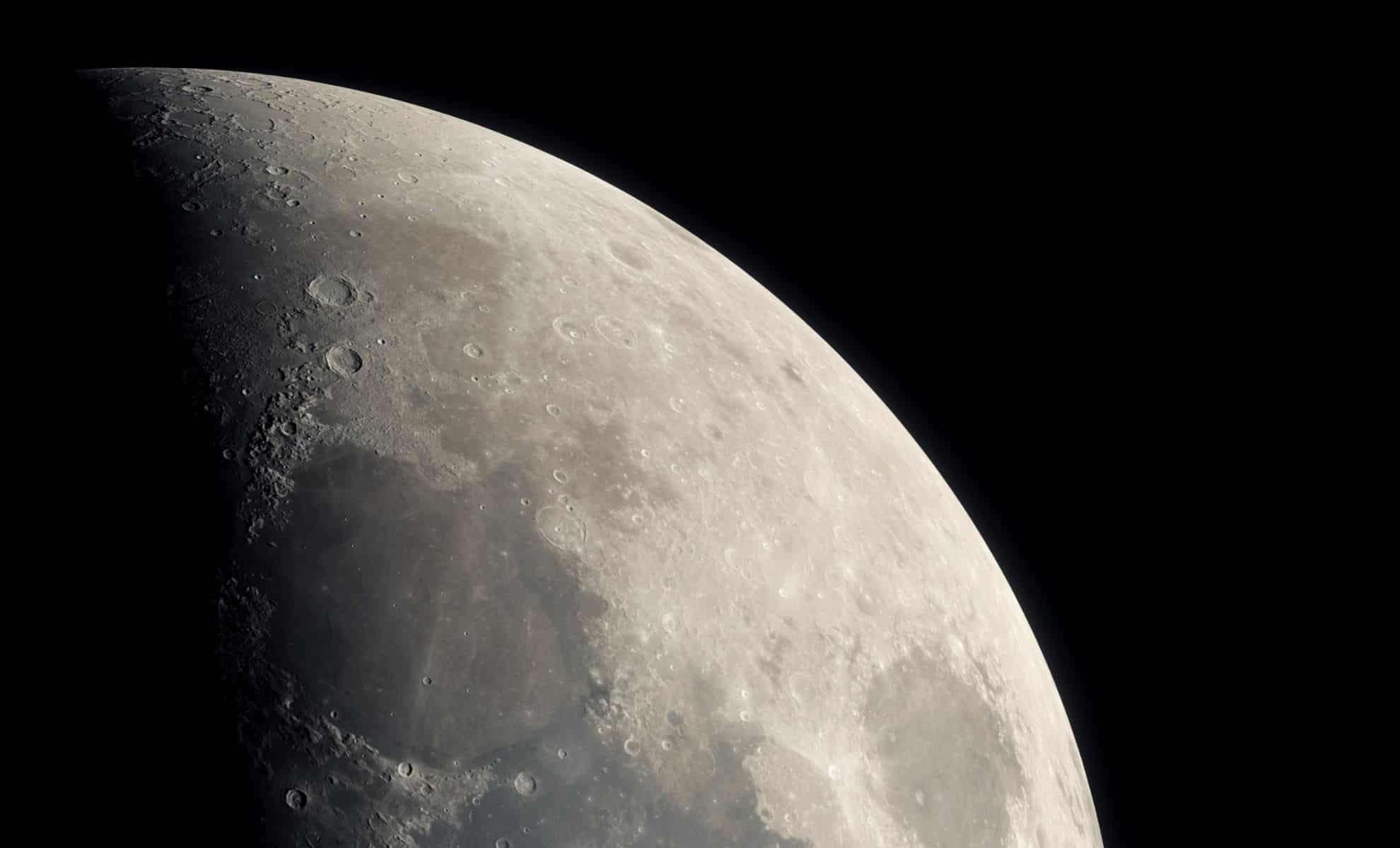
Scientists have made a significant advancement that brings humanity closer to establishing a sustainable presence on the Moon. Their innovation allows for the extraction of water, oxygen, hydrogen, and carbon monoxide straight from lunar soil, potentially transforming the Moon into a crucial local hub for space missions.
Addressing Space’s Most Expensive Resource Challenge
Launching essential supplies like water, oxygen, and fuel from Earth to the Moon is financially prohibitive. A recent study in Joule estimates the cost to send just one gallon of water by rocket to be around $83,000. Considering astronauts require about one to four gallons of water daily, the expense compounds rapidly, making prolonged lunar stays incredibly costly.
To alleviate this expense, researchers have focused on the Moon’s own resources. Lunar surface dust, also known as regolith, contains minor amounts of water. However, extracting it until now demanded complex, energy-heavy procedures that rendered the process inefficient.

Tapping into the Moon’s Indigenous Chemistry
Led by Lu Wang at the Chinese University of Hong Kong, Shenzhen, the team developed a novel technique that combines lunar soil utilization with recycling astronauts’ exhaled carbon dioxide. Their system efficiently extracts water from regolith while simultaneously converting carbon dioxide into carbon monoxide and hydrogen—fundamental components for fuel and breathable oxygen production.
“We never fully imagined the ‘magic’ that the lunar soil possessed,” Wang remarked publicly. This integrated approach not only satisfies several vital needs simultaneously but also has the potential to ease the logistical burden associated with transporting massive supplies from Earth.
Solar Energy Powers Lunar Resource Extraction
The researchers validated their method using authentic lunar soil samples from China’s Chang’E mission alongside lab-prepared analogs. By harnessing the Moon’s plentiful sunlight, they heated the soil in a reactor filled with carbon dioxide, initiating chemical reactions that yield essential substances. Wang shared, “the biggest surprise for us was the tangible success of this integrated approach.”
This technique enables astronauts to transform waste gases into valuable resources, effectively establishing a closed-loop life support system for upcoming missions. It represents a scalable and energy-efficient solution pivotal for sustained lunar habitation and future space exploration.
Challenges Ahead for Practical Deployment
Although laboratory tests show great promise, bringing this technology to the lunar environment remains challenging. Harsh factors like intense cosmic radiation, extreme temperature variations, and the Moon’s low gravity require further innovation. Moreover, enhancing the system’s automation and scalability for mission readiness is essential.
The authors remain hopeful: “This work implies that the Moon could provide enough water and fuel for future bases and deep space ventures,” they concluded in Joule. As research advances, transforming the Moon into a resupply hub transcends fiction. Multiple international projects now aim to utilize lunar resources to propel humanity’s next giant leap.
- Categories:
- News












0 comments
Sign in to Comment