
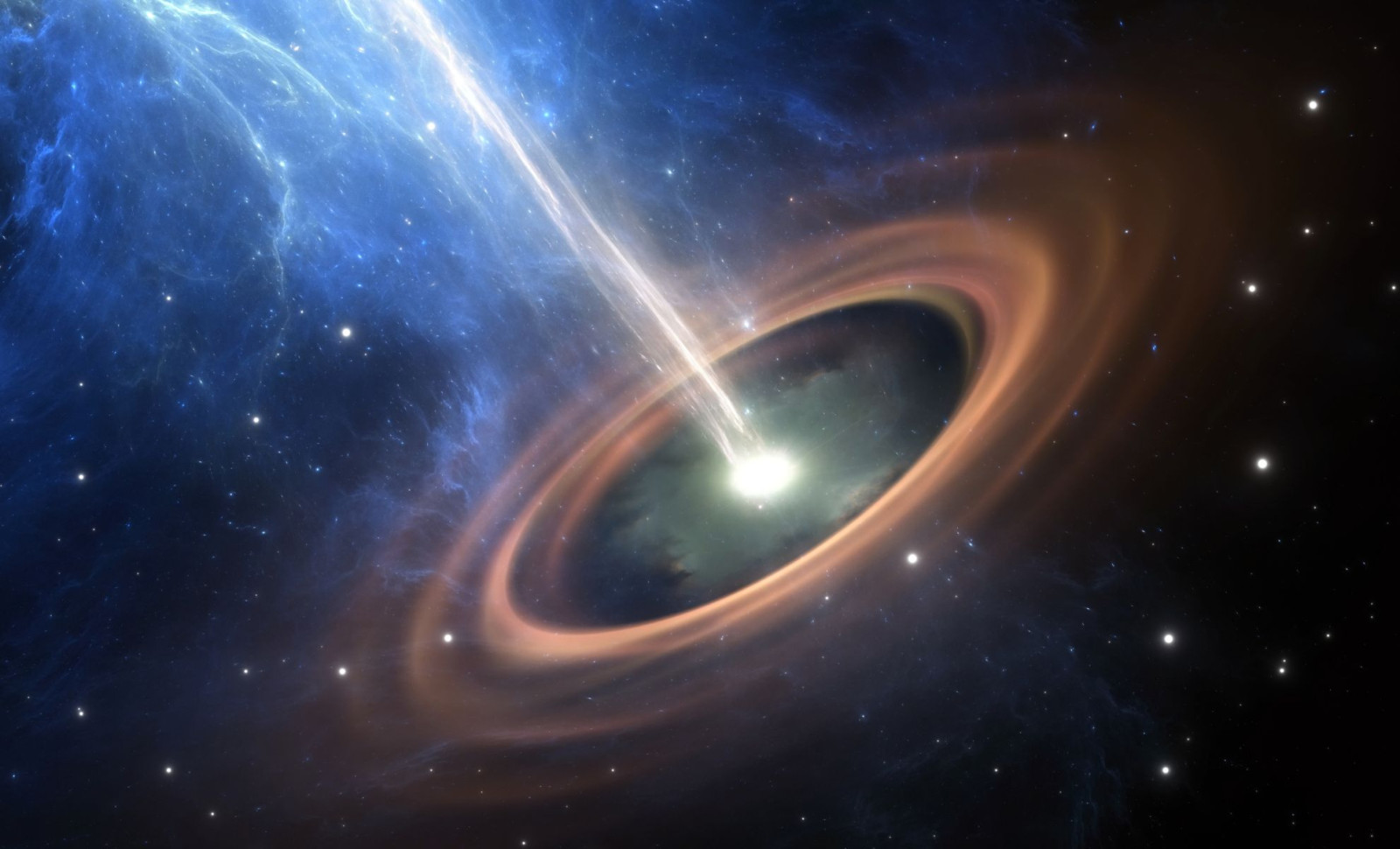
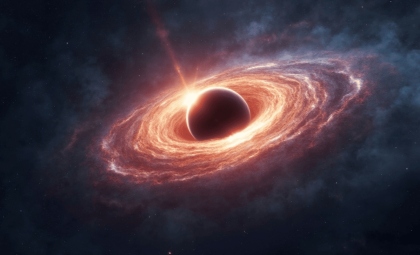
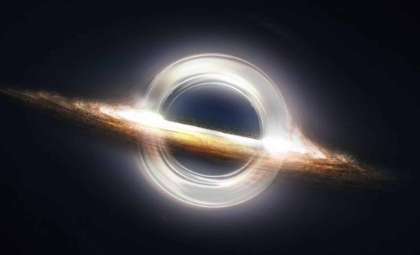
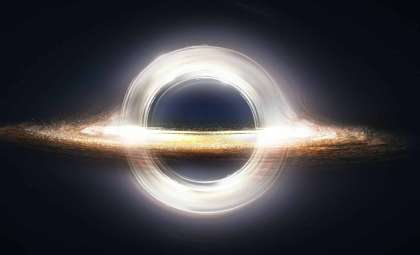
Recent findings suggest that certain primordial black holes might endure far longer than previously assumed. Instead of vanishing completely due to Hawking radiation, these minuscule entities might stabilize into a form resembling the theoretical white hole.
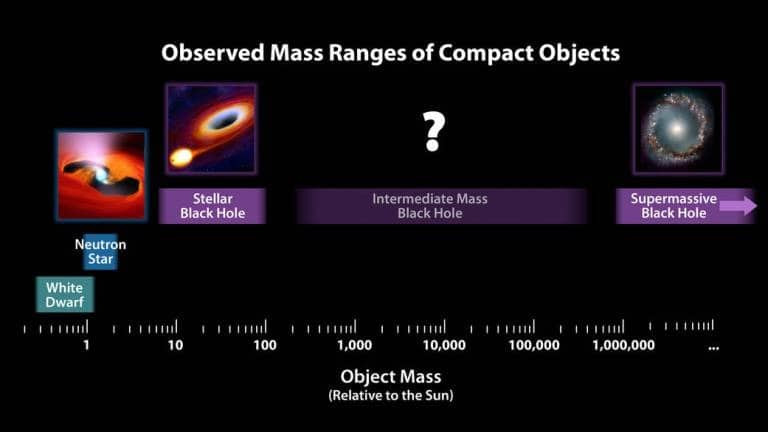
Primordial black holes are believed to have originated shortly after the Big Bang when the cosmos was significantly hotter and denser. Unlike stellar black holes, which form from collapsing stars, these ancient black holes remain hypothetical and unobserved, posing one of cosmology's greatest mysteries.
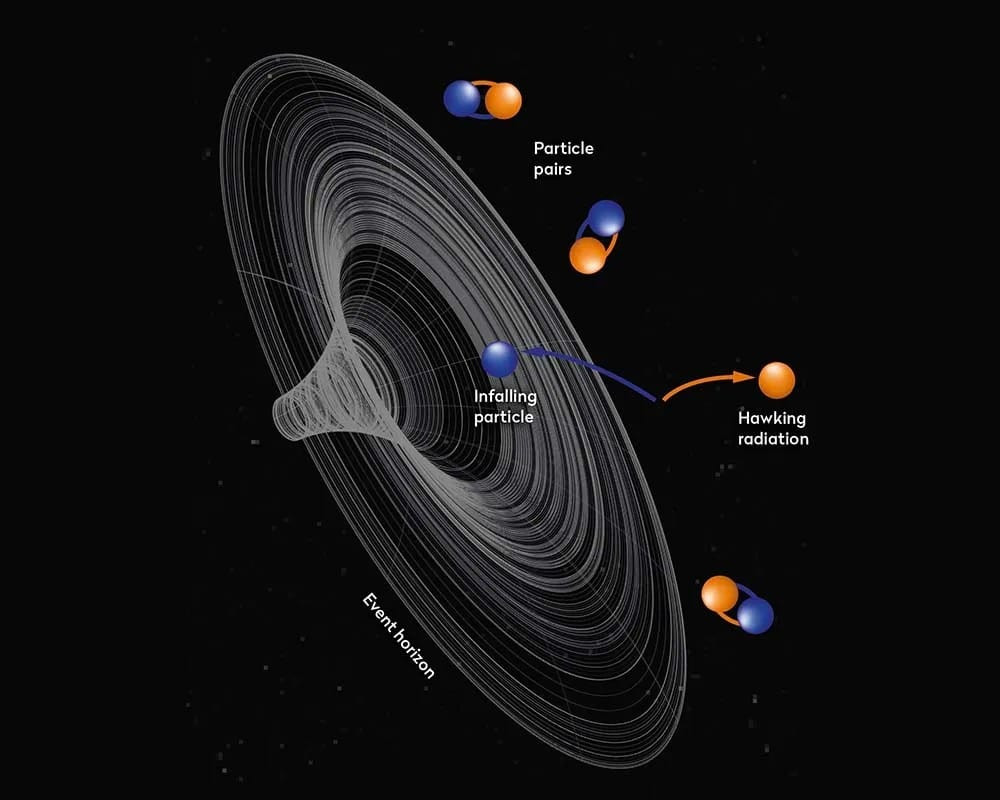
Conventional wisdom held that the tiniest black holes would eventually evaporate through Hawking radiation, a process introduced by Stephen Hawking in the 1970s. This new study revisits the final stages of this evaporation, reaching an alternative conclusion.

Investigating the Planck Mass Threshold
The investigation, led by Daniel Paraizo and his team, examined what occurs when a primordial black hole diminishes to the Planck mass, approximately 20 micrograms. Though this amount may seem negligible, it equates roughly to the mass of a human eyebrow hair or a flea egg. This mass scale marks a point where gravitational and quantum effects are equally significant in physics.
“We found that the lifetime of black holes is much longer than previously thought,” explained Paraizo. “The phenomena that we identify are relevant for black holes possibly formed in the early universe. These objects have not been observed yet, but their search is a topic of intense interest as dark matter candidates.”
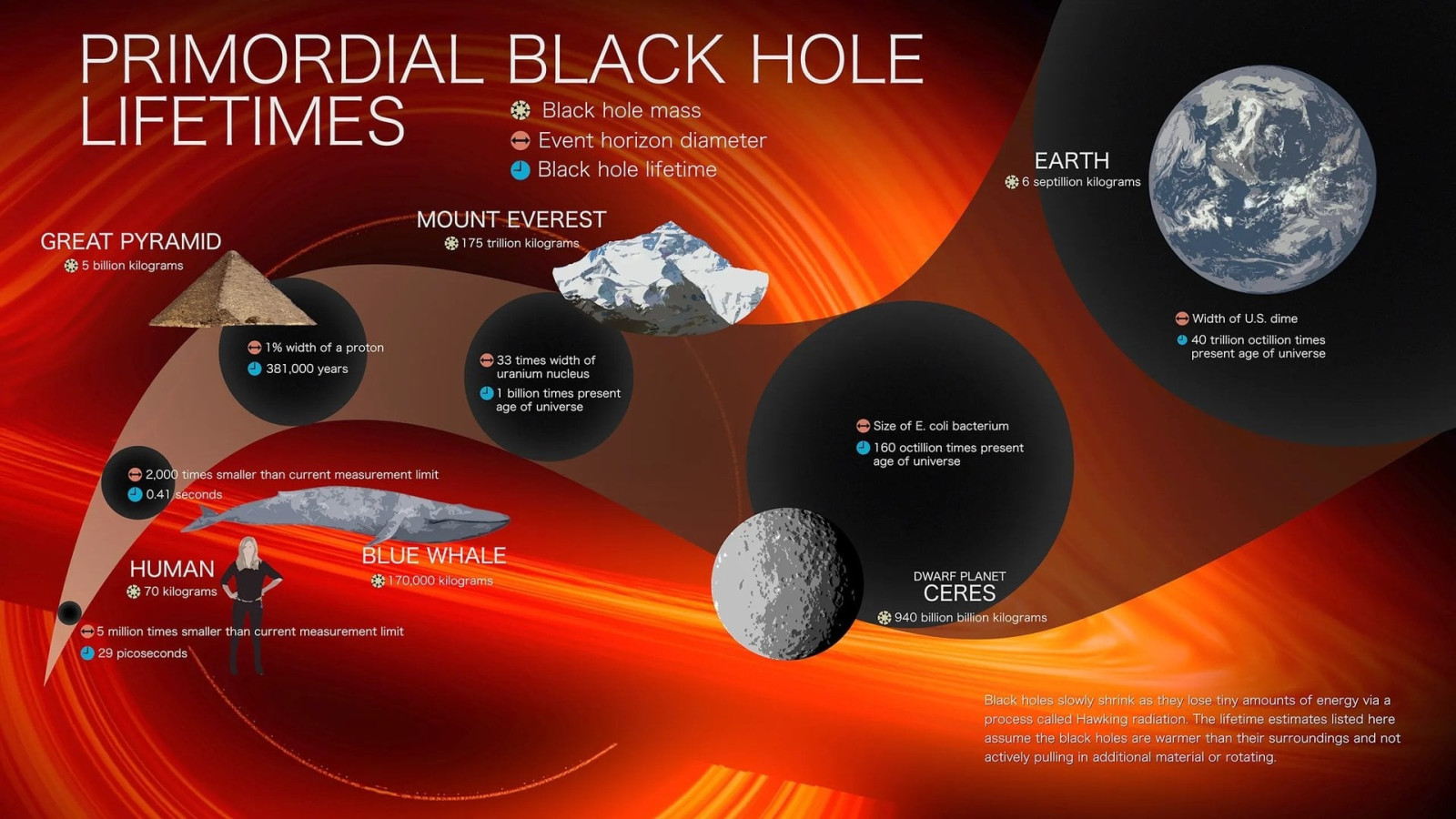
Black holes lose mass over time through Hawking radiation, with smaller black holes evaporating at faster rates. However, the ultimate destiny of these objects remains a profound scientific puzzle.
A Black Hole That Might Resist Complete Evaporation
The team modeled how primordial black holes of varying masses shrink over extended periods. Their analysis, published on the arXiv server, reveals that a primordial black hole initially weighing close to one billion tons—comparable to a medium-sized asteroid—would require about one billion years to reduce to Planck mass scale.
Conversely, much smaller primordial black holes behave distinctly. One possessing an initial mass near one ton would rapidly reach the Planck threshold. Previous theories predicted that the last 20 micrograms would evaporate swiftly, but Paraizo observed:
“It is then that our results predict something new: previous arguments indicated that the remaining 20 micrograms are radiated in at least 1 second; our estimate shows instead that these 20 microgram remnants are practically stable.”
If this hypothesis is accurate, the evaporation could effectively halt when the black hole reaches this minuscule size, leaving behind a persistent relic rather than disappearing entirely.
The Final State After Black Hole Evaporation
The researchers propose an unconventional outcome once the black hole’s mass falls to the Planck scale. Paraizo explains how the event horizon—the boundary from which no light or radiation can escape—slowly diminishes.
“The mechanism that we study for the death of this Planck-sized black hole is the gradual disappearance of the horizon that traps radiation,” he said.
As this decay occurs, the remnant emits what the team calls “purifying radiation.” This process mirrors characteristics expected from a white hole, a theoretical celestial object thought to expel matter and energy, the opposite of a black hole's behavior.
While white holes remain purely hypothetical and their physics is not fully understood, the researchers highlight that from a distance, the resulting remnant exhibits “exactly the same properties” as a white hole.
They caution that critical unknowns remain. To truly comprehend these remnants’ ultimate nature would require a comprehensive theory of quantum gravity uniting quantum mechanics and general relativity.
- Categories:
- Astronomy






0 comments
Sign in to Comment