
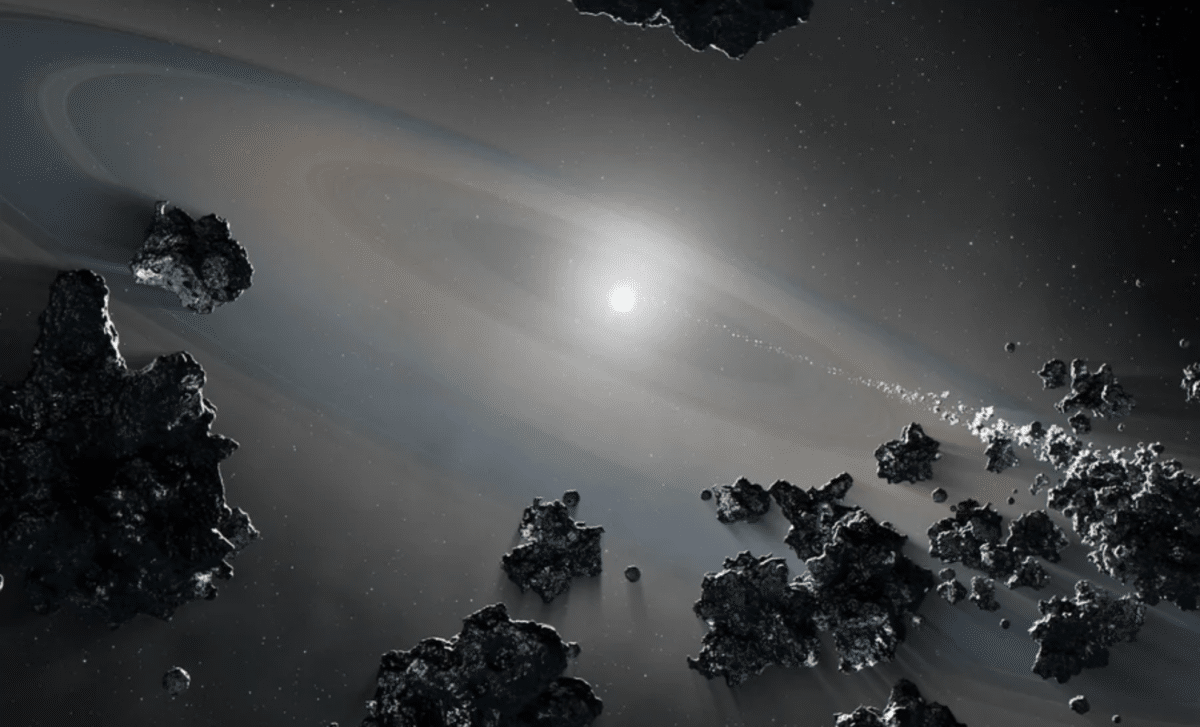
Recent findings shared on arXiv hint that the cosmos might have a considerably shorter existence ahead, with a potential collapse occurring within the next 33.3 billion years. This challenges the commonly held view of limitless cosmic expansion and revives the concept of a Big Crunch, where the universe halts its growth and contracts into a highly dense state.
A Paradigm Shift in Understanding Universe Expansion
For many years, the prevalent cosmological framework has supported an eternally expanding universe powered by a mysterious force called dark energy. Consistent observations confirmed the universe’s accelerated expansion, leading scientists to believe that galaxies would continue separating endlessly, ultimately resulting in a cold, desolate space.
The latest analysis, published on arXiv, questions this perspective by proposing that dark energy might not maintain a constant strength. Instead of acting as a fixed feature of the fabric of space-time, its effect could vary over billions of years. This change has vast implications. Should dark energy diminish or reverse, the expansion could slow down, stop, and eventually begin to contract.

Such a shift points to a universe with a finite lifecycle, eventually collapsing back into a state resembling the Big Bang.
The Role of the Axion Dark Energy Model
Central to this hypothesis is the axion dark energy (aDE) model, which merges the concept of a cosmological constant with an ultra-light particle field called the axion. While axions are theoretical particles often linked to dark matter, this model positions them as influential agents in the universe’s expansion history.
Researchers employed observations from extensive projects like the Dark Energy Survey (DES) and the Dark Energy Spectroscopic Instrument (DESI) to evaluate the validity of this combined approach. These surveys cataloged hundreds of millions of galaxies, creating one of the most comprehensive assessments of cosmic growth so far.
Findings indicate that the aDE framework matches observed phenomena well. Crucially, it suggests a future stage where forces from the axion field and cosmic background energy may begin to draw the universe inward, counteracting the previous outward push.
This development suggests that a force once assumed to ensure perpetual growth might ultimately precipitate the universe’s contraction.
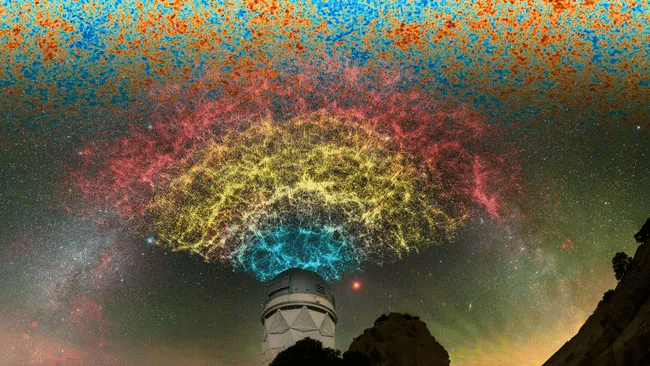
A Universe on a Course Toward a Big Crunch
If accurate, this model implies that the cosmos will cease expanding at a certain point before contracting. Over billions of years, galaxies will start to approach one another again, cosmic structures will compress, and temperatures throughout the universe will increase.
This contraction phase culminates in a Big Crunch, collapsing space-time and all matter into an intensely dense singularity. This event is essentially the reverse of the Big Bang, raising fascinating possibilities about cyclical cosmic processes.
The projected timeframe of 33.3 billion years contrasts sharply with earlier estimates stretching into the trillions, marking a significant adjustment in our understanding of cosmic timelines.
Importance of This Breakthrough Today
This study redefines one of science’s key mysteries: the ultimate destiny of the universe. It also shines a spotlight on the elusive nature of dark energy, which constitutes approximately 70% of the universe’s energy budget.
The findings emphasize how slight variations in dark energy’s behavior could trigger vastly different cosmic outcomes. They stress the necessity for continued observations and upcoming space missions aimed at enhancing our grasp of the universe’s expansion.
With fresh data arriving, scientists will keep testing this model and refining it as needed. What is clear is that the cosmic future is uncertain and potentially far more complex than we have imagined.
- Categories:
- Astronomy





0 comments
Sign in to Comment