
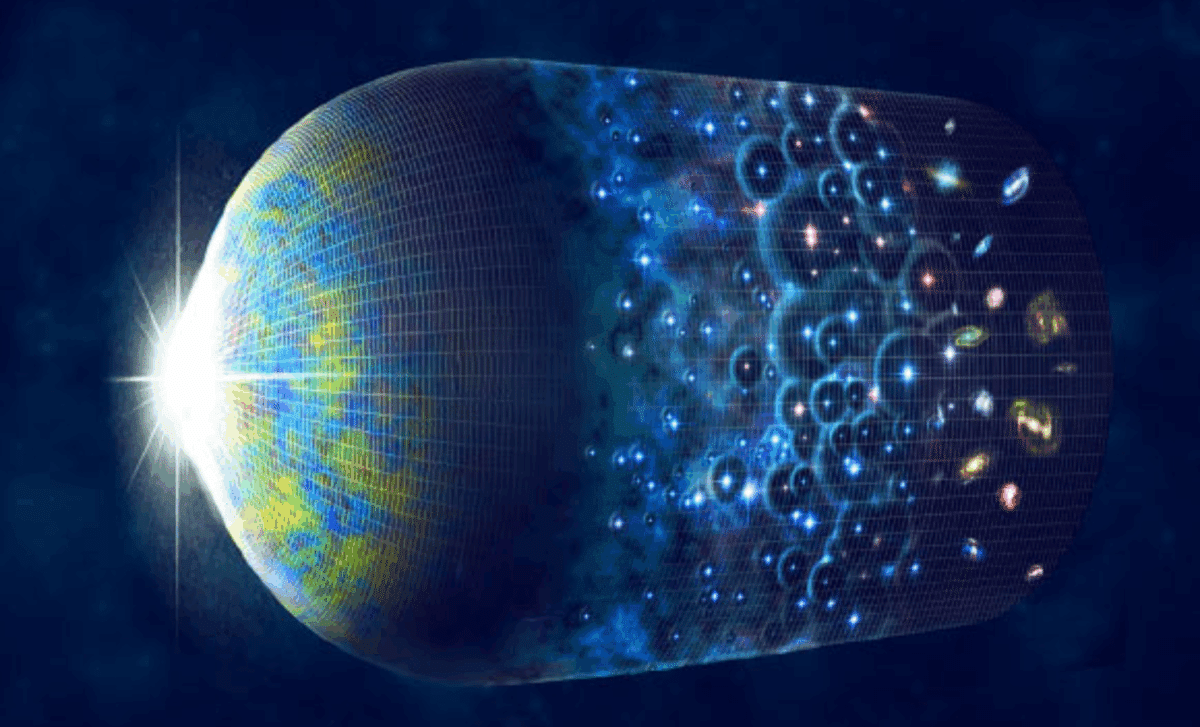
For many years, the mainstream consensus has held that the Universe’s expansion is accelerating, propelled by an enigmatic force known as dark energy. Yet, a recent groundbreaking investigation published in the Monthly Notices of the Royal Astronomical Society by Yonsei University researchers now questions this view. Their findings indicate that instead of speeding up, the Universe’s expansion may have already begun to decelerate.
Reassessing a Fundamental Cosmological Assumption
The idea that dark energy drives a continuously accelerating cosmic expansion has been foundational in cosmology for almost three decades. This concept was largely supported by observations of Type Ia supernovae, which serve as reliable “standard candles” to measure distances across the Universe. These observations, which earned the 2011 Nobel Prize in Physics, bolstered the theory of an accelerating Universe.
Nevertheless, the new research from Yonsei University, under Professor Young-Wook Lee’s leadership, puts forward strong evidence suggesting that the expansion rate may already be slowing down.

“Our study shows that the Universe has already entered a phase of decelerated expansion at the present epoch and that dark energy evolves with time much more rapidly than previously thought,” Professor Lee explained.
This surprising conclusion could revolutionize our comprehension of the Universe’s evolution, both past and future.
Confirming these results would upend the current cosmological framework, which has been guided by the principle of an ever-accelerating cosmic expansion. Professor Lee emphasized,
“If these results are confirmed, it would mark a major paradigm shift in cosmology since the discovery of dark energy 27 years ago.”
Reexamining Type Ia Supernovae and Their Role
Type Ia supernovae have traditionally been considered dependable cosmic distance indicators due to their uniform brightness. This consistency allows for precise measurements of how quickly the Universe is expanding. However, the team from Yonsei University challenges the long-held assumption that these supernovae are unaffected by factors such as the age of their progenitor stars.
The study finds that the luminosity of these stellar explosions is influenced not only by cosmic expansion but also by the age of the stars they originate from.
“Even after luminosity standardization, supernovae from younger stellar populations appear systematically fainter, while those from older populations appear brighter,” the researchers found.
This previously unrecognized age-related bias may have skewed earlier interpretations about the Universe’s accelerating expansion.
After adjusting for this bias, their analysis revealed that supernova data no longer align with predictions based on the standard cosmological model. Instead, the updated data better correspond with a framework informed by Baryon Acoustic Oscillations (BAO) and Cosmic Microwave Background (CMB) studies, suggesting dark energy changes over time and diminishes in strength rather than remaining constant.
Implications for Current Cosmological Theories
The discovery that cosmic expansion may have entered a deceleration phase presents a notable challenge to the established ΛCDM model, which asserts that dark energy persists at a constant level propelling acceleration. The latest evidence indicates that dark energy likely decreases as the Universe ages, and that this transformation is already underway.
Integrating the recalibrated supernova data with BAO and CMB observations strengthens the case that our cosmos is no longer accelerating but slowing down.
“By contrast, our analysis — which applies the age-bias correction — shows that the Universe has already entered a decelerating phase today,” Professor Lee stated.
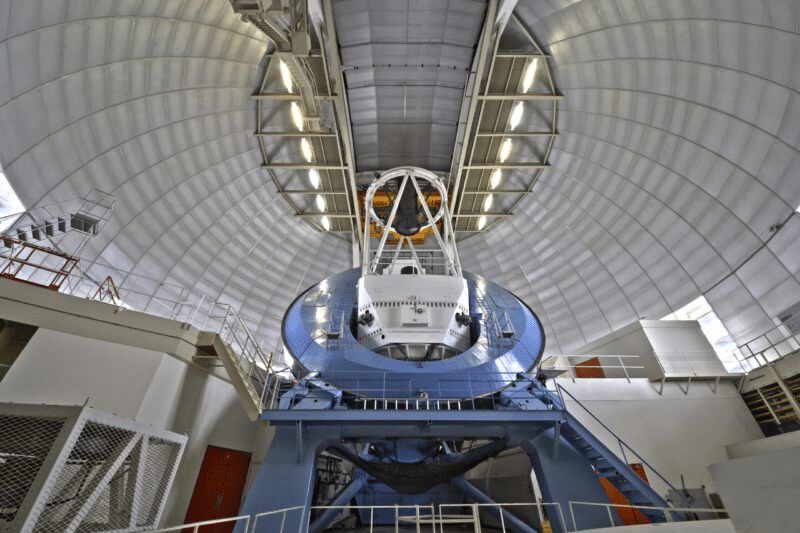
This fresh perspective contrasts with conclusions from the Dark Energy Spectroscopic Instrument (DESI) collaboration, which, relying on uncorrected supernova data combined with BAO inputs, suggested the Universe is still accelerating but may slow in the future.
Looking Ahead: Testing New Models with Upcoming Data
The revelations from the Yonsei University team, though requiring further validation, are already expanding the frontiers of cosmic research. Central to this advancement is their correction for age-related biases in supernova brightness, offering a more intricate view of universal expansion. As noted by Professor Chul Chung, also at Yonsei University,
“Within the next five years, with the Vera C. Rubin Observatory discovering more than 20,000 new supernova host galaxies, precise age measurements will allow for a far more robust and definitive test of supernova cosmology.”
The arrival of detailed data from the Vera C. Rubin Observatory will be pivotal for assessing these new conclusions. Enhanced accuracy in supernova observations promises to refine theoretical models and could ultimately confirm if the Universe is truly slowing down. This forthcoming era of exploration may redefine our understanding of dark energy and the destiny of the cosmos.
- Categories:
- Physics


0 comments
Sign in to Comment