
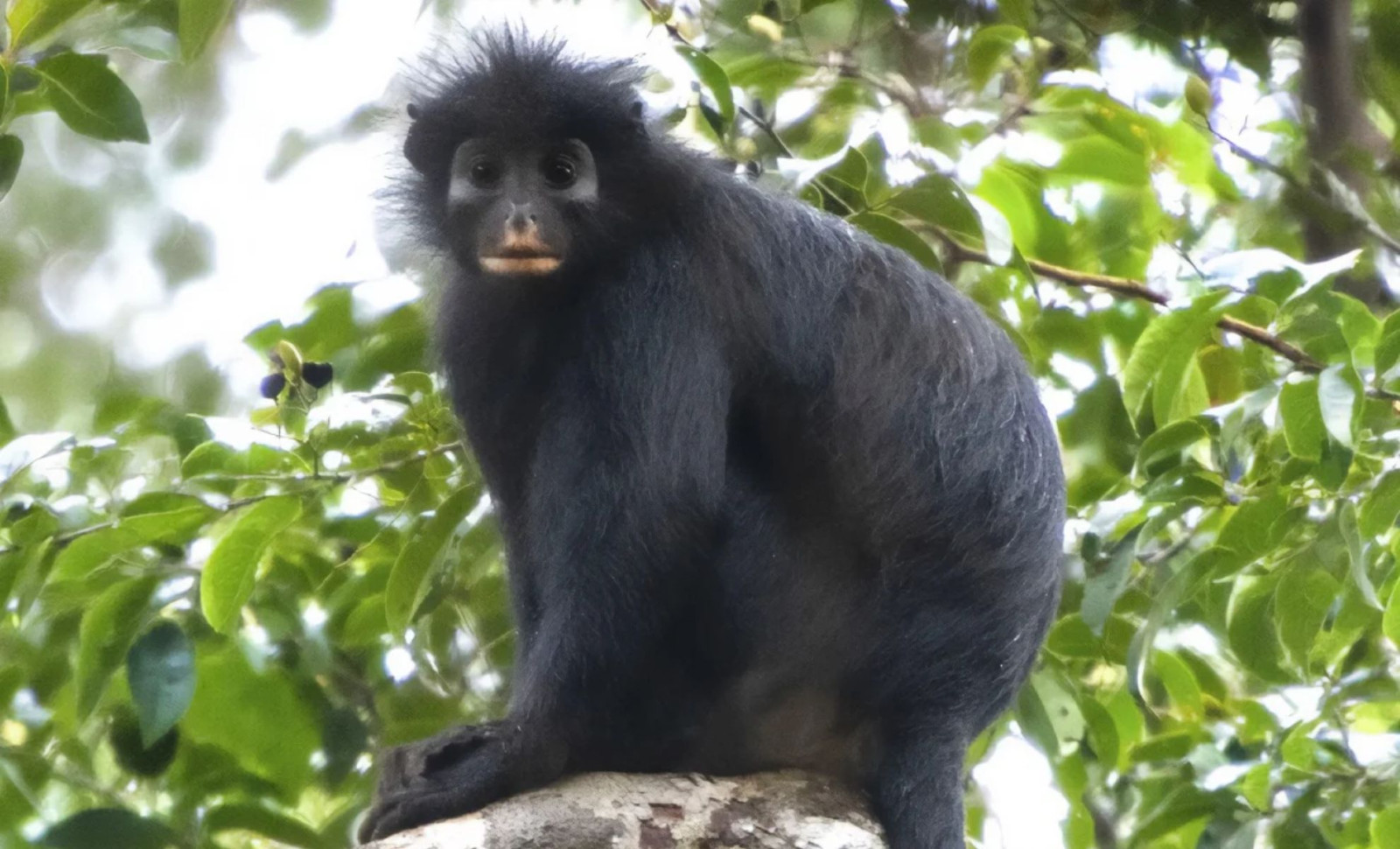
A striking primate sporting vivid orange lips, distinct vocalizations, and a secretive lifestyle in the Congo rainforest has been formally identified as a new species. Dubbed Colobus congoensis, this monkey was discovered in the secluded forests of the Democratic Republic of the Congo, where scientists suspect additional undiscovered species may still exist.
Locally called the likweli, this primate inhabits Lomami National Park, a protected region within the Congo Basin. Scientists first noticed the animal from photographs taken in 2008; however, those images were insufficient for proper identification. It was only after a clearer sighting in 2018 that researchers pursued a more detailed study.
Tracking a Hidden Primate in the Congo Jungle
The investigation began when conservationists captured unusual images of a distinctive monkey moving through Lomami National Park's treetops. In 2018, researcher Junior Amboko and his team engaged local villagers by showing them photos in 52 settlements surrounding the park.

Recognition of the monkey came from just eight villages, according to Live Science. The Balanga hunters called it likweli, whereas some Mituku community members referred to it as kasaba nkoni, meaning “branch shaker”, inspired by the monkey’s leaping between branches.
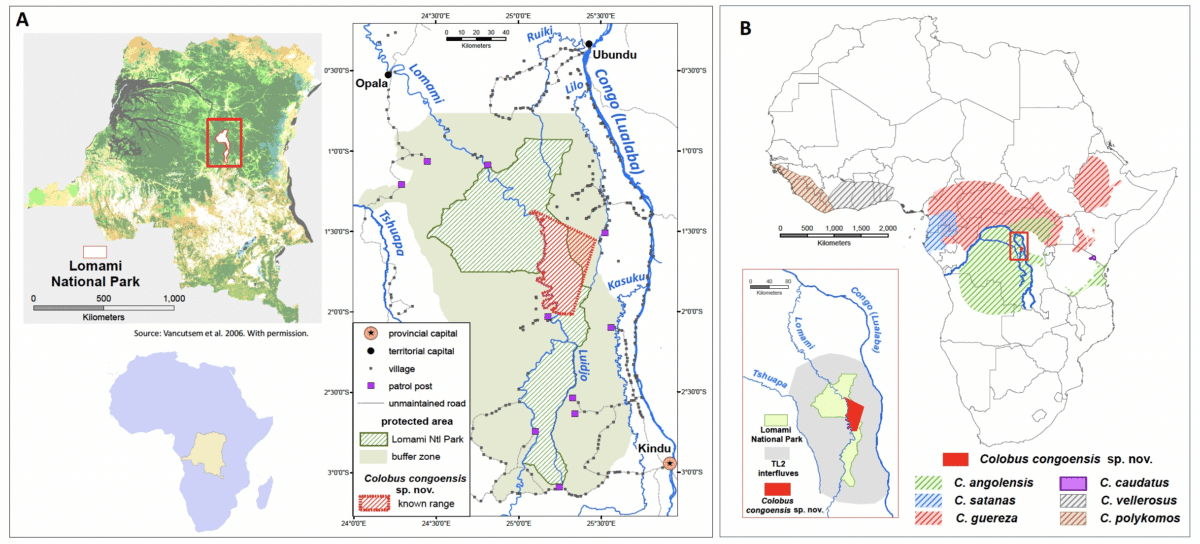
Over several years, researchers intensified their efforts. Between 2018 and 2022, they documented 114 encounters covering approximately 1,700 square kilometers (660 square miles), located between the Lomami and Lualaba rivers.
The results were published in the journal PLOS One, confirming the monkey as a distinct member of the Colobus genus, previously unrecognized.
Notable Features: Orange Lips and Unique Calls
The newly identified species exhibits unmistakable traits. Its body is predominantly cloaked in glossy black fur, with a vivid orange area around the mouth and nose. The cheeks feature gray bare skin, complemented by a white fur patch on the rear.
“We’re going with the face and the rump as the two distinctive traits,” study co-author Kate Detwiler told Live Science. “If you see the face, you see this unique bare skin that’s orange cream. And then if you’re coming from behind, you see this white patch.”
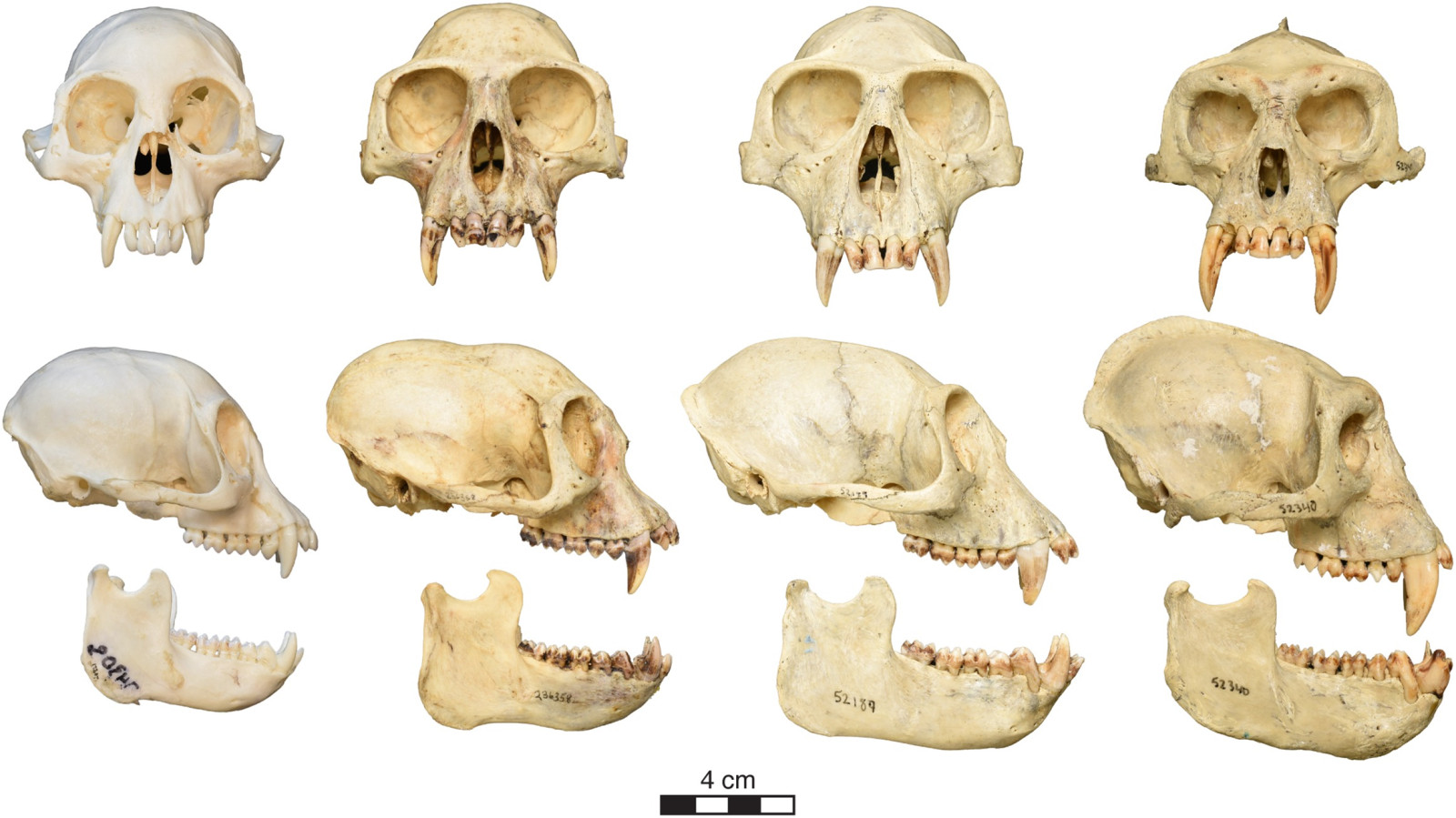
This species also communicates with deep roars and distinctive snorting sounds that differ from other Colobus monkeys, providing additional evidence supporting its unique classification.
Genetic analysis solidified the discovery. DNA collected from monkeys captured by hunters, involved in the illegal bushmeat trade, was compared with museum specimens and existing genetic databases. The data confirmed that Colobus congoensis possesses a unique genetic profile, as detailed in the study.
Insights into Rainforest Primate Evolution
Genetic studies revealed that the closest relatives of Colobus congoensis are the black colobus monkeys (Colobus satanas) located roughly 1,200 kilometers (750 miles) away in Cameroon, Gabon, and Bioko Island.
Scientists were surprised by the distance between their habitats. The two species diverged in evolutionary terms between 3.44 and 5.78 million years ago, representing the greatest known evolutionary split within the Colobus group.
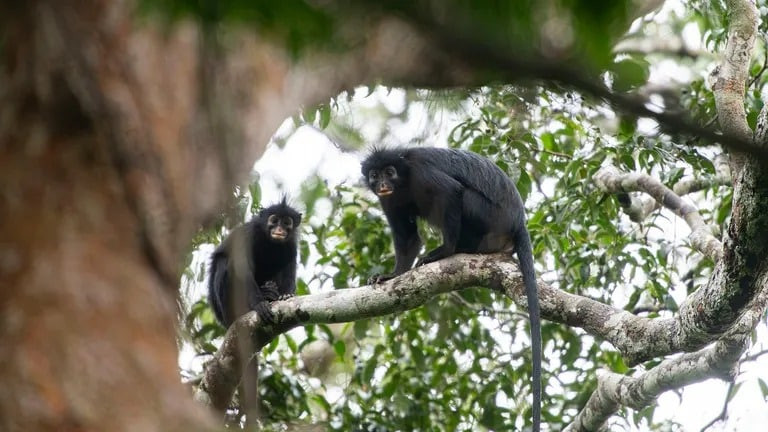
Because this newly discovered monkey inhabits a limited range and is at risk due to habitat destruction, experts suggest classifying C. congoensis as endangered on the IUCN Red List.
- Categories:
- Science









0 comments
Sign in to Comment