

Recent research has sparked renewed discussion within psychiatric and public health fields around whether having a cat in childhood could elevate the likelihood of developing schizophrenia-related conditions later.
Featured in Schizophrenia Bulletin, this meta-analysis compiled data from 17 international studies, uncovering a notable correlation between cat exposure and the diagnosis of schizophrenia-spectrum disorders. Those with a history of cat contact, particularly during formative years, showed nearly twice the risk for disorders involving psychosis and cognitive impairments.
Although the results do not establish cats as a direct cause of schizophrenia, they reinforce longstanding investigations into a biological factor frequently discussed in this context: the parasite Toxoplasma gondii, commonly hosted by cats and linked to neurological alterations.

The Role of a Parasite in Behavioral Changes
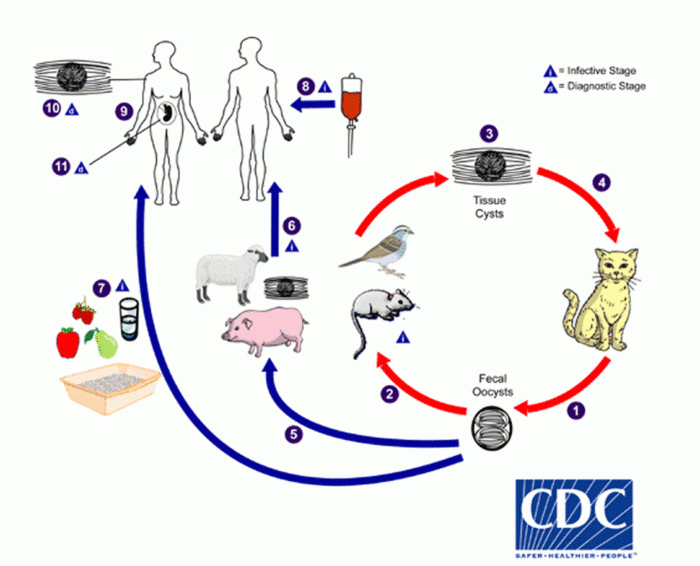
The parasite Toxoplasma gondii stands as the primary infectious suspect explaining the connection. Cats serve as the definitive host, enabling the parasite’s reproduction exclusively within their intestines. Humans acquire the infection through contact with contaminated cat litter, consumption of undercooked meats, or exposure to polluted water or soil.

After infecting a host, T. gondii can invade the central nervous system and remain latent for an individual’s lifetime. Animal studies imply the parasite influences host behavior—for example, infected rodents often lose their instinctive fear of cats, thereby facilitating the parasite’s lifecycle.
Human studies present less definitive evidence but have observed disruptions in neurotransmitters, especially dopamine, in those harboring latent infections. Associations have also been drawn between T. gondii and heightened susceptibility to psychiatric illnesses including schizophrenia, bipolar disorder, and increased suicide risk.
It is estimated that over 40 million people in the U.S. carry the parasite, according to the CDC. Most infected individuals show no outward symptoms, though concerns linger about long-term neurological consequences for vulnerable groups.
Authors of the review found that cat owners had nearly double the odds of being diagnosed with schizophrenia, even after accounting for factors like demographics and environment. Nonetheless, many studies were case-control, limiting conclusions about causality.
Critical Windows of Exposure
Not every study analyzed found a consistent or robust connection between owning cats and later mental health issues. Still, several pointed to important nuances regarding the timing of exposure.
One highlighted investigation showed no general link between cat ownership before age 13 and schizophrenia. However, focusing on the narrower age range of 9 to 12 years old revealed a significant relationship, hinting that certain developmental phases might increase vulnerability.

Another U.S.-based study of college students revealed no association between cat ownership and psychosis-like traits, but those who reported being bitten by cats displayed elevated schizotypy scores. This points to the potential contribution of other microbes, such as Pasteurella multocida found in feline saliva.
Research published in PLOS ONE reinforced variability in findings across regions and methodologies. Similarly, a 2023 case-control study in Saudi Arabia found a positive correlation between childhood cat exposure and schizophrenia, though it stressed the importance of further extensive, longitudinal studies.
Such mixed outcomes underscore the necessity for large-scale, prospectively designed research to monitor individuals over time rather than depend on retrospective data or narrow definitions of exposure.
Unresolved Questions Amid Growing Interest
The existing evidence does not prove that cats or their parasites are the root cause of schizophrenia. However, the recurring patterns in specific populations and developmental stages suggest further exploration is justified.
Review authors emphasize that higher-quality studies with better confounder controls yielded more consistent patterns. They advocate considering cat exposure as a potential factor influencing risks of neuropsychiatric disorders.
A major UK study published in Psychological Medicine found no clear connection between owning cats and schizophrenia, indicating other interacting factors may mask or influence possible associations.
Since schizophrenia affects roughly 24 million individuals globally, even minor risk increases from common environmental factors could lead to new prevention strategies, especially for those with genetic predispositions.
Implications for Cat Owners
These findings are not a call to avoid cats or alarm pet owners. Cats offer companionship and substantial emotional and health benefits. Instead, the review suggests heightened awareness around certain exposures during childhood may be worthwhile.
Preventing toxoplasmosis is feasible through simple steps like wearing gloves while handling litter, ensuring meat is fully cooked, and washing produce thoroughly. Those who are pregnant or immune-compromised should exercise extra caution, as T. gondii infection poses greater risks in these groups.
- Categories:
- Science











0 comments
Sign in to Comment