
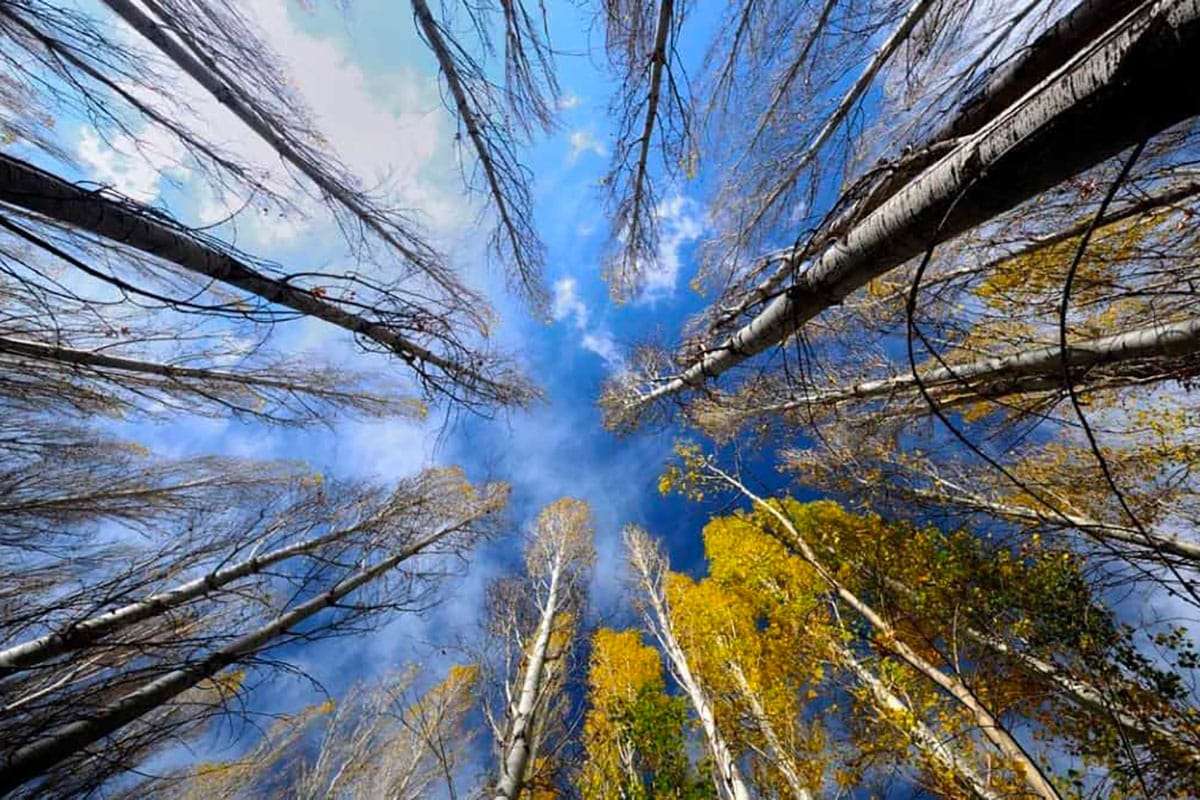
General Sherman, a colossal giant sequoia (Sequoiadendron giganteum), stands as one of nature’s most impressive giants. Towering at a staggering 275 feet (83.8 meters), this tree is a prominent feature of Sequoia National Park’s landscape. Its massive base spans 36 feet (11 meters) in diameter, making it the largest living single-stem tree by volume anywhere on the planet.
The enormity of General Sherman is truly awe-inspiring. To appreciate its scale, consider these astonishing details:
- The tree’s trunk weighs approximately 1,385 tons
- Its biggest branch measures nearly 7 feet (2.1 meters) across
- The lowest major branch starts 130 feet (40 meters) above the ground
- The bark’s thickness can reach up to 3 feet (0.9 meters)
Such dimensions place General Sherman among the most remarkable natural wonders, drawing people worldwide eager to witness its grand presence.

An ancient marvel: Estimating General Sherman's age
Accurately aging giant sequoias is complicated, but experts estimate General Sherman’s age to be somewhere between 2,300 and 2,700 years. This immense age ranks it among the planet’s oldest living entities. Imagine—this tree began life as a tiny seedling during the dawn of civilizations like ancient Rome and Greece.
Some giant sequoias are known to exceed 3,000 years in age, bearing silent witness to seismic shifts in Earth’s history and environmental conditions. As living archives, these trees offer invaluable insight into natural heritage.
The distinct habitat of Sequoia National Park
General Sherman is part of the Giant Forest within Sequoia National Park, which harbors five of the ten largest trees worldwide by volume. This primeval forest fosters a unique environment that sustains a broad variety of wildlife and plant species.
These giant sequoias are vital in preserving the park's ecological balance. Their extensive root networks help stabilize the soil, and their lofty branches create habitats for many creatures. Over centuries, fallen needles and limbs enrich the soil, promoting healthy growth of other flora and fungal communities.
Visitors can traverse this extraordinary ecosystem by trails like the Congress Trail, a paved 2-mile loop that showcases General Sherman and other impressive sequoias, offering an immersive experience amid these timeless giants.
Safeguarding an irreplaceable heritage
Despite their grandeur, General Sherman and its fellow sequoias confront ongoing threats such as climate shifts, wildfires, and human interference. Protection efforts are essential to preserve these natural statues for future generations.
The National Park Service, alongside conservation groups, actively works to shield these trees. Their strategies include:
- Conducting prescribed burns to manage wildfire dangers
- Tracking the trees’ health and mitigating risks
- Raising public awareness about the importance of preserving these giants
- Undertaking research to assess climate change impacts on this ecosystem
By exploring Sequoia National Park and supporting preservation programs, visitors contribute to maintaining the timeless wonder of General Sherman and its ancient companions. These majestic trees embody nature’s endurance and magnificence, standing as enduring symbols of Earth’s rich evolutionary saga.
- Categories:
- Nature








0 comments
Sign in to Comment