
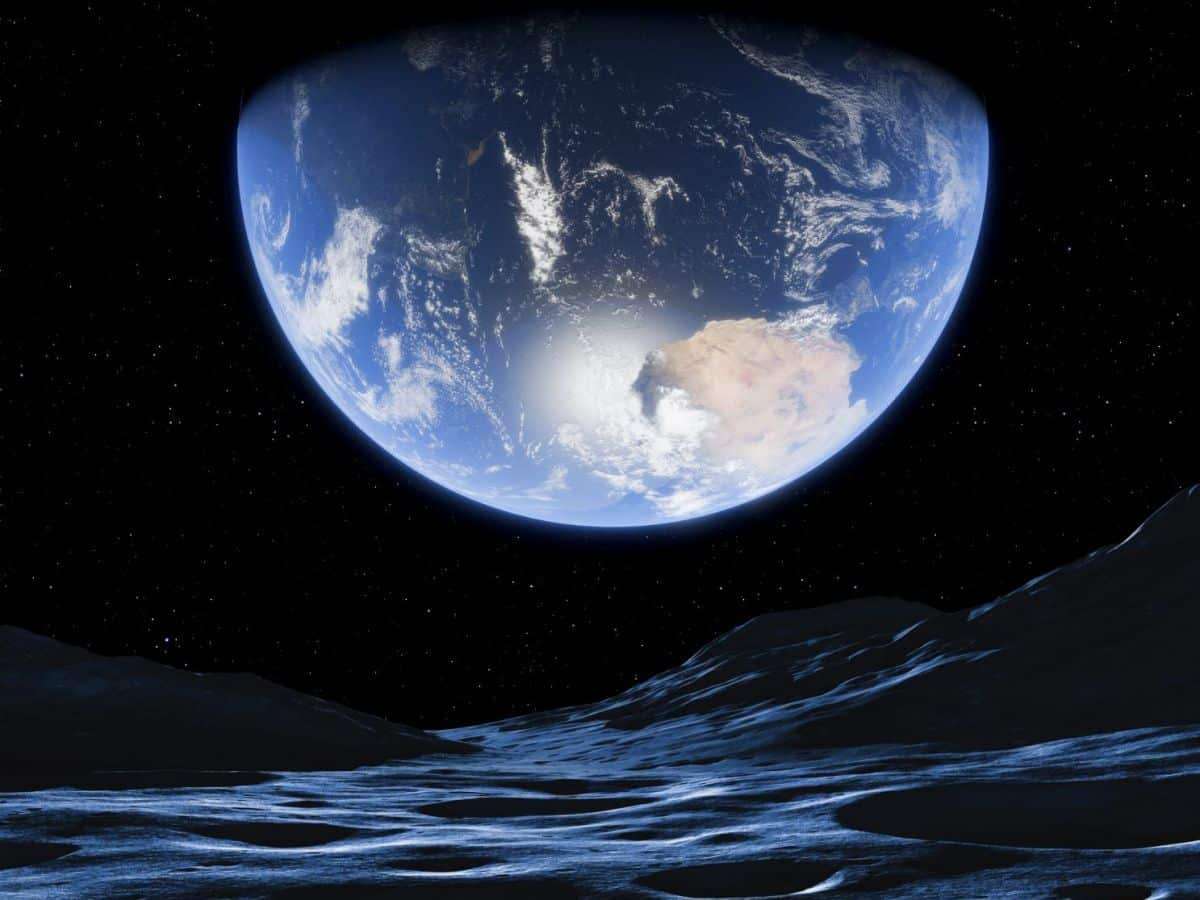
The concept of Earth continuously "falling" might seem confusing initially, yet it offers a fascinating perspective that challenges traditional views on gravity and planetary motion. This isn't merely theoretical; it reshapes how we understand Earth's place in the cosmos and our daily experience on this planet.
The Perpetual Free-Fall of Earth
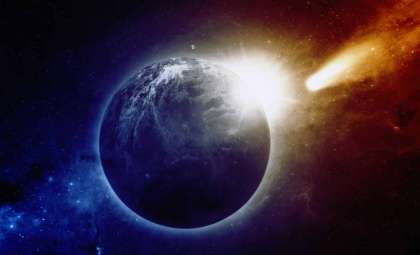
Since its formation around 4.5 billion years ago, Earth has been engaged in a state of constant free fall. This movement corresponds to Earth's orbit around the Sun, which can be thought of as a never-ending descent. We remain unaware of this ceaseless motion because Earth’s orbit is stable and well-regulated.
This free-fall concept is essential; it resembles the sensation astronauts experience when weightless inside orbiting space stations. On a grander scale, Earth perpetually "falls" around the Sun without colliding, sustained by gravitational attraction.

The Role of Gravity in Earth's Journey
Gravity is central to this cosmic interplay. It pulls objects toward a mass center, such as the Sun pulling Earth toward itself. Were Earth motionless relative to the Sun, gravity would draw it directly inward. However, Earth’s significant sideways velocity—about 67,108 mph—prevents a collision by enabling it to continuously fall around the Sun without crashing.
This balance between gravitational pull and orbital speed prevents planets from either plunging into their stars or drifting away into space.
From Newtonian Forces to Einstein’s Curved Space-Time
Our grasp of gravity has evolved considerably. In the 17th century, Isaac Newton introduced the foundational explanation for gravitational attraction. Later, in the 20th century, Albert Einstein revolutionized this understanding with his general theory of relativity, proposing that gravity is not a force but the warping of space-time around massive bodies like the Sun.
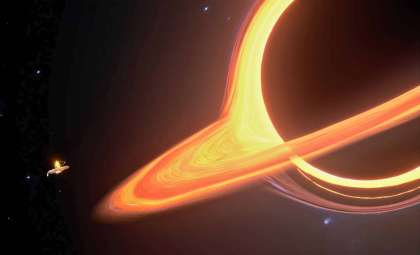
According to Einstein’s model, Earth follows a curved trajectory through this distorted fabric of space-time, akin to a ball rolling within a funnel. This framework deepens our understanding of why celestial objects maintain their orbits.
Falling Motion That Goes Unnoticed
Despite Earth’s continual fall toward the Sun, we—and all life on the planet—do not detect this motion firsthand. Much like astronauts floating inside orbiting space labs, we are participants in this cosmic voyage without feeling its force.
Because no external forces aside from gravity act upon us, everything from the atmosphere and oceans to the continents moves cohesively in this orbital journey.
Endless Free Fall Across the Universe
This phenomenon isn’t unique to Earth. For instance, the Moon is also perpetually falling toward Earth at approximately 2,287 mph, which maintains its orbit instead of causing a collision.
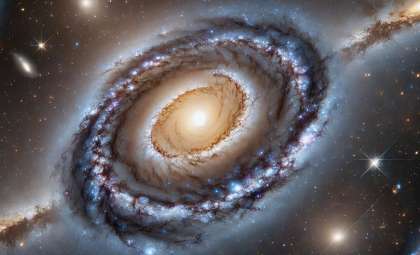
Zooming even further out, entire galaxies and galaxy clusters undergo continuous free fall within gravitational wells, influenced by both observable matter and elusive dark matter structures throughout the universe.
Seamless Motion Through Space
Traveling through space differs greatly from moving on Earth due to the near absence of frictional forces. Unlike Earth, where air resistance and surface friction gradually decelerate objects, the vacuum of space offers almost no resistance.
Therefore, Earth’s trajectory remains mostly unchanged except for gravitational influences from other bodies or subtle effects like tidal forces from the Moon.
Understanding Earth's infinite free fall enhances our knowledge of celestial mechanics and highlights humanity's role as travelers on a continuous cosmic expedition through space-time.
- Categories:
- Space





0 comments
Sign in to Comment