
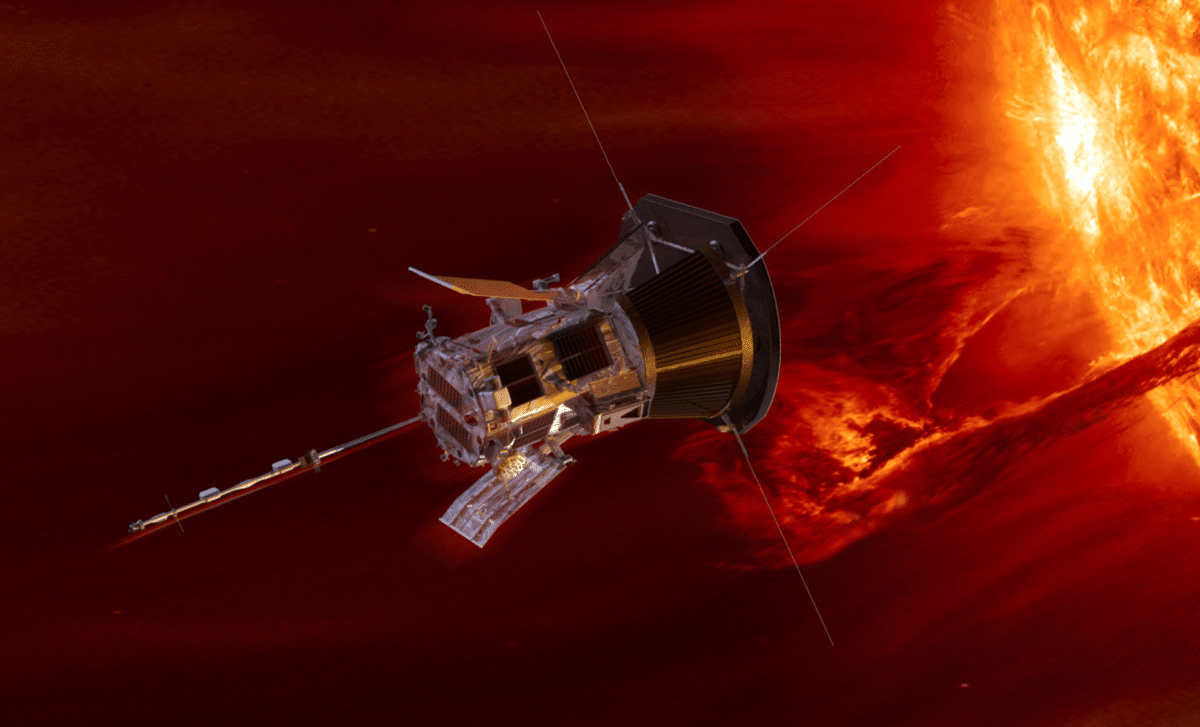
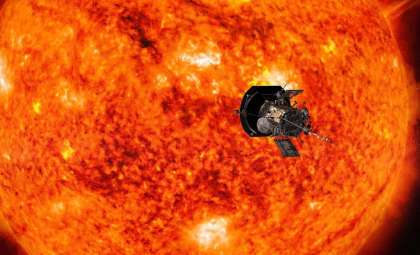
NASA’s Parker Solar Probe has accomplished its 27th close solar passage, approaching as near as 3.8 million miles from the Sun's surface. This impressive feat, reached on March 11, 2026, marks a pivotal advancement in decoding the Sun’s intricate mechanisms and the forces behind space weather phenomena that influence satellites and power systems on Earth. With each perihelion, the probe breaks its own records, propelling its groundbreaking mission to unveil the mysteries of our star.
Insights Gained from the Parker Solar Probe
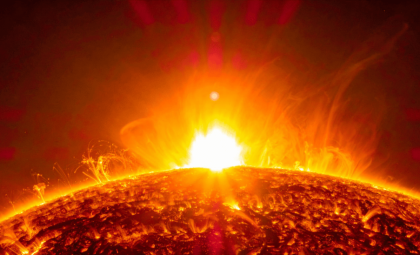
Since its launch in August 2018, NASA’s Parker Solar Probe has steadily ventured closer to the Sun, capturing data previously thought unreachable. This recent solar encounter not only sets a new proximity milestone but also expands our scientific understanding. Traveling through the Sun’s outer atmosphere—the corona—the spacecraft collects crucial information on solar winds, activity bursts, and coronal mass ejections (CMEs), all of which directly influence Earth’s space weather.
The mission’s significance is underscored by its contributions to refining space weather forecasts. By analyzing the origins of high-energy particles linked to solar flares and storms, scientists can better anticipate when these solar eruptions might impact Earth. This knowledge is vital, given the serious hazards these phenomena pose to astronauts, satellite operations, aviation, and terrestrial power infrastructure.

Beyond investigating solar wind and space weather, the Parker Solar Probe is documenting the Sun’s varying activity phases—from calm intervals to peak solar cycles. Capturing data across these stages enables researchers to monitor dynamic solar changes over time, fostering the development of enhanced predictive models for future solar events.
NASA’s Enduring Dedication to Solar Science and Exploration
As part of NASA’s Living With a Star (LWS) initiative, managed by the Goddard Space Flight Center in Greenbelt, Maryland, the Parker Solar Probe exemplifies efforts to deepen our understanding of the Sun-Earth relationship and its effects on space weather, according to NASA Science. The mission is operated by Johns Hopkins Applied Physics Laboratory (APL), the team responsible for the probe’s design and construction. NASA’s unwavering focus on solar exploration is reflected in the probe’s continual advancement in acquiring high-fidelity, real-time solar data.
This flyby is part of a timeline of progressively challenging encounters aimed at pushing the boundaries of space technology and enriching our comprehension of solar processes. Traveling at an astounding 430,000 miles per hour (687,000 kilometers per hour), the probe ranks among the fastest artificial objects ever launched. This exceptional velocity and close solar proximity enable it to collect unmatched observations on solar wind behaviors, magnetic fields, and energetic particles driving space weather.
The Broader Impact of Solar Research on Upcoming Missions
Discoveries made by the Parker Solar Probe are expected to be critical for future space endeavors. As NASA plans missions to the Moon, Mars, and beyond, understanding and mitigating space weather risks is paramount. Solar phenomena represent significant dangers to astronauts, spacecraft, and long-distance exploration, making Parker’s data indispensable for mission safety strategies.
Moreover, insights from the probe may revolutionize the protection of Earth's communication networks and power grids. Solar flares and CMEs have the potential to disrupt satellite links, navigation systems, and electrical infrastructure. Enhancing forecast accuracy through Parker’s findings supports the development of robust defenses against such disruptions.
With continued exploration expanding humanity’s reach into space, the Parker Solar Probe’s contributions will remain essential for securing spaceflight operations and advancing our knowledge of the cosmos.
- Categories:
- Nasa





0 comments
Sign in to Comment