
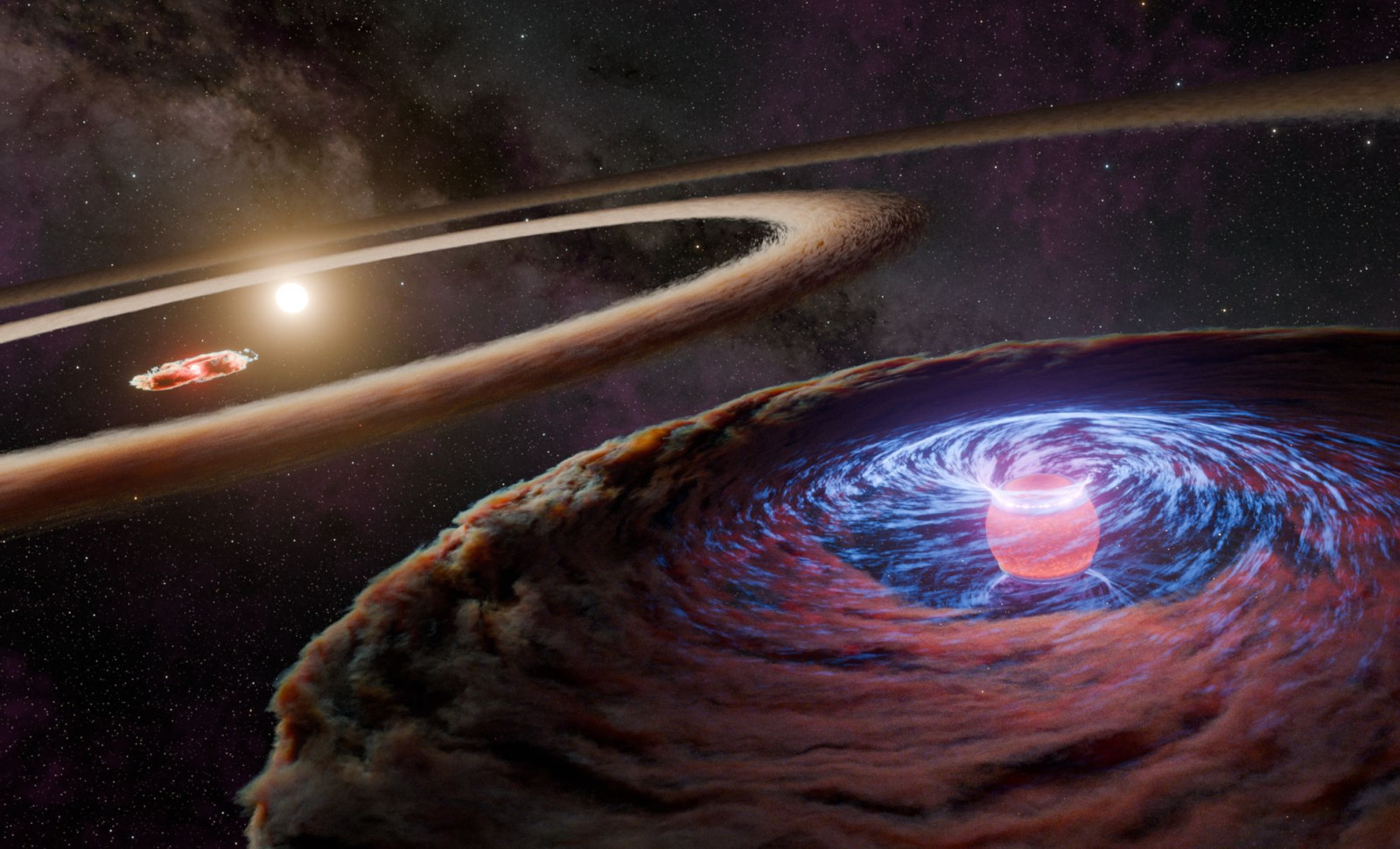
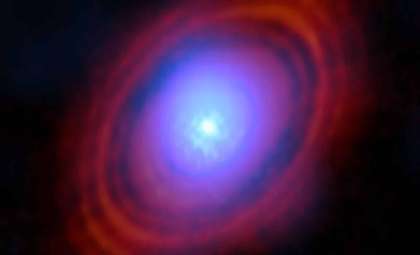
Scientists have secured a rare opportunity to observe two massive planets emerging around the youthful star WISPIT 2. This unique glimpse reveals planetary creation stages that are normally concealed from direct view.
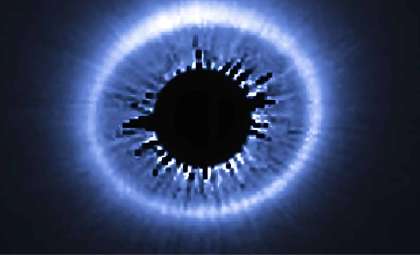
The research, published in The Astrophysical Journal Letters, utilized data from the European Southern Observatory and additional cutting-edge instruments. Employing several advanced imaging methods, the team confirmed the existence of two large planets embedded within an extensive disc of gas and dust. The disc's intricate structure also points to an active and dynamic planetary system.
System Resembles Early Solar System Formation
WISPIT 2 is now among a very few systems, alongside PDS 70, where two forming planets are observed orbiting the same star. The large, well-defined disc surrounding the star provides researchers with clearer insight into the complex interactions occurring during planet formation.

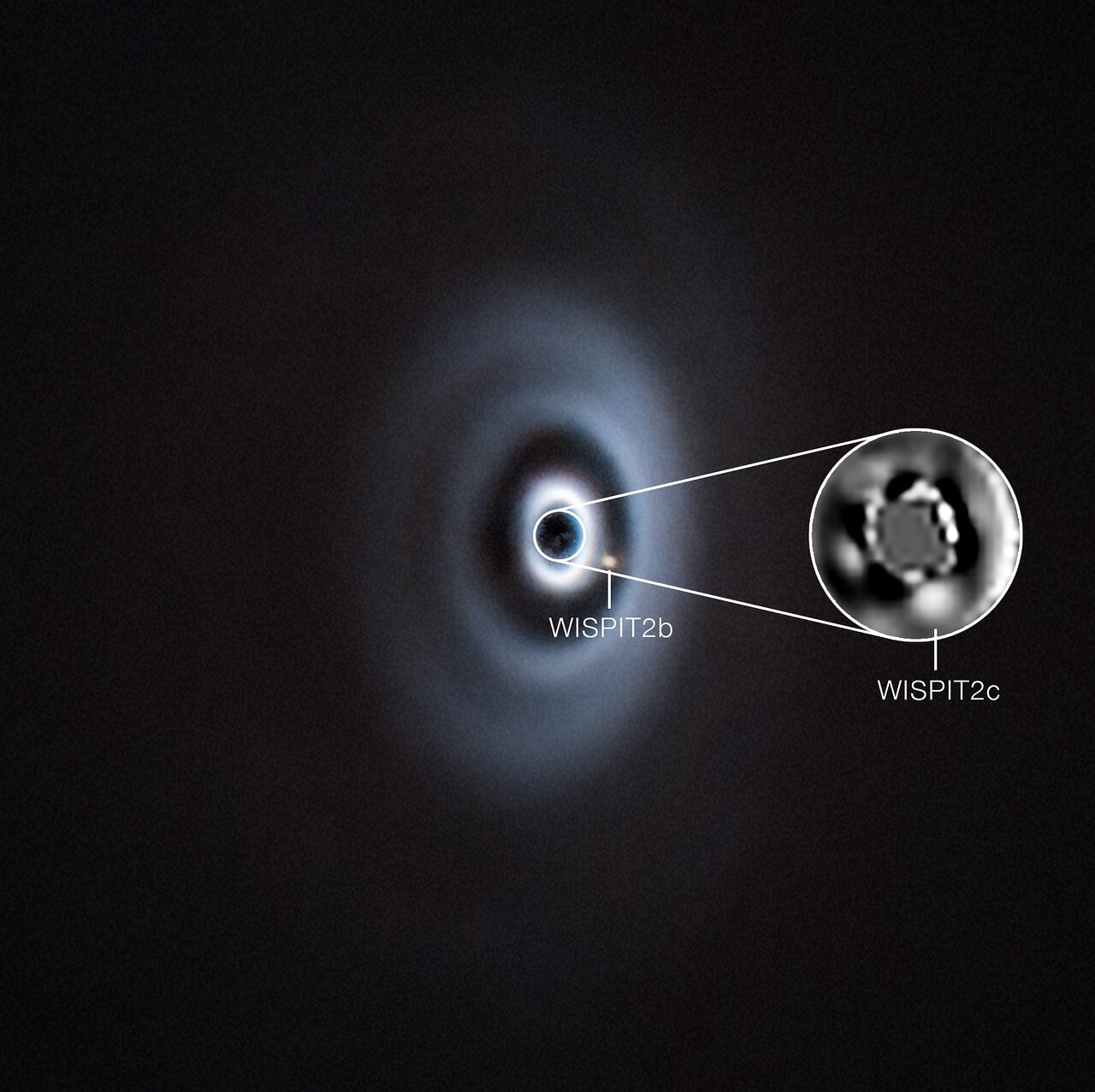
The disc exhibits visible bands and gaps, commonly recognized as telltale signs of planetary genesis. As Christian Ginski, co-author of the study, highlighted, these patterns suggest additional planets might still be forming, though not yet directly observed. He added:
“WISPIT 2 gives us a critical laboratory not just to observe the formation of a single planet but an entire planetary system.”
Discovery of Two Giant Planets at Vastly Different Distances
The study details that the first planet, WISPIT 2b, previously detected, has a mass close to five times that of Jupiter and orbits roughly 60 astronomical units from the star—far beyond Earth’s distance from the Sun.
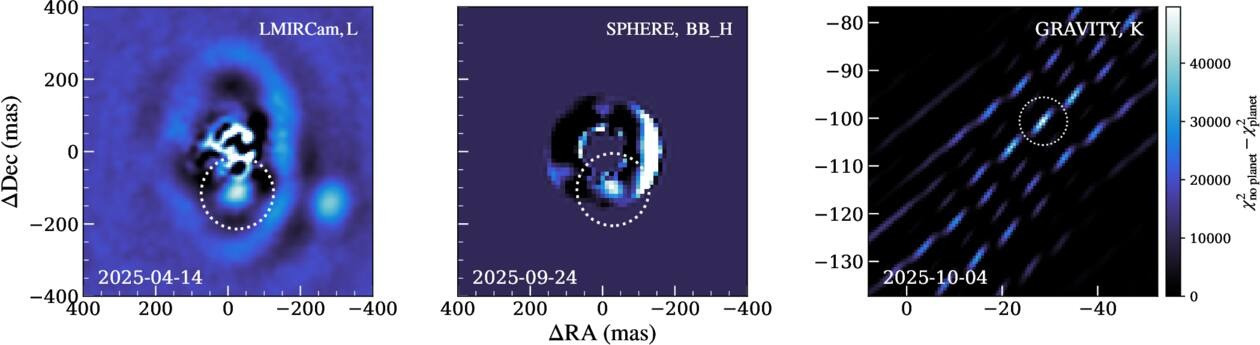
The newly confirmed second planet, WISPIT 2c, lies closer in at about a quarter of that distance and is about twice as massive as Jupiter. Guillaume Bourdarot from the Max Planck Institute for Extraterrestrial Physics emphasized the importance of the enhanced GRAVITY+ instrument in confidently identifying this planet.
The discovery relied on combining details from SPHERE mounted on the ESO Very Large Telescope with interferometric data, showcasing the advancing capabilities of today’s astronomical technology.
Unusual Gaps in Disc Hint at Additional Forming Planets
Both giant planets occupy distinct gaps within the protoplanetary disc—clear evidence that forming planets sculpt their natal material. The disc’s pronounced ring shapes further reveal how these planets influence their surroundings.
The team also noted a smaller, more subtle gap at a greater distance from the star. Chloe Lawlor of the University of Galway proposed that this gap might indicate the presence of a third planet.
“We suspect there may be a third planet carving out this gap,” she said, “potentially of Saturn mass owing to the gap’s being much narrower and shallower.”
Upcoming observations with next-generation telescopes like the Extremely Large Telescope are expected to further investigate this possibility and deepen understanding of this evolving planetary system.
- Categories:
- Space


0 comments
Sign in to Comment