
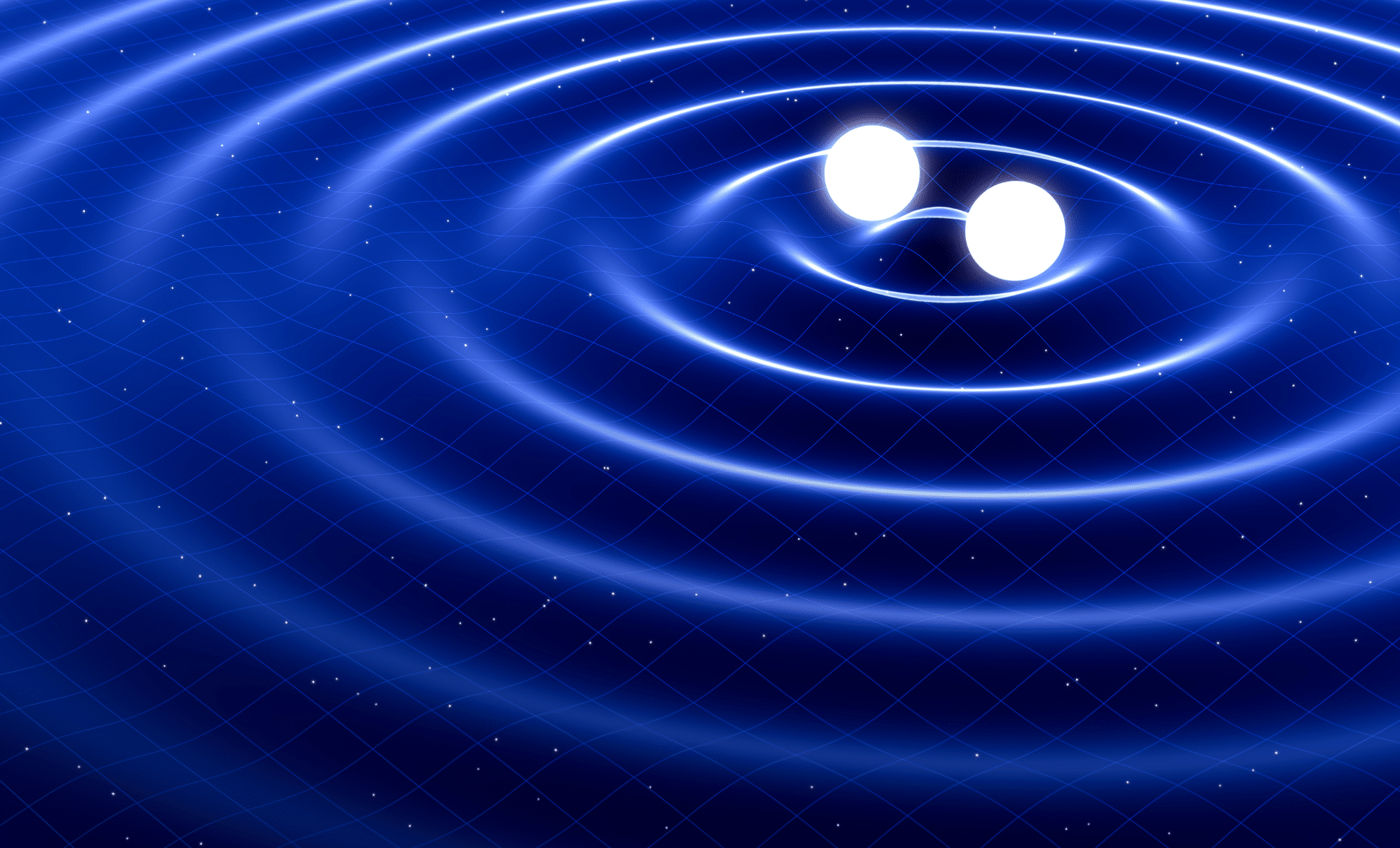
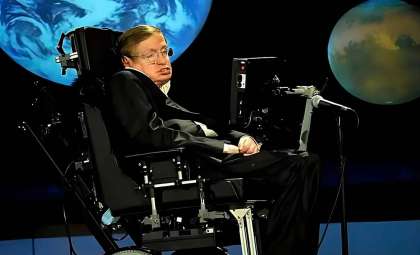
The collaborative effort between LIGO, Virgo, and KAGRA has revealed the most powerful gravitational wave ever recorded, providing robust evidence supporting Stephen Hawking’s black hole area theorem. The event, designated GW250114, was observed on January 14, 2025, and sheds light on the intricate relationships between black hole entropy and mass. Detailed in Physical Review Letters, this discovery highlights the cutting-edge precision of gravitational wave observatories in unveiling cosmic mysteries.
Advancing the Frontier of Gravitational Wave Astronomy
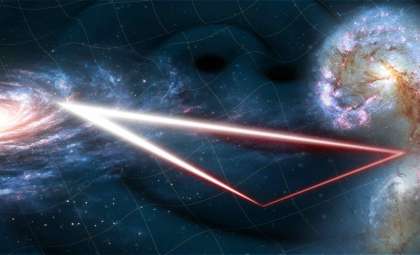
Gravitational wave astronomy has transformed our understanding of the universe by capturing phenomena previously beyond reach. The pioneering detection by LIGO in 2015, enhanced by collaborations with Virgo and KAGRA, first confirmed Einstein’s general relativity. These disturbances in spacetime are generated by massive accelerating bodies like colliding black holes.
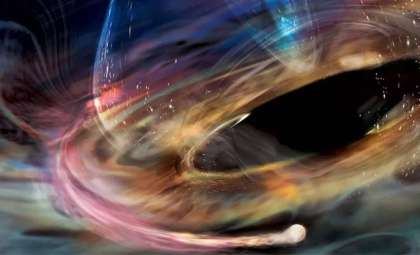
The recent event, GW250114, originated from a cosmic collision 1.3 billion light-years distant, involving two black holes each between 30 and 40 solar masses. This marks the loudest gravitational wave captured so far, offering unprecedented precision for validating Hawking’s black hole area theorem.

GW250114’s Remarkable Signal Strength
“GW250114 stands as the most powerful gravitational wave signal we’ve detected—significantly louder than any before,” said Simona Miller, a Caltech graduate student and co-author telling IFLScience. “By ‘loud,’ we mean its signal amplitude shines far above the typical detector noise.” This exceptional clarity enabled far more accurate determinations of the black holes’ masses and spins than earlier observations.
To illustrate, previous gravitational waves were like hearing a loud laugh or a shout in a busy room, while GW250114 is comparable to a blaring fire alarm. This powerful signal let researchers measure the final merged black hole’s properties with unparalleled precision.
Hawking’s Area Theorem Put to the Test
A pivotal outcome of GW250114 is the confirmation of Stephen Hawking’s area theorem, a key concept in the physics of black holes. The theorem predicts that the event horizon surface area of black holes never shrinks and increases after a merger. This area increase correlates with black hole entropy, aligning with the second law of thermodynamics.
“Thanks to the loudness of GW250114, we could precisely determine the masses and spins of the original black holes as well as the resulting remnant black hole,” Miller explained. “Since a black hole’s area depends on these parameters, we could test Hawking’s theorem with unprecedented confidence.”
Calculated values showed that the combined initial areas of the black holes were about 240,000 square kilometers (93,000 square miles)—similar in size to Oregon. Post-collision, the final black hole’s surface area expanded to roughly 400,000 square kilometers (154,000 square miles), comparable to California, thereby affirming the predicted area increase.
Unmatched Accuracy in Cosmic Measurements
The strength and clarity of the GW250114 event allowed scientists to reach levels of measurement precision once thought impossible. Professor Vicky Kalogera of LIGO remarked, “Our current measurements represent the most exacting scientific observations ever achieved. This is a truly extraordinary breakthrough.”
This milestone results from decades of progress in interferometer technology and data processing, pushing gravitational wave science to new heights. The sensitivity now enables detection of tiny spacetime ripples created by distant black hole mergers with astounding detail.
- Categories:
- News





0 comments
Sign in to Comment