
Researchers have captured the most intense single fast radio burst (FRB) ever detected and successfully pinpointed its source with extraordinary accuracy. Published in The Astrophysical Journal Letters, this finding marks a major step in understanding these fleeting yet powerful radio pulses that have puzzled scientists for years.
Exceptional Accuracy in Locating the Burst
The remarkably bright signal, recorded on March 16, 2025, was initially confused with Earth-based radio interference, such as signals from cellphones or aircraft. Subsequent investigation revealed its extragalactic origin. Labeled RBFLOAT—an acronym for the radio-brightest flash of all time—this burst emitted in milliseconds the energy output comparable to that of four days of solar radiation.
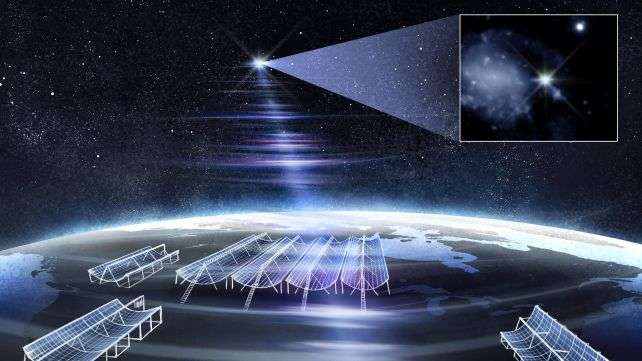
Fast radio bursts are brief and sporadic, posing a challenge for astronomers aiming to trace their origins. Most are detected at extreme distances within milliseconds, complicating precise localization. However, the enhanced Canadian Hydrogen Intensity Mapping Experiment (CHIME) telescope array has significantly improved this capability.

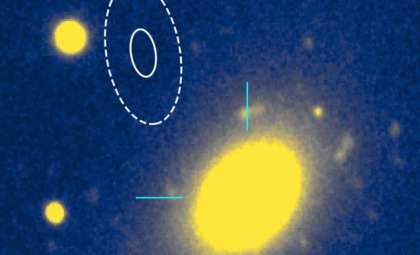
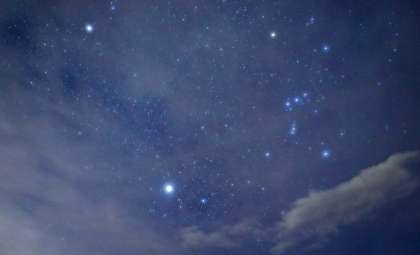
By integrating CHIME with a series of Outrigger telescopes distributed across Canada and the U.S., scientists have been able to triangulate FRBs with unprecedented precision. Leveraging this expanded network, they determined RBFLOAT’s source to lie within a range of just 45 light-years, pointing to the edge of a galaxy in the Big Dipper constellation about 130 million light-years from Earth. This makes it the nearest confirmed non-repeating FRB to date.
Magnetar as the Probable Source
After localizing the burst, researchers employed terrestrial observatories such as the MMT and Keck to examine the source area in finer detail. Northwestern University's lead scientist Yuxin “Vic” Dong confirmed the emission came from a spiral arm in the host galaxy, a region often rich in star formation activity.
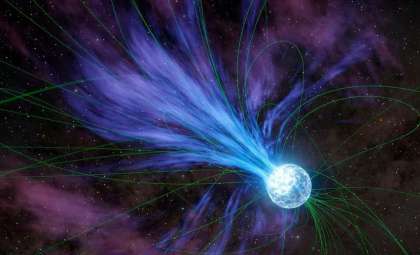
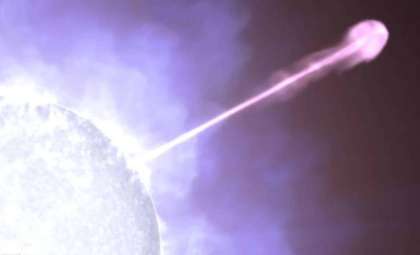
This aligns with theories suggesting that magnetars—neutron stars with extraordinarily strong magnetic fields—might be responsible for many FRBs. Dong pointed out the intriguing nature of the burst's position relative to these regions: “The burst was detected near but not directly within a star-forming clump, which is quite fascinating.”
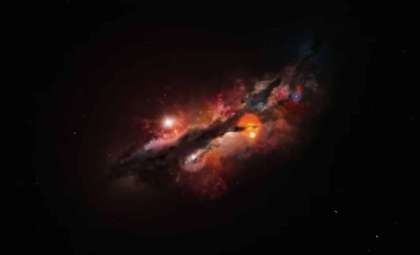
This may indicate the magnetar either drifted away from its stellar nursery or originated just outside it. Data from the James Webb Space Telescope (JWST) reinforce this magnetar origin hypothesis.
Advancing the Study of Fast Radio Bursts
RBFLOAT is influencing current FRB studies with its exceptional brightness and close proximity, making it an invaluable target for future research. Scientists hope analyzing such events will shed light on unanswered questions like: Why do some FRBs recur while others appear only once? Are magnetars the exclusive sources of all FRBs?
Astrophysicist Tarraneh Eftekhari, also from Northwestern University, emphasized the discovery’s importance: “With the CHIME Outriggers, we’re ushering in an unprecedented era for FRB research.” As many more bursts are expected to be localized with similar precision, our understanding of FRB origins and environments stands to greatly improve.
- Categories:
- News


0 comments
Sign in to Comment