
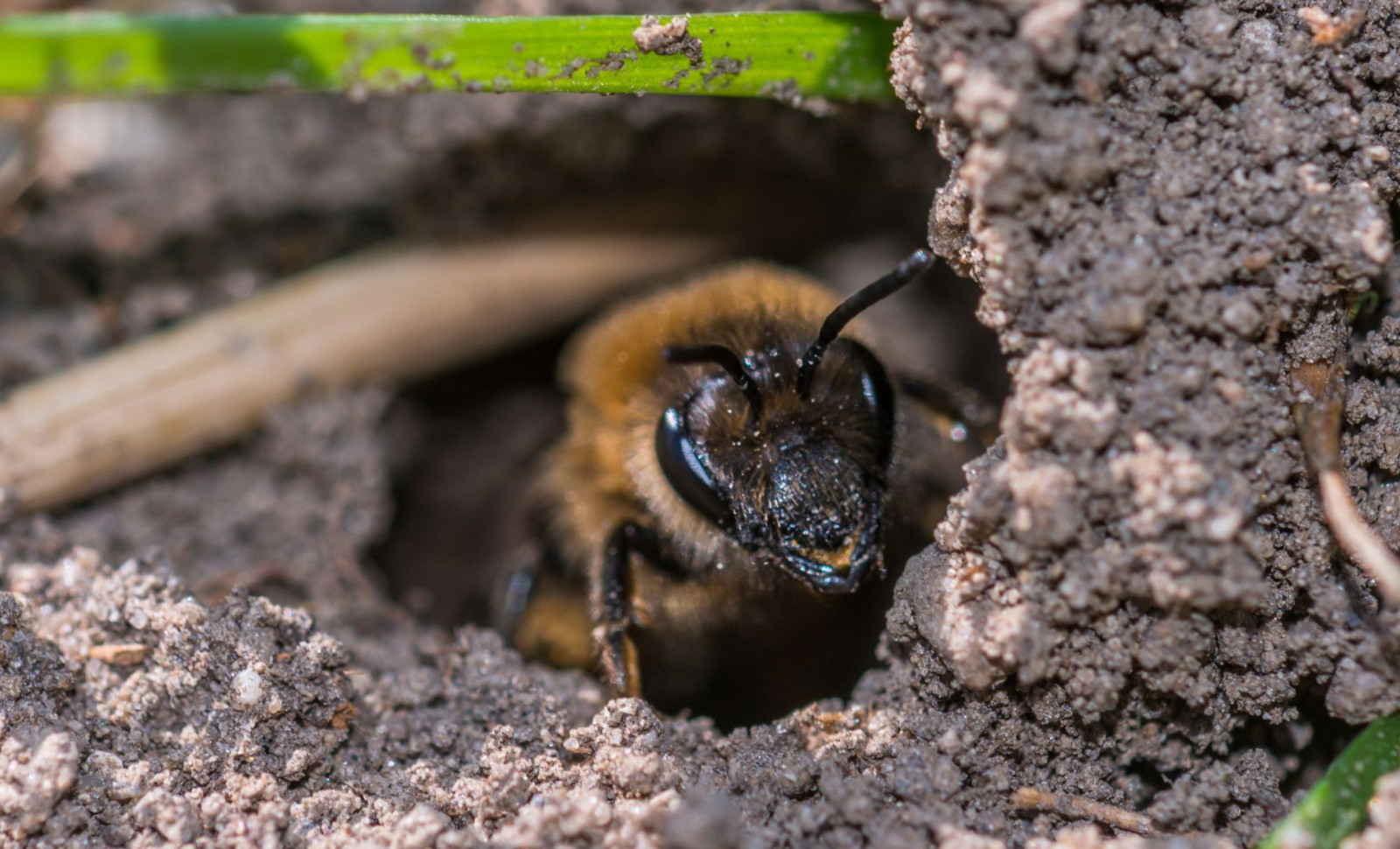
Hidden beneath a tranquil cemetery in Ithaca, New York, an astonishing population of about 5.6 million ground-dwelling bees has been uncovered by scientists. This represents one of the most extensive bee concentrations documented to date, likely thriving unnoticed for decades.
A team from Cornell University studied the Andrena regularis species, which has inhabited the East Lawn Cemetery area since at least 1935. Their research, published in Apidologie, marks the first attempt to quantify how many bees actually occupy this site.
While many imagine bees living in hives, a majority—around 70% of North American bee species—are solitary and nest underground. The researchers highlight that this lifestyle contributes to these insects being overlooked, no matter how massive their numbers.

Bee Populations Thriving in Unexpected Places
In a recent comparison, scientists uncovered a massive spider community along the Albania-Greece border, sprawled across over 1,040 square feet and housing roughly 111,000 spiders. The bee colony in Ithaca dwarfs this in scale.
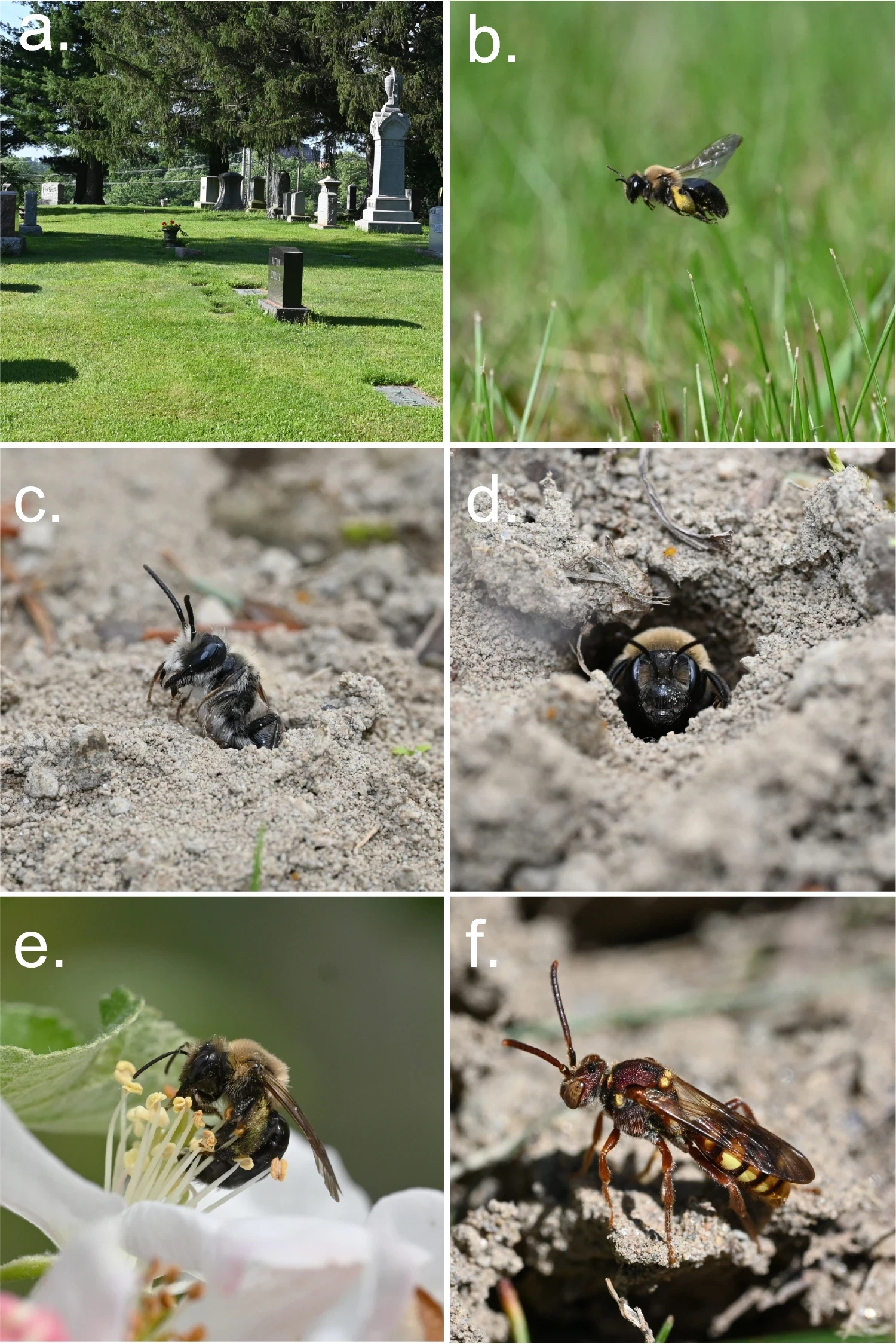
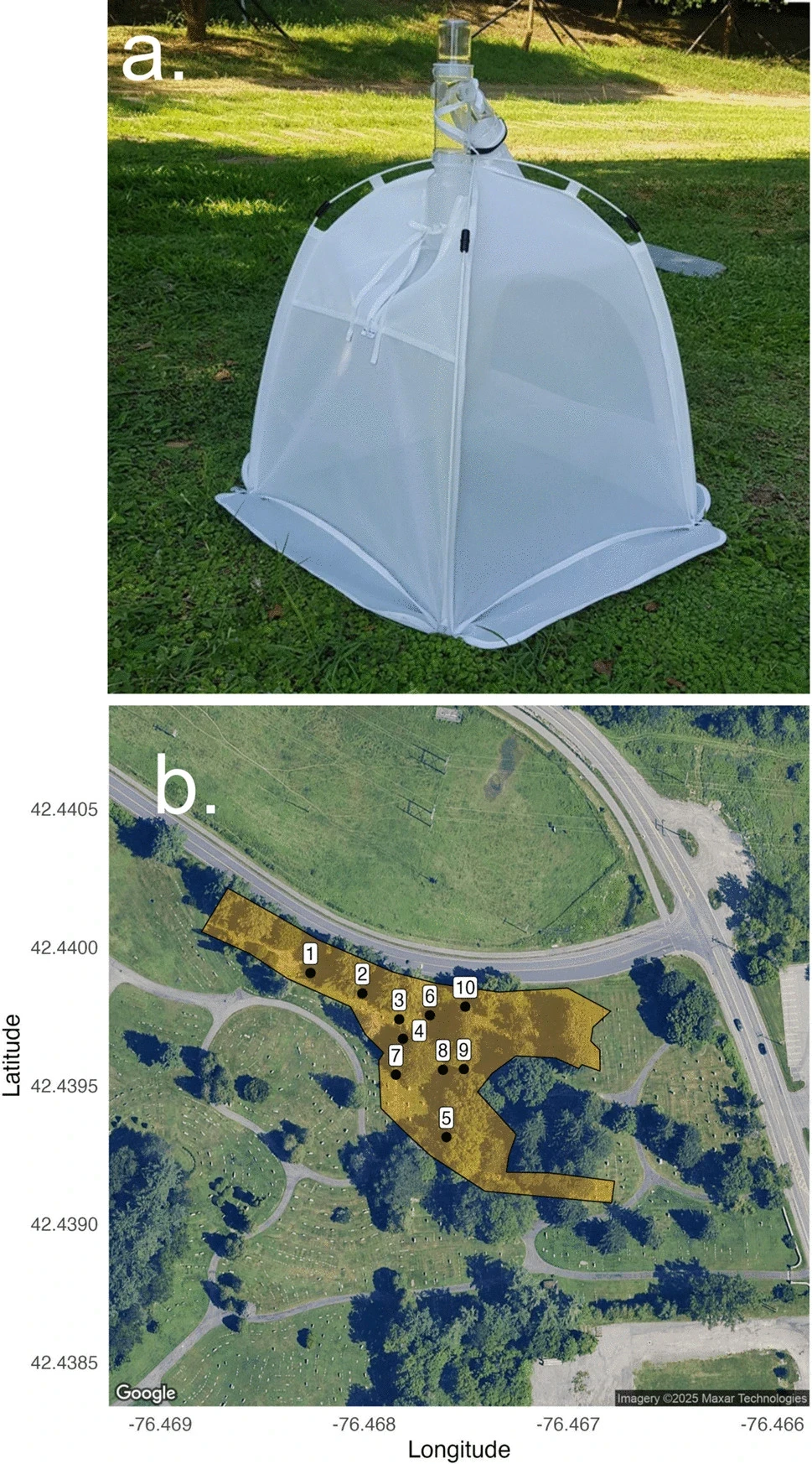
During the spring of 2023, researchers spent nearly six weeks gathering samples across the cemetery grounds. Their data indicated that approximately 5.56 million bees emerged from an area near 6,500 square meters. Bryan Danforth, the principal investigator, noted that most known bee aggregations are far smaller. He commented:
“I was completely floored when we did the calculations. I have seen published estimates of bee aggregations in the hundreds of thousands. But I never really imagined that it would be 5.56 million bees.”
To provide context, a standard honeybee hive typically contains about 30,000 pollinators. This subterranean colony’s density and scale are truly exceptional.
A Record-Breaking Encounter
Although other large bee assemblages have been documented, none approach the magnitude found in Ithaca. Past surveys noted a site in Arizona with roughly 1.6 million bees and another New York location with about 651,000.
In Brazil, researchers have recorded approximately 13,500 bees within a smaller zone, impressive but far less than the Ithaca discovery.
“I’m sure there are other large bee aggregations that exist around the world that we just haven’t identified, but in terms of what is in the literature, this is one of the largest,” stated Steve Hoge, first author of a new study published in the journal Apidologie.
Why Cemeteries Are Ideal Habitats for Ground-Nesting Bees
Though unexpected, cemeteries provide near-perfect conditions for subterranean bee species. The soil remains largely undisturbed, and there is minimal construction or heavy human interference.
Danforth emphasized that such areas are critically important for pollinator conservation, enabling species like Andrena regularis to establish and thrive over time. Even though these solitary bees often fly under the radar compared to hive dwellers, they contribute significantly to pollination. He remarked:
“The solitary bees are totally underappreciated. I spend a lot of time trying to encourage people to appreciate the solitary bees, just because they do so much, and they’re kind of under the radar,” He addeed, “but they’re fascinating creatures.”
- Categories:
- News











0 comments
Sign in to Comment