

Recent investigations from Swinburne University of Technology in partnership with CSIRO demonstrate the potential to extract iron from Martian soil simulants under Mars-like conditions. Published in Acta Astronautica — Metals extraction on Mars through carbothermic reduction: Mars regolith simulant (MGS-1) characterization and preliminary reduction experiments (April 2025) and Iron (alloy) extraction on Mars through carbothermic reduction of regolith: a thermodynamic assessment and experimental study (May 2025), their work marks an important advance in extraterrestrial metallurgy and highlights in-situ resource utilization (ISRU) as a critical strategy for establishing sustainable habitats on Mars.
The Challenge of Earth-Dependent Construction on Mars
Shipping building materials and metals from our planet to Mars presents formidable logistical and financial challenges. Although launch costs have dropped over time, the sheer quantity of resources needed to support human presence on Mars remains immense. Dr. Deddy Nababan pointed out, “Transporting tons of metal from Earth is technically possible but economically impractical. It's simply too costly to consider for establishing a Mars colony.” This reality underscores the pressing need for local resource production techniques.
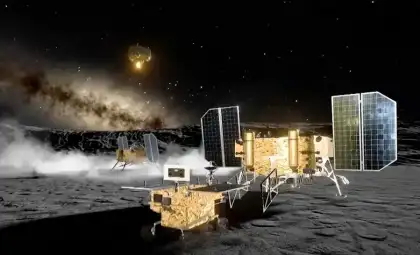
Instead of relying on Earth for supplies, futuristic Mars settlements might harness the planet’s own resources to manufacture essential materials. This concept transforms Mars into a self-reliant industrial environment, where inhabitants produce metals directly from available regolith deposits. As Nababan further explained, “By utilizing Mars’ own materials through In-Situ Resource Utilization, we can cut dependence on Earth and create more scalable colony development.”

Turning Martian Soil into Metal
The process to convert Martian soil into iron involves replicating Mars’ environmental conditions using Earth-based simulations. Lead researcher Professor Akbar Rhamdhani and colleagues used a regolith analog closely matching samples from Gale Crater, a location extensively explored by NASA’s Curiosity rover. “We tested a simulant that closely resembles Gale Crater’s soil under simulated Martian atmosphere to better predict how the reduction process would function on Mars,” he shared.
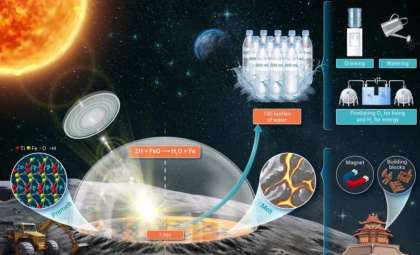
The carbothermic reduction procedure entails heating regolith in an environment with pressures akin to Mars’ thin atmosphere. At roughly 1000°C, iron metal begins to appear, and when the temperature approaches 1400°C, it melts and bonds with silicon to form iron-silicon alloys. Professor Rhamdhani detailed, “At elevated temperatures, all metals merged into a single metallic droplet that could be separated from surrounding slag just like traditional Earth smelting methods.” These outcomes suggest that familiar metallurgical techniques can be adapted for off-world manufacturing, pointing to the feasibility of an on-site foundry on Mars.
Obstacles to Establishing Martian Metalworking
Despite the promising results, several hurdles remain before large-scale iron production on Mars can become a reality. The long-term structural integrity of these alloys under the harsh Martian environment is not yet fully understood, and scaling up requires sophisticated engineering solutions yet to be deployed on Mars. Rhamdhani cautioned, “We still need comprehensive studies on how these metals will behave over extended periods on Mars and practical demonstrations of this process on the actual planet.”
Addressing these challenges demands expertise across multiple disciplines. Mars metallurgy overlaps with fields like geology, mining engineering, robotics, and materials science. Rhamdhani noted, “Interest in this area is growing worldwide as Mars exploration intensifies. Achieving these goals will depend on collaboration across various scientific and engineering fields.”
Impact Beyond Mars: Advancing Earth Industries
Besides enabling Martian habitation, these advancements might revolutionize resource processing on Earth. Developing efficient, low-waste metallurgical methods adaptable to extreme settings could drive greener manufacturing technologies globally. Dr. Nababan emphasized, “My hope is that these findings not only push space exploration forward but also deliver practical benefits to industry and society here on Earth.”
Thus, Mars emerges not just as a future home but also as an innovation hub inspiring sustainable industrial breakthroughs. With increasing investment in space technologies and ISRU, the dream of building a permanent human presence on the Red Planet is advancing. Martian soil may well become the foundational building block for humanity’s first extraterrestrial cities.
- Categories:
- News










0 comments
Sign in to Comment