
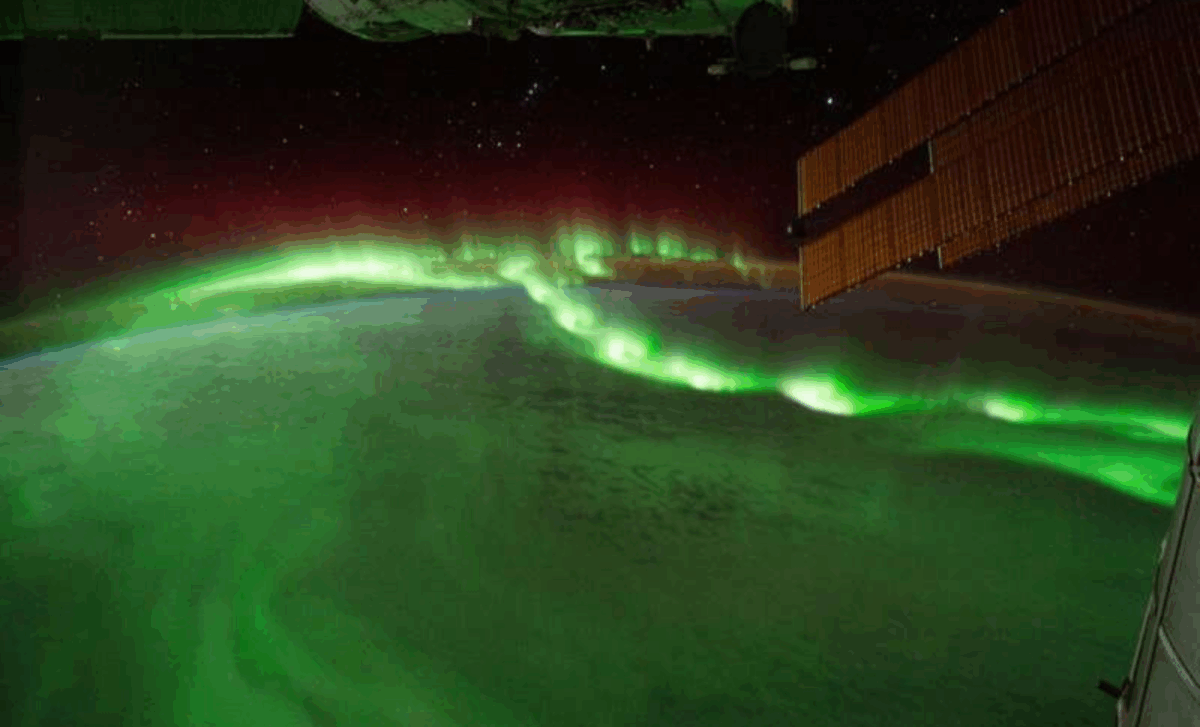
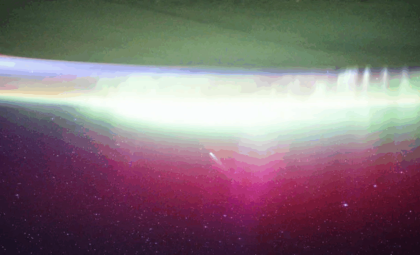
A newly identified radio frequency has been linked to the sudden intensification of auroral storms that illuminate the night sky with striking green and red hues. This breakthrough promises to enhance our ability to forecast space weather and deepen our grasp of how the solar wind impacts Earth’s magnetic environment.
Leveraging cutting-edge terrestrial observatories, scientists have pinpointed a unique radio pattern that emerges moments before powerful auroral explosions commence.
Their study appears in Nature Communications.
The Signal Heralding Aurora Eruptions
Physicists have long understood that auroral substorms—rapid, dazzling intensifications of the aurora borealis and australis—originate from the abrupt release of energy stored in Earth’s magnetosphere. Yet, the catalyst for this sudden energy release has remained unclear. The latest research, led by a global team from the University of Southampton, identifies a particular form of low-frequency radio emission tied directly to the moment this energy is unleashed, filling a crucial gap in our understanding. Their findings are detailed in Nature Communications, showcasing one of the strongest observed correlations between radio waves and auroral activity.
“The aurora borealis and aurora australis are caused by charged particles from space colliding with atoms and molecules in our atmosphere,” explains physicist Dr. Daniel Whiter of the University of Southampton. “Particles ejected from the sun flow out through the solar system carrying the sun’s magnetic field with them, and this ‘solar wind’ is the source of energy for the aurora.
Add Cosmo Herald as a Preferred Source“Auroral substorms are caused by the accumulation and then release of magnetic energy stored in Earth’s magnetosphere during its interaction with the solar wind flow. However, what exactly triggers this energy to suddenly unload in spectacular fashion isn’t fully understood.”

Findings reveal that immediately before an auroral storm escalates, Earth's magnetosphere emits distinctive radio waves identifiable by specialized detectors. These radio emissions could provide an early alert system, enabling improved predictions of geomagnetic disturbances that threaten satellite operations, GPS accuracy, and electrical grids.
Tuning Into Earth's Magnetic Signals
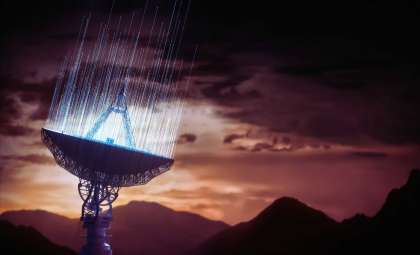
By analyzing data collected from several Arctic monitoring stations, researchers tracked a consistent signal synchronized with the start of auroral storms. This preliminary radio signature likely originates as energy stored in Earth’s magnetic tail is swiftly directed toward polar regions, triggering the brilliant atmospheric light shows.
This insight allows scientists to "hear" the underlying processes shaping space weather. With this new marker, computational models of magnetospheric behavior can more accurately simulate the sequence leading to an auroral substorm. By linking magnetic energy discharge to radio signals, researchers gain enhanced knowledge of space plasma phenomena and the flow of energy within our planet’s magnetic shield.
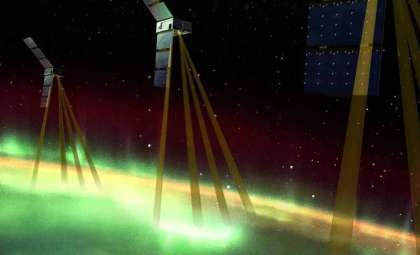
Experts are hopeful that upcoming satellite initiatives will track these radio emissions live, laying the groundwork for a worldwide auroral alert system. Such progress would safeguard essential technologies and bring us closer to decoding the rhythmic pulse of Earth's magnetic field.
Advancing Our Capacity to Forecast Space Weather
This breakthrough represents a significant step in monitoring the interactions between the sun and Earth. If regularly detected, these radio signals could serve as a crucial predictive indicator for geomagnetic storms before they reach critical intensity.
The research, published in Nature Communications, ushers in the prospect of auroral substorms being tracked not solely by sight but also by specialized instruments detecting the solar wind’s influence. Each discovery enriches our understanding of the solar wind, Earth’s magnetosphere, and the spectacular auroral phenomena adorning our skies.
- Categories:
- News





0 comments
Sign in to Comment