
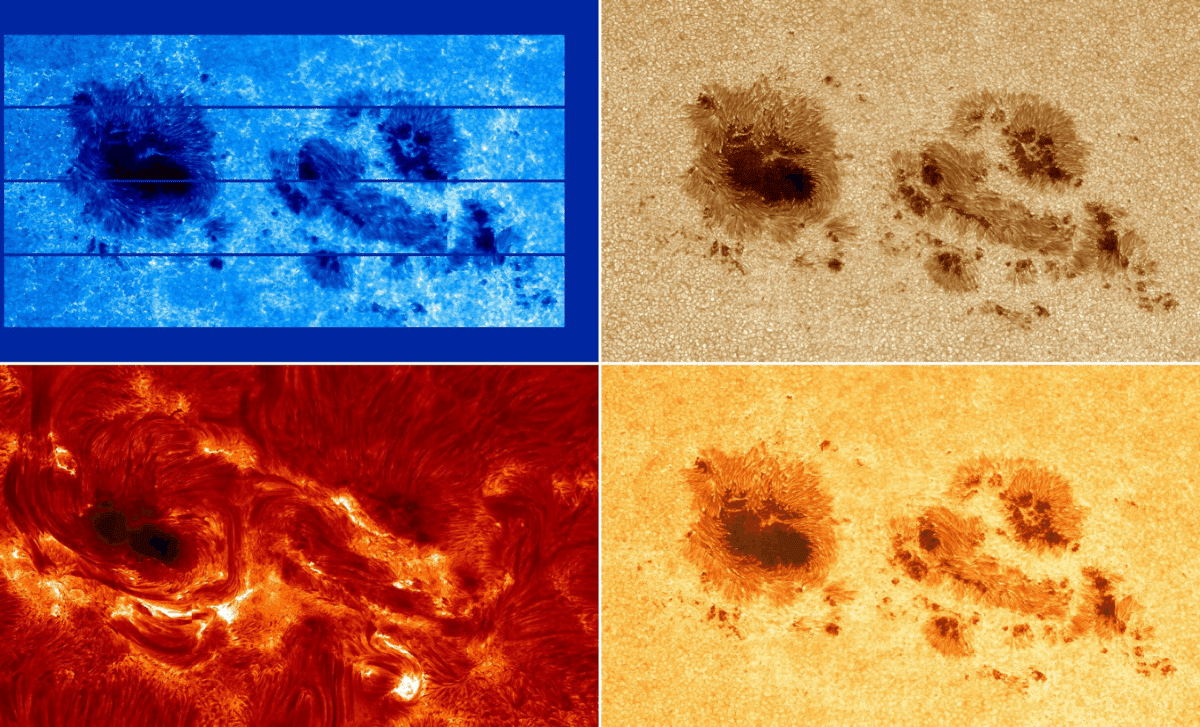
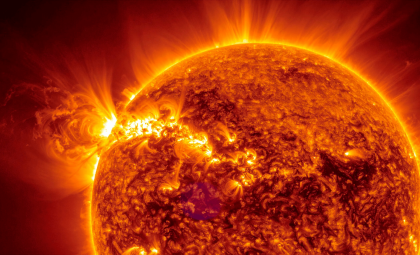
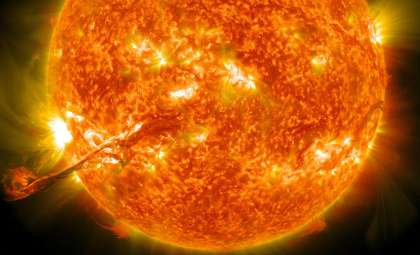
Researchers have recently obtained rare, ultra-clear images of some of the Sun’s most vigorous regions responsible for intense X-class solar flares. These explosive solar phenomena, among the strongest events emitted by the Sun, reveal crucial information about solar activity and its unpredictability. The observations were made using cutting-edge solar instrumentation at the Teide Observatory located in Tenerife, Spain. Their findings, detailed in Research Notes of the AAS, provide new understanding of the mechanisms driving solar flares and their influence on space weather.
Overcoming Obstacles in Capturing Solar Flare Events
Monitoring solar flares presents significant challenges. “Intense flares often occur on the Sun’s far side, during nighttime, or under poor weather conditions, limiting their visibility,” explains Prof. Carsten Denker, head of Solar Physics at the Leibniz Institute for Astrophysics Potsdam (AIP) and lead author of the research. These factors make real-time, high-resolution observations exceptionally rare. The research centered on two major X-class flares observed on November 10 and 11, 2025 using the 1.5-meter GREGOR solar telescope at the Teide Observatory.
Magnetic Field Dynamics Driving Intense Solar Flares
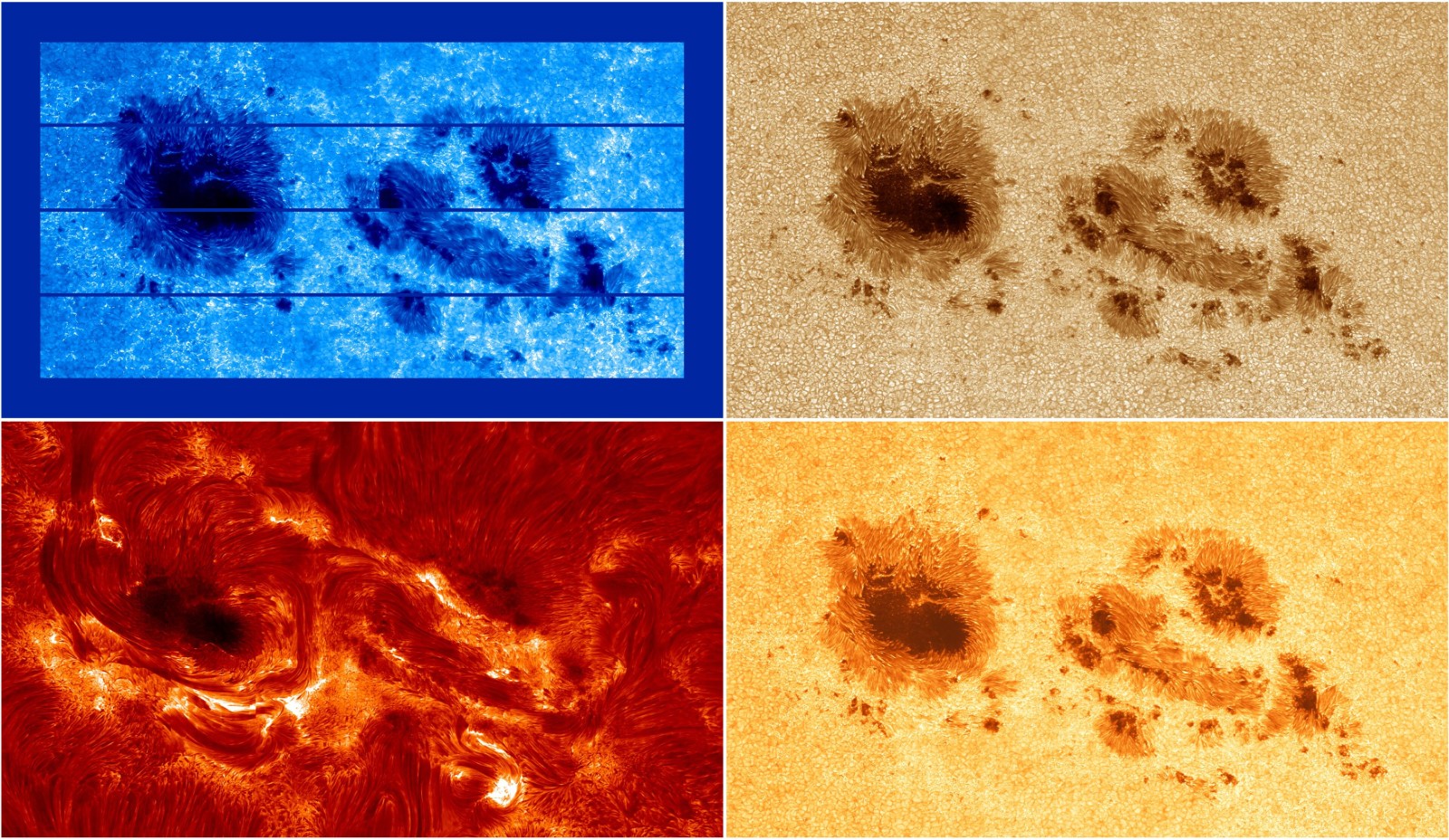
The observed X-class flares stood out not only due to their sheer power but also because of the detailed insight they provided into the Sun’s magnetic field complexities. As noted by Dr. Meetu Verma, a solar physicist at AIP and co-author of the article,

“The penumbral fibrils, which typically extend radially from the dark umbral core, were strongly curved and braided. This indicates a highly stressed magnetic field structure.”
These intricately braided fibrils indicate intense stress and twisting within the Sun’s magnetic fields, accumulating energy that ultimately erupts as a solar flare.
This discovery marks a significant advancement in solar physics. Decoding these magnetic field stress patterns enables scientists to better forecast solar flare occurrences and evaluate their potential hazards. Flares of this magnitude can have dramatic consequences for space weather, affecting satellite operations, power infrastructure, and space missions. Published in Research Notes of the AAS, the study enhances our grasp of solar eruptions and highlights the importance of continued monitoring to mitigate their impacts on Earth.
Cutting-Edge Technology Unlocking Solar Secrets
The exceptional detail captured by the GREGOR solar telescope signifies a major progression in solar observation capabilities. With its 1.5-meter aperture, GREGOR is among the world’s most powerful solar telescopes, capable of revealing fine structures on the Sun’s surface. This precision enables researchers to study solar flares with unprecedented clarity, particularly the magnetic field configurations that lead to energy buildup and explosive flares.
Such technological progress has transformed the field of solar research, equipping scientists with new tools to probe the Sun’s complex behaviors. While solar flares have been studied previously, the unprecedented level of detail provided by these observations promises to drive future discoveries and enhance our understanding of solar phenomena.
Examining the Effects of Solar Flares on Space Weather
X-class solar flares can profoundly influence space weather, impacting global communication networks, satellite systems, and GPS navigation. These flares emit massive quantities of energy that disturb Earth’s magnetic field, triggering geomagnetic storms. Understanding the origins and dynamics of these flares is critical for predicting weather events in space and protecting technology and infrastructure.
As human activities increasingly rely on space-based technology, the threat posed by solar flares grows more urgent. The insights from this investigation offer improved knowledge of flare formation processes, which will help refine forecasting models for space weather hazards. In today’s tech-dependent world, studying the Sun’s eruptions is essential for safeguarding our technological assets.
- Categories:
- News





0 comments
Sign in to Comment