
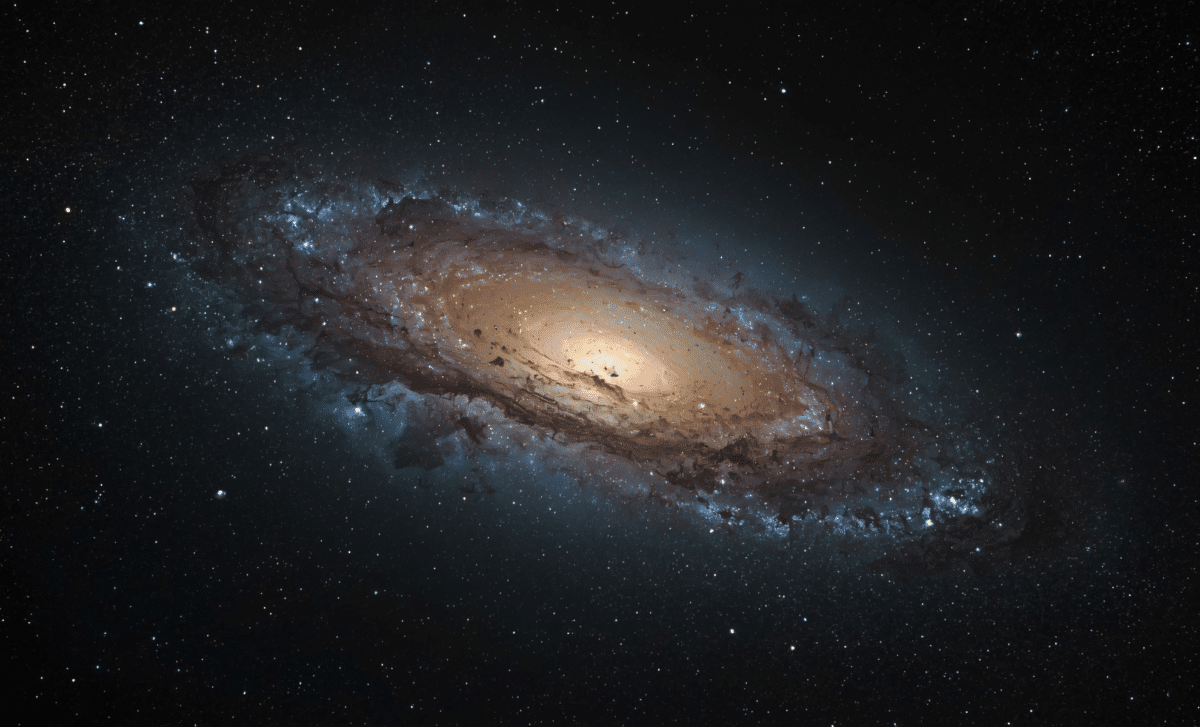
A recent study published in Monthly Notices of the Royal Astronomical Society reveals a newly recognized cluster of ancient stars that could be remnants of an unidentified dwarf galaxy, named Loki, concealed within the Milky Way. This discovery opens up the possibility of an overlooked epoch in our galaxy’s formation history located in its disk.
Clues from Ancient Stars Suggest a Forgotten Galactic Intruder
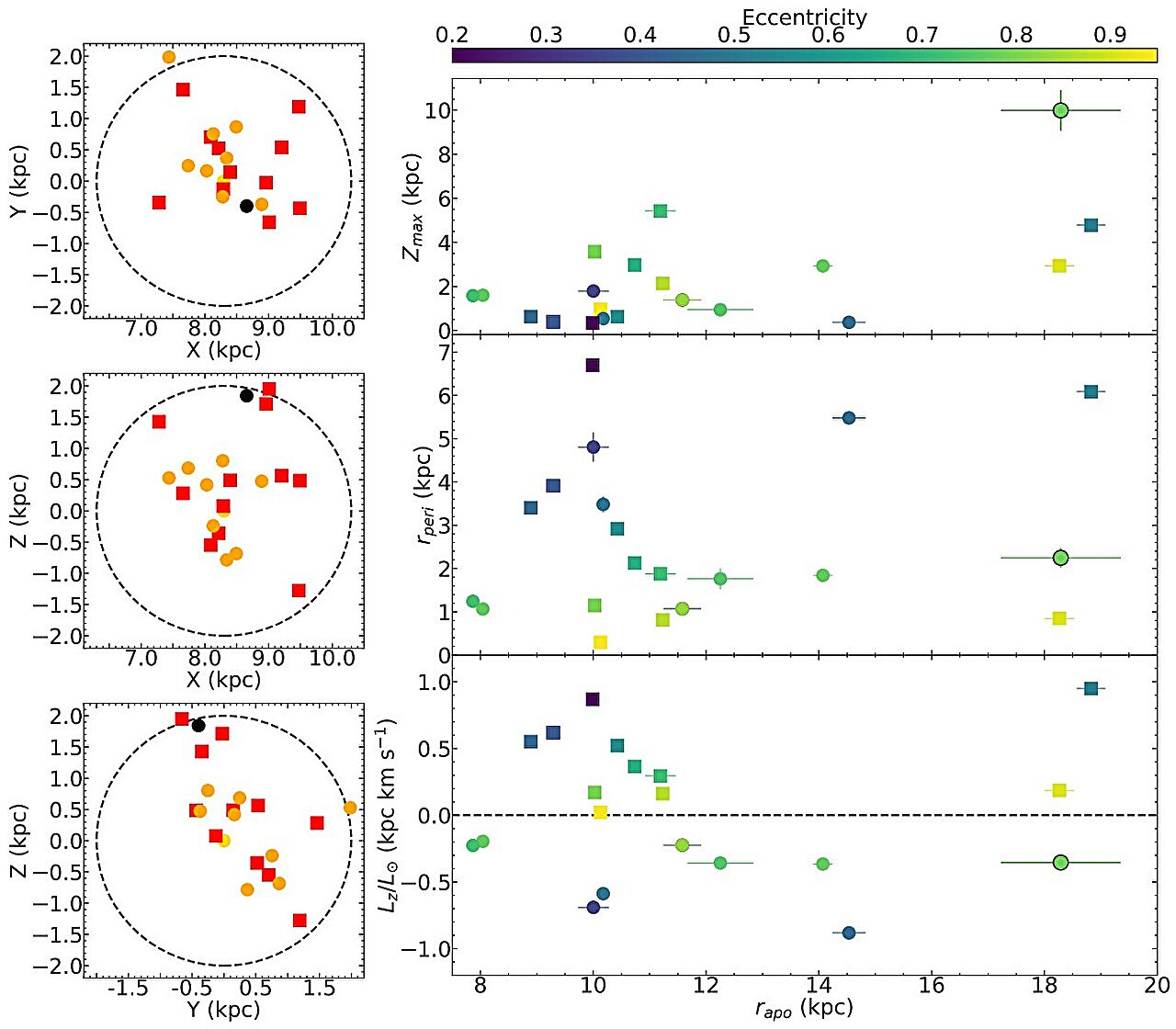
It is well established that the Milky Way expanded by assimilating smaller galaxies, leaving behind stellar footprints scattered throughout its halo and disk. Scientists concentrated on a group of 20 metal-poor stars—early-formed stars holding chemical markers of their origins—found amidst the galactic plane. These stars immediately stood out because their elemental makeup and orbital motions diverged from typical halo stars or known remnants of past mergers.
Researchers detected unique elemental abundance signatures indicating influences from hypernova explosions, rapidly spinning massive stars, and neutron star collisions. Simultaneously, the lack of evidence for white dwarf supernovae suggests a brief, intense period of star formation. This rare combination strongly points to a small, energetic dwarf galaxy origin. Both prograde and retrograde stars shared almost identical chemical profiles, reinforcing the notion they originated from a singular, now dispersed, system instead of separate sources.

Metal-Poor Stars: Cosmic Time Capsules of Galactic Formation
Beyond their age, metal-poor stars serve as vital historical records. Their minimal heavy elements represent an era before the universe was enriched by many stellar generations. Examining these stars allows scientists to trace how galaxies like the Milky Way formed and transformed over billions of years.
“These building blocks merged together at early epochs, dispersing their stellar, gaseous, and dark matter content into the forming proto-galaxy. Therefore, the most metal-poor stars coming from the early galactic assembly are supposed to populate the inner regions of the Milky Way, while those accreted later might be dispersed in the outer halo,” the study authors explain.
The Loki candidates challenge expectations due to their placement. While most ultra metal-poor stars reside in the galactic halo, far above the disk, this set lies within the galactic plane itself—disrupting conventional ideas about where ancient merger debris should appear. Their closely matched chemical patterns imply an isolated evolutionary environment, contrasting with the mixed stellar populations typically found in the halo.
This study, featured in Monthly Notices of the Royal Astronomical Society, underscores how these stellar fossils preserve evidence of early galaxy-building events even after billions of years of complex galactic dynamics.
One Origin or Two? Decoding the Orbital Mystery
An intriguing question is whether these stars all belong to a single dwarf galaxy or possibly arise from two similar systems. The coexistence of both prograde (aligned with the Milky Way’s spin) and retrograde (counter-rotating) orbits complicates this. Typically, such orbital differences hint at separate sources.
However, the chemical similarity presents a contrasting view. Nearly identical elemental abundances across the entire group suggest a common evolutionary track, supporting the idea of a shared progenitor. Galactic chemical evolution models reinforce this perspective, indicating that the star group could have emerged from one dwarf galaxy characterized by specific mass and chemical enrichment patterns.
“Alternatively, if our sample originated in a pair of systems, the simplest case would be one for the prograde and one for the retrograde stars. The pair of systems would share a very similar, if not identical, chemical history and evolution, as suggested by the small MAD and by the GCE model. The total baryonic mass would be twice the case of the single-system scenario.”
Even if two galaxies were involved, their strikingly similar properties would blend their observational signals, effectively resembling a single entity. This ambiguity sustains the Loki proposition, while leaning toward a unified origin.
Unveiling a Hidden Galactic Component
The existence of the Loki galaxy remains provisional, based on a limited number of stars. Scientists emphasize that extensive future stellar surveys will be critical to validating this finding and outlining its structure. Upcoming efforts like WEAVE and 4MOST will deliver comprehensive, high-accuracy spectroscopic data across enormous stellar populations within the Milky Way.
Should this discovery hold true, Loki would be a rare example of a dwarf galaxy remnant embedded within the galactic disk instead of residing in the halo. This would challenge existing paradigms about the dispersal of merger remnants and the Milky Way’s growth history.
It also suggests that our galaxy may still conceal additional such relics, hidden among countless stars. Each relic carries a story from the Milky Way’s distant past, waiting to be revealed through detailed analysis of stellar motions, compositions, and ages.
- Categories:
- Astronomy




0 comments
Sign in to Comment