
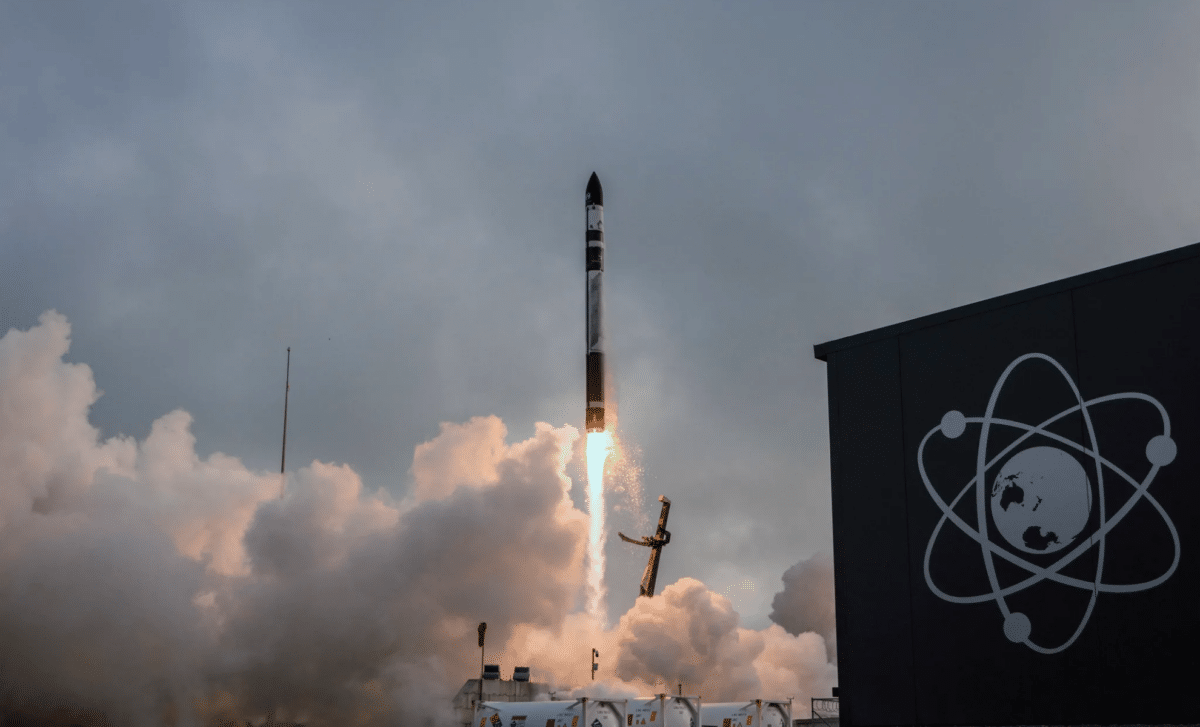
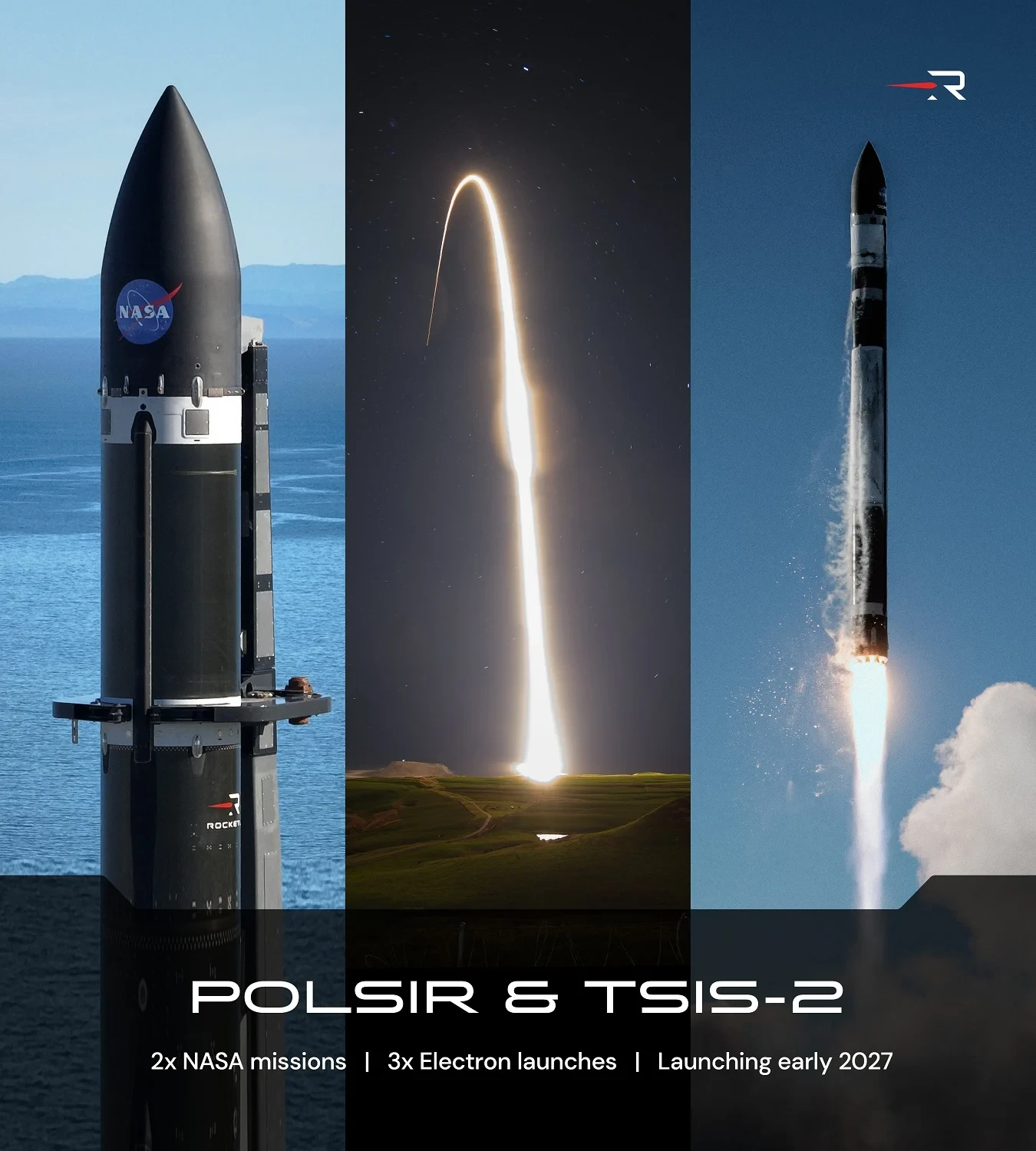
NASA has contracted Rocket Lab to deploy two innovative space missions designed to deepen insights into solar energy and the behavior of ice clouds in Earth’s atmosphere. Both the TSIS-2 and PolSIR projects will be launched aboard Rocket Lab’s Electron vehicle from Launch Complex 1 in New Zealand. Scheduled for early 2027, these launches represent a synchronized approach to enhancing the nation’s capacity for continuous climate and solar monitoring. These efforts align with NASA’s broader goal to utilize adaptable commercial launch services for efficient deployment of compact scientific satellites.
Coordinated NASA and Rocket Lab Effort to Deploy Two Scientific Satellites
As detailed in NASA’s official release, this launching agreement encompasses two distinct but complementary missions that will function independently after entering orbit. The TSIS-2 mission aims to measure both the total and spectral irradiance of the Sun, providing detailed data on solar energy reaching Earth’s atmosphere across ultraviolet, visible, and infrared wavelengths. This continues and expands upon measurements from TSIS-1 aboard the International Space Station, moving the instruments to a free-flying platform for uninterrupted global data collection. Findings from TSIS-2 will enhance understanding of ocean currents, seasonal atmospheric changes, and Earth's energy budget.
Meanwhile, PolSIR is dedicated to studying high-altitude ice clouds within tropical and subtropical zones.
This mission deploys two 16U CubeSats outfitted with sensors to detect electromagnetic signals linked to ice particles in clouds. By tracking daily variations in ice cloud properties, researchers hope to clarify their role in storm dynamics and energy transfer within the atmosphere. The satellites will occupy staggered orbital positions several hours apart, allowing for detailed time-based monitoring of cloud development. This twin-satellite setup amplifies temporal resolution beyond what single-platform missions can offer.

🚀Two missions, three rockets.
— NASA's Kennedy Space Center (@NASAKennedy) June 25, 2026
NASA has selected @RocketLab to launch two science missions in 2027 on three Electron rockets from Launch Complex 1 in New Zealand.
Two launches will send the twin CubeSats for PolSIR to study tropical ice clouds. A single rocket will launch… pic.twitter.com/g5k8COZBD0
Instruments, Design, and Research Objectives
The TSIS-2 satellite carries two main instruments: the Total Irradiance Monitor and the Spectral Irradiance Monitor. Together, these devices measure about 96% of the solar spectrum affecting Earth's climate, detecting subtle changes in solar radiation that could influence both long-term climate shifts and short-term atmospheric variations. NASA’s Goddard Space Flight Center leads the project, with collaboration from the Laboratory for Atmospheric and Space Physics at the University of Colorado Boulder and spacecraft manufacturing by General Atomics – Electromagnetic Systems.
PolSIR focuses on delivering precise, high-resolution observations of ice cloud dynamics. Built by Blue Canyon Technologies, its CubeSats are equipped to analyze how ice crystals change and scatter incoming sunlight. Led by Vanderbilt University with science operations managed by the University of Wisconsin’s Space Science and Engineering Center, this mission exemplifies a cooperative effort between academic institutions and aerospace companies to enhance atmospheric models with real-time orbital data.
Launch Strategy and NASA's Small Satellite Program
The partnership with Rocket Lab falls under NASA’s Venture-Class Acquisition of Dedicated and Rideshare (VADR) initiative, designed to secure flexible, budget-friendly launches for smaller science payloads. This contract enables NASA to issue multiple launch task orders over a decade with a $300 million budget limit, facilitating quick mission turnaround while controlling costs—especially beneficial for CubeSat deployments and small satellite science experiments.
Rocket Lab’s Electron rocket has emerged as a preferred vehicle for dedicated small satellite insertions, offering launch flexibility without the compromises linked to rideshares.
Operating from its Mahia Peninsula site in New Zealand, Rocket Lab provides access to optimal orbital inclinations ideal for Earth observation missions. Both TSIS-2 and PolSIR will utilize this advantage, given their need for precise orbital paths and consistent viewing angles. Combining these missions under a single launch provider exemplifies a strategy that optimizes launch scheduling efficiency while respecting the distinct scientific timelines and requirements of each satellite.
- Categories:
- Nasa







0 comments
Sign in to Comment