
For decades, the nature of Nanotyrannus has sparked discussion, with some experts considering it merely a juvenile form of the iconic Tyrannosaurus rex. New research, however, settles this long-standing debate by demonstrating that Nanotyrannus represents a separate species, not just a young T. rex. This important finding reshapes our perspective on dinosaur diversity and their evolutionary pathways.
The controversy surrounding Nanotyrannus stemmed from its small stature and skeletal similarities to T. rex, which led many paleontologists to assume it was simply a younger stage of the larger predator. Recent advancements in fossil analysis, though, have allowed scientists to scrutinize the bones more thoroughly, revealing that the differences cannot solely be explained by growth.
Fresh Insights from Detailed Fossil Analysis
Previously, the idea that Nanotyrannus was just a juvenile T. rex was widely accepted given how alike their bone structures appeared. This new investigation, however, challenges that viewpoint.

“Everything that I had heard when we started the project was that most experts agreed the skull was a juvenile T. rex,” said Caitlin Colleary, a paleontologist at the Cleveland Museum of Natural History. “So I went into it thinking that more than likely we were going to provide additional evidence for that hypothesis.”
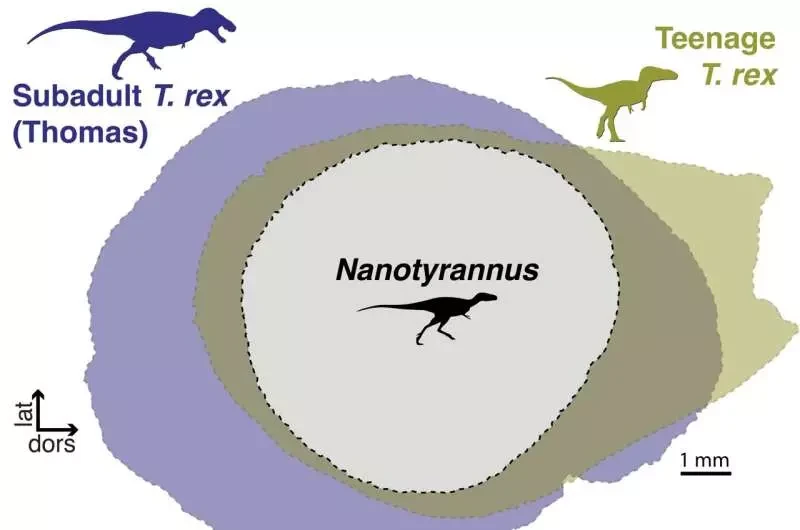
The team identified critical distinctions between the two dinosaurs that age alone does not clarify, especially in the shape of the skull and the general body proportions of Nanotyrannus.
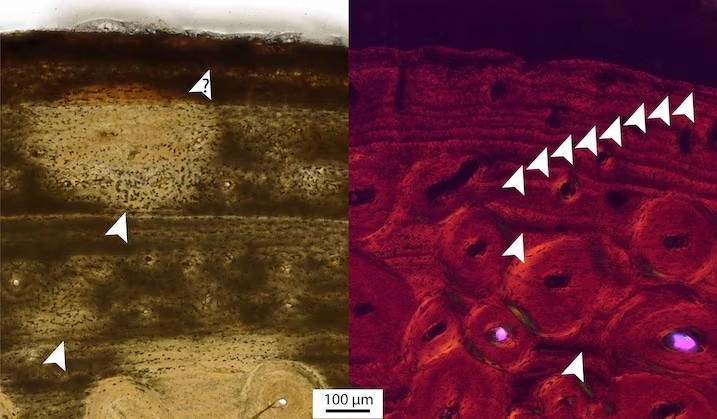
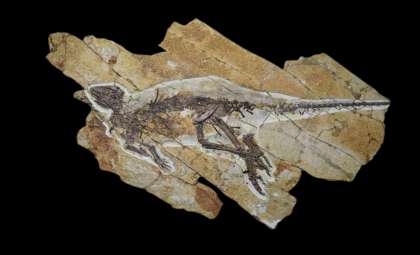
Published in Science, the study examined multiple fossil specimens, including a well-preserved juvenile Nanotyrannus. Using state-of-the-art techniques to compare these with T. rex fossils, the researchers uncovered distinct anatomical features strong enough to classify Nanotyrannus as a different species. These conclusions aim to definitively end debates about its classification.
Revisiting Dinosaur Evolution Theories
Beyond identifying a new dinosaur species, this research prompts a rethink of previously held beliefs regarding dinosaur growth and species differentiation. The notion that smaller dinosaurs were simply juveniles of larger ones must be reconsidered. Recognizing Nanotyrannus as a separate species prompts new inquiries into how various theropods thrived alongside one another during the Late Cretaceous era.
“More people working on something makes the science so much better,” Colleary noted. “To have the two studies come out so closely together really makes me feel like it’s a one-two punch for Nanotyrannus.”
With continuous fossil discoveries and enhanced analytical tools, surprises about ancient species may keep emerging. It's possible that what we've seen as juvenile forms in the past could belong to entirely different dinosaur species than previously thought.
- Categories:
- News









0 comments
Sign in to Comment