
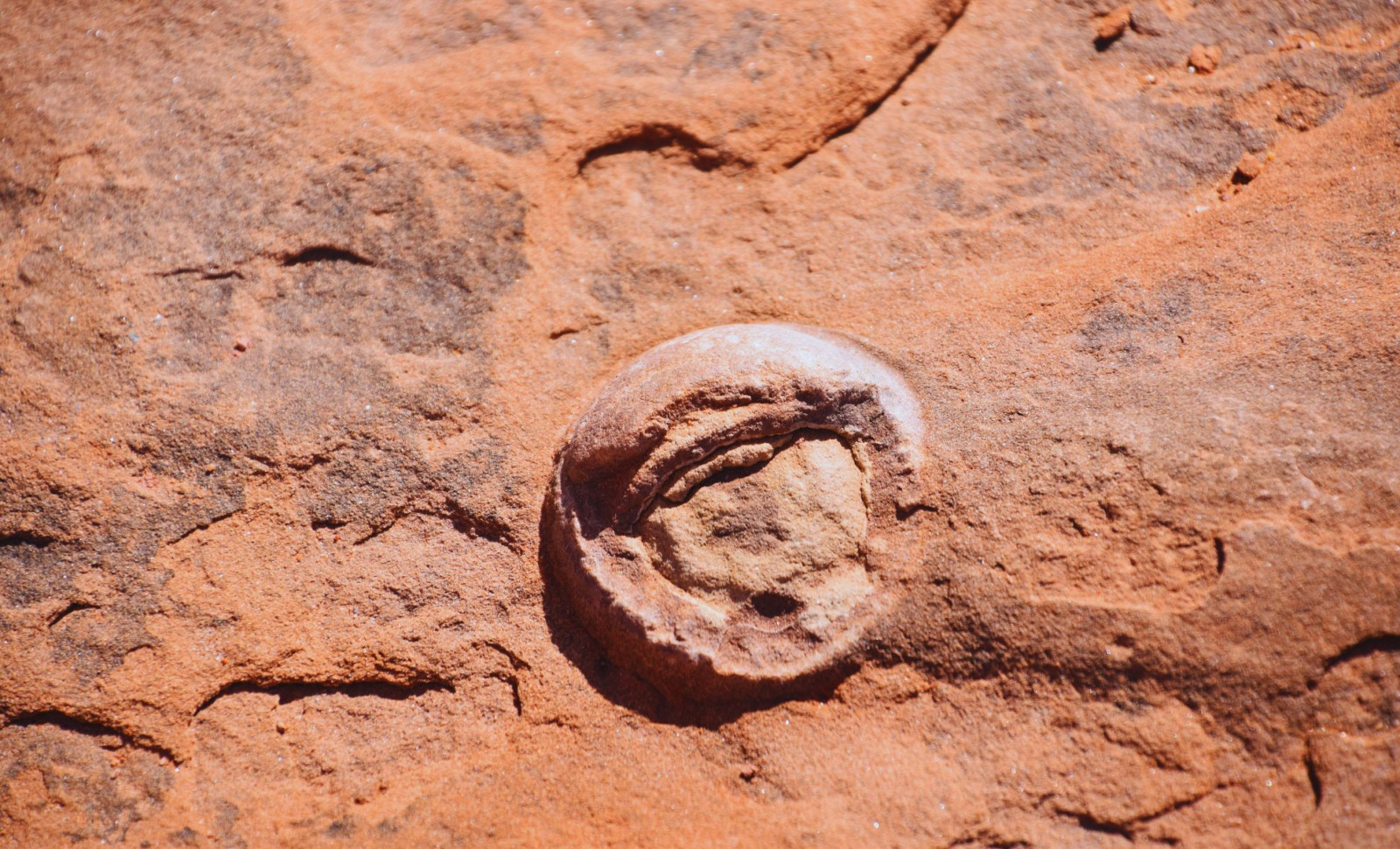
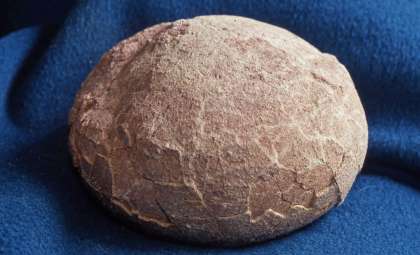
In central India, researchers have uncovered a fossilized dinosaur egg containing a second egg within it, marking the first confirmed instance of an ovum-in-ovo formation in dinosaurs. This specimen, from the Lameta Formation near Padlya village in Madhya Pradesh, belongs to a titanosaur and dates back to the Late Cretaceous period.
Under the leadership of Guntupalli Prasad from the University of Delhi, the discovery challenges the previous assumption that such egg anomalies were exclusive to birds, suggesting novel reproductive links between titanosaurs, crocodilians, and modern birds.
Fossil Reveals Egg-within-Egg Phenomenon
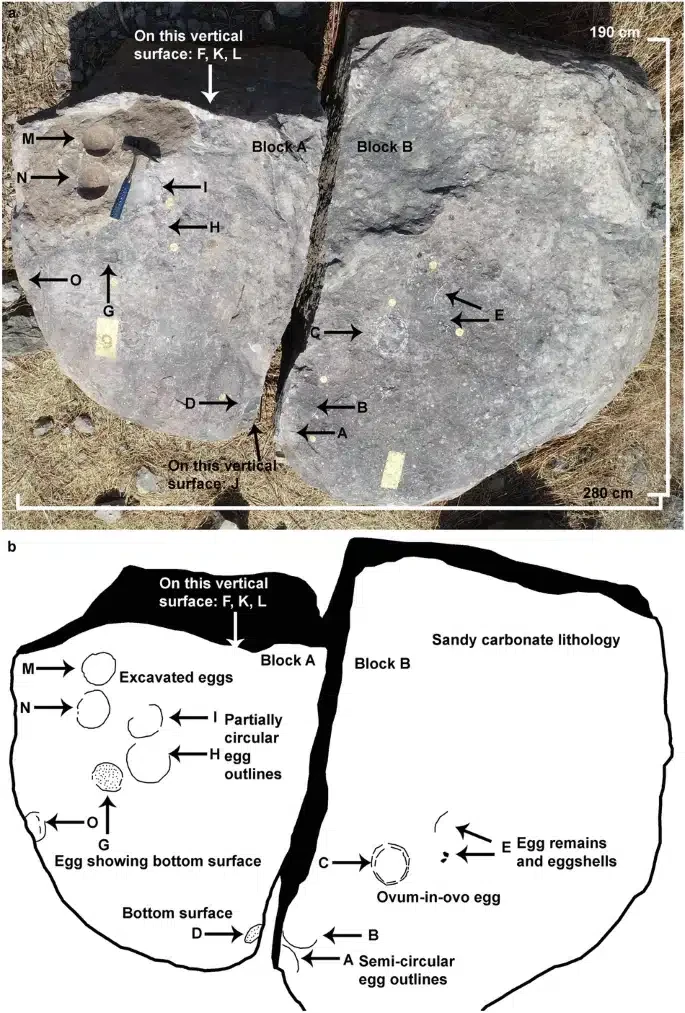
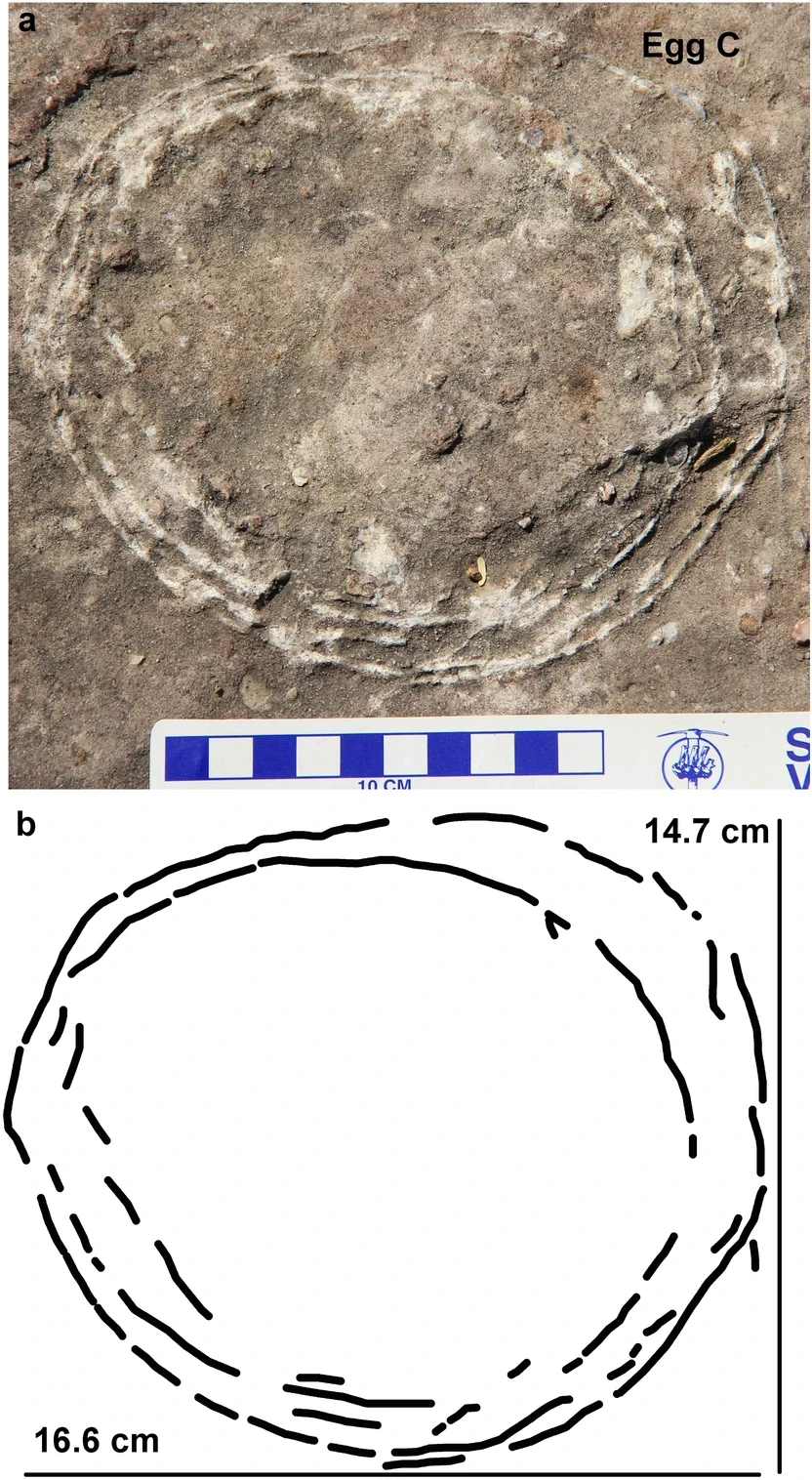
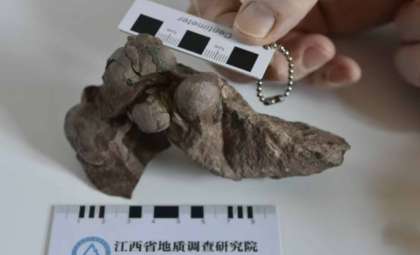
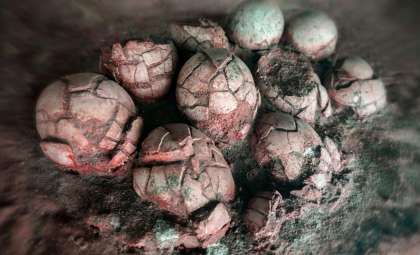
The16.6 cm long and 14.7 cm wide fossil was found in a sauropod nesting site. According to the study reported in Scientific Reports, this ovum-in-ovo structure dates back about 68 million years and is linked to a titanosaurid, a group of large sauropod dinosaurs.

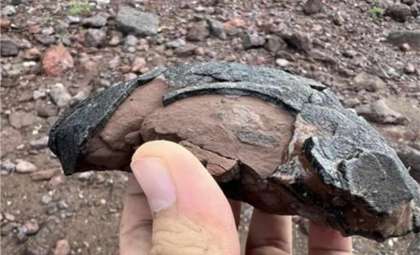
“The egg shows two circular and partially broken but complete eggshell layers occurring one within the other and with minor eggshell fragments present as curved remnants in between the two layers,” the study’s authors said.
The team identified the fossil as representing ovum-in-ovo pathology, similar to cases in contemporary birds. Photographs show a crescent-shaped shell fracture and clear eggshell layer boundaries that reinforce this interpretation.
Linking Dinosaur Reproduction to Birds
Previously, the ovum-in-ovo condition was identified only in birds, where it results when an almost fully formed egg reverses into the upper oviduct and becomes enveloped by a secondary shell. Finding this feature in a titanosaur nest raises intriguing questions about dinosaur reproductive systems. Guntupalli Prasad and his collaborators noted:
“The presence of ovum-in-ovo pathology from a titanosaur nest supports the idea that the titanosaurs had an oviductal functional morphology similar to birds.”
The research also highlights that while most reptiles lay groups of eggs simultaneously via a generalized uterus, birds and crocodilians possess a more specialized, segmented uterine structure.
Unusual Eggs Shed Light on Dinosaur Biology
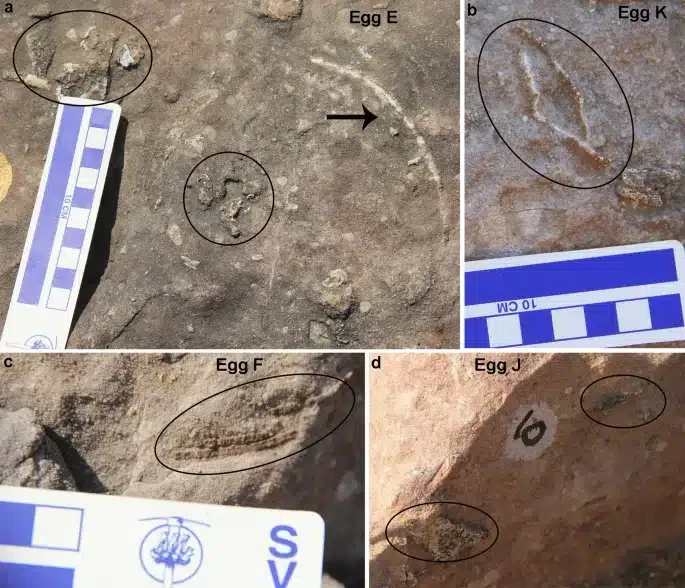
The ovum-in-ovo condition is one example of several egg abnormalities recorded in the fossil record. Other known issues include multi-shelled eggs, peculiar shell shapes, eggs lacking yolks, and variable shell thicknesses. These abnormalities provide key insights into the reproductive behaviors and physiology of ancient and present-day species.
Multi-shelled egg conditions have been documented across various amniotes, including turtles, lizards, crocodiles, and some extinct bird species.
“While several other amniotes have a generalized uterus and laid the eggs simultaneously, the alligators and crocodiles show more similarity with birds by having a specialized segmented uterus while keeping the reptilian mode of egg laying,” the researchers said.
Overall, the study suggests this fossil provides valuable evidence connecting dinosaurs, birds, and crocodilians through reproductive traits. Understanding these shared features helps scientists piece together the evolutionary development of complex biological systems over millions of years and highlights how ancient creatures were not as different from modern animals as once thought.
- Categories:
- News




0 comments
Sign in to Comment