
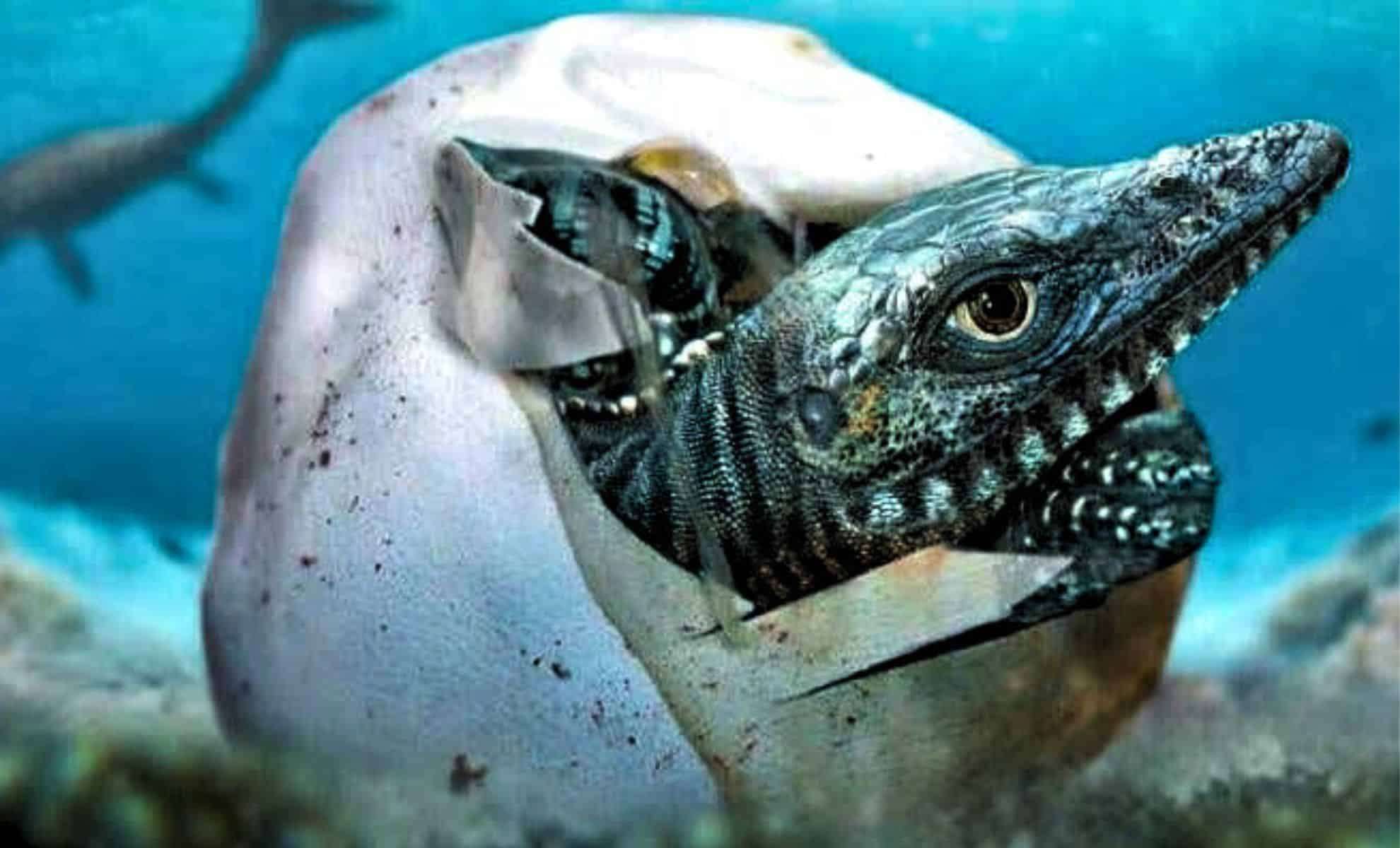
Buried beneath Antarctica’s icy surface for over 60 million years, a remarkable fossil has been unearthed, challenging long-standing views on how ancient marine reptiles reproduced during the Cretaceous era. Initially perceived as an odd anomaly—a large, leathery object found near an ancient predator’s remains—this discovery is rewriting the fossil record.
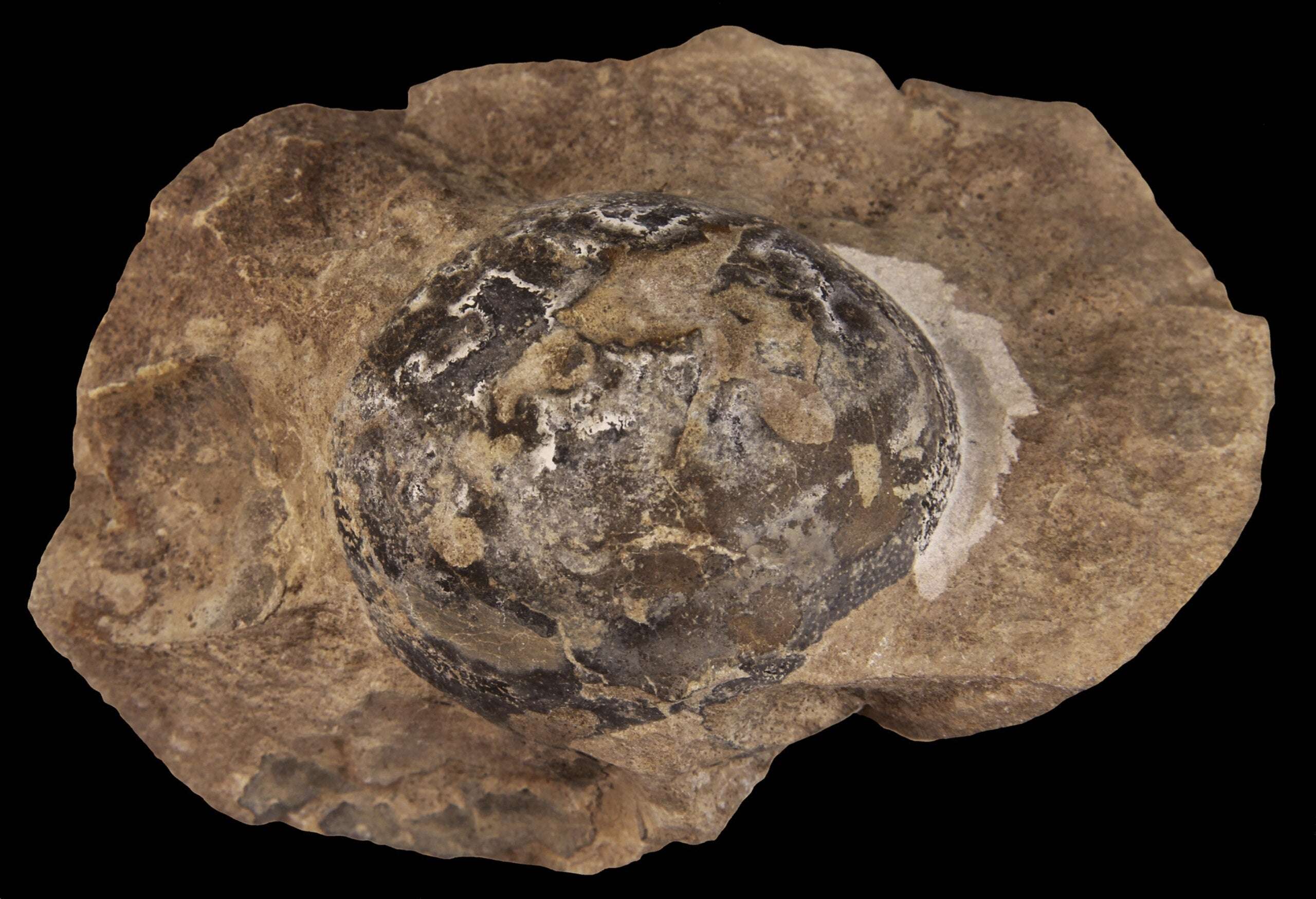
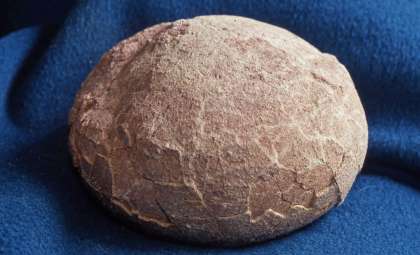
Reported by The Brighter Side, the fossil, now identified as Antarcticoolithus bradyi, is a giant soft-shelled egg measuring roughly 11 by 8 inches. The specimen was found in 2011 by a Chilean research team on Seymour Island, near the Antarctic Peninsula. Its unique composition and absence of a hard shell left researchers puzzled for years. Today, it’s recognized as the largest soft-shelled egg ever discovered and the second-largest egg fossil known worldwide.
an unprecedented fossil find
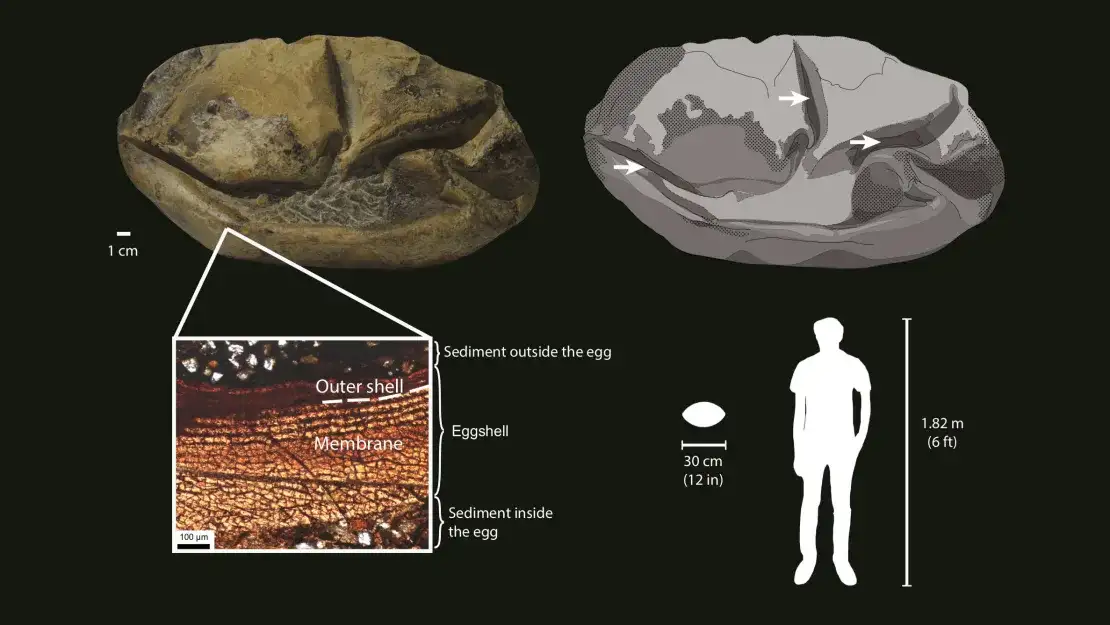
This egg’s appearance is unlike any previously documented in paleontological studies. Its delicate, papery exterior lacks the familiar pores common in dinosaur eggs, and the partially collapsed form gives it a deflated look. Julia Clarke, a vertebrate paleontologist at the University of Texas at Austin, described the specimen as “exceptional in both size and structure,” emphasizing its unmatched features.

Lucas Legendre, postdoctoral fellow at UT Austin and lead author of the corresponding study, noted that the egg’s structure is more similar to those of modern lizards and snakes than to any dinosaur eggs. “Though it came from an animal as large as a dinosaur, its characteristics are unlike dinosaur eggs,” Legendre commented.
Findings suggest the egg was laid in water and hatched almost immediately, opposing the widely held belief that ancient marine reptiles gave live birth.
evidence linking the egg to a giant mosasaur
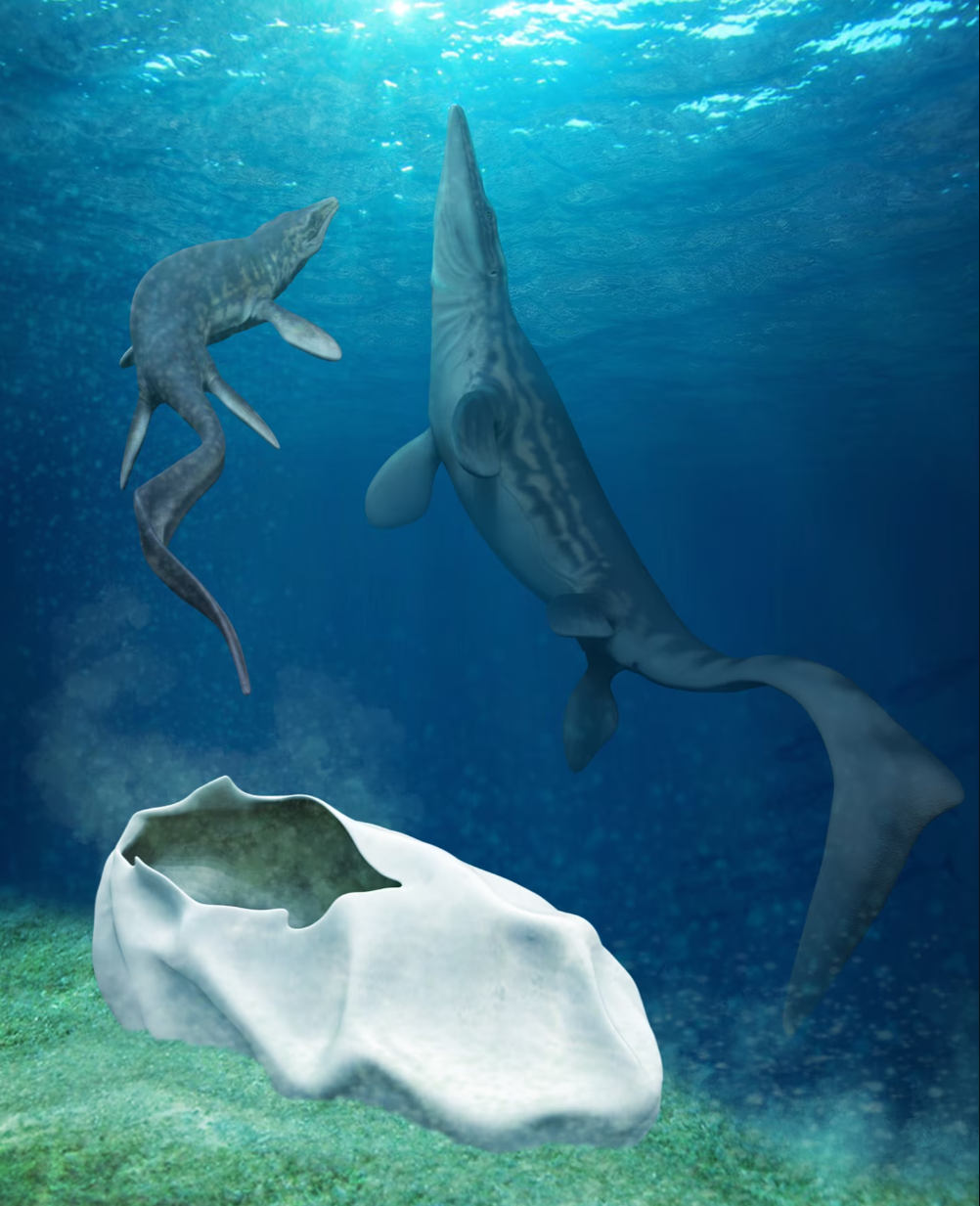
Though no embryo was found inside the egg, it was located just 200 meters from the remains of Kaikaifilu hervei, a huge mosasaur species closely related to snakes and monitor lizards. Comparing the egg’s size to 259 living reptiles, scientists estimate the mother measured at least 23 feet long, excluding her tail—consistent with the size known for K. hervei.
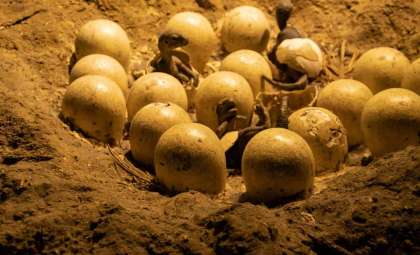
Fossils of baby mosasaurs and plesiosaurs found nearby support the idea that this area functioned as a nursery or birthing ground. Based on these findings, Clarke and her colleagues proposed a reproductive approach similar to modern sea snakes, which lay thin-shelled eggs in the ocean that quickly hatch.
broader implications for evolutionary history
The discovery’s impact extends beyond a single species’ behavior. The fragile shell implies that soft-shelled eggs could have been more common among reptiles and early dinosaurs than previously thought. Darla Zelenitsky, a paleobiologist specializing in fossil eggs, described the discovery as “remarkable,” especially when considered alongside other recent findings of soft-shelled eggs from dinosaurs like Protoceratops and Mussaurus.
Soft-shelled eggs rarely fossilize due to their delicate makeup, making such finds extremely rare. These discoveries challenge the long-held view that dinosaur eggs were mainly hard-shelled. “The assumption has always been that the ancestral dinosaur egg was hard-shelled,” stated Mark Norell, head of paleontology at the American Museum of Natural History. “These findings overturn that idea.”
unanswered questions about egg-laying habits
Despite the deepening knowledge, how the egg was laid remains uncertain. One theory suggests mosasaurs deposited eggs directly into the sea, as some current marine reptiles do. Another theorizes the eggs were laid on beaches, with hatchlings making their way to the ocean, like baby sea turtles. Clarke noted the latter is less likely given the mother’s size but acknowledged that “we can’t exclude the idea that they shoved their tail end up on shore because nothing like this has ever been discovered.”
The study includes a detailed illustration of the egg’s anatomy compared to a human, underscoring the fossil’s exceptional preservation in Antarctica’s extreme climate. Clarke and her team aim to conduct further fieldwork in search of more well-preserved prehistoric evidence.
As the research progresses, the discovery of A. bradyi sheds fresh light on reptilian reproductive evolution and opens the door to revisiting many established assumptions about ancient life.
- Categories:
- News



0 comments
Sign in to Comment