
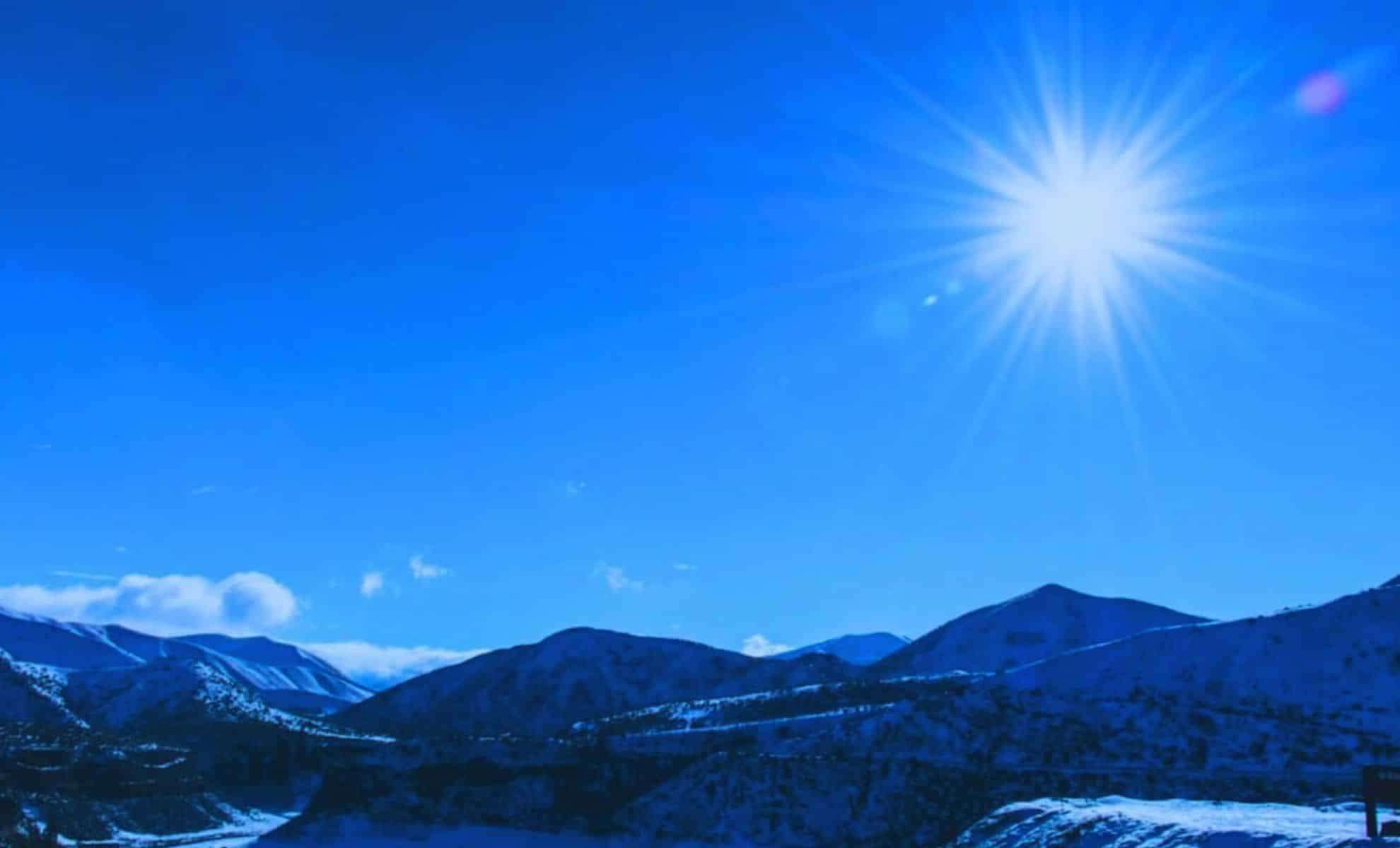
During the summer of 1831, observers throughout the Northern Hemisphere witnessed an extraordinary atmospheric event: the Sun took on a striking blue hue, occasionally shifting to violet or green, illuminating the environment with an unusual glow amid an unseasonably cold spell. This led to plummeting temperatures, failed harvests, and widespread bewilderment as the skies confounded expectations.
For nearly two centuries, the cause of this climatic anomaly puzzled scientists. While volcanic activity was suspected, the specific eruption responsible had not been identified until recently. Now, new research attributes the event to a powerful yet overlooked volcanic eruption from the Zavaritskii caldera, located in Russia’s remote Kuril Islands.
Decoding the Past Using Ice Core Geochemistry
A research group at the University of St Andrews, led by Dr. William Hutchison, applied sophisticated geochemical techniques to solve the longstanding enigma. They analyzed minute volcanic glass fragments, termed cryptotephra, extracted from polar ice cores taken in Greenland and Antarctica. These samples were then compared to tephra from volcanoes throughout Asia and the North Pacific region.

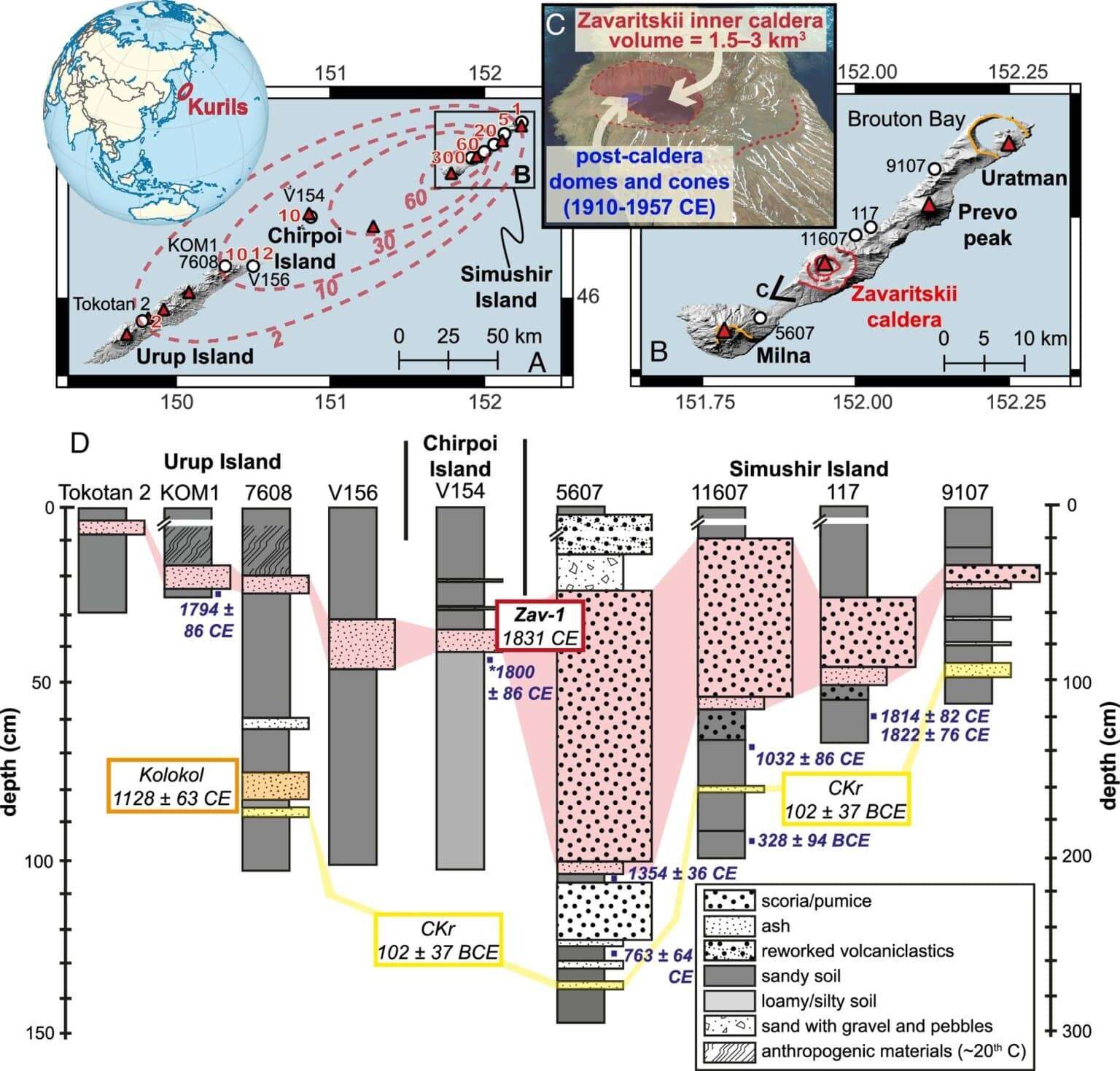
Their analysis conclusively linked the ice core deposits to the Zavaritskii caldera on Simushir Island within the Kuril chain, located between Japan and Kamchatka. The chemical composition of tephra from the previously identified “Zav-1” eruption—gray pumice deposits on Simushir—matched perfectly with the volcanic particles found in the ice.
Dr. Hutchison remarked, “The instant we matched the volcanic ash from the ice cores with that from the caldera, it was a true breakthrough— the chemical signatures were identical.” The eruption had remained hidden due to the island’s isolation and scarce historical records.
At that time, Simushir was sparsely populated by Indigenous Ainu communities, Russian settlers, and Aleut workers along the northern shores. No contemporary accounts documented the eruption, and ash fallout in inhabited areas, such as Broughton Bay, was minimal.
An Eruption That Changed Climate Patterns
The Zav-1 event was notable both in scope and environmental consequences. Scientists estimate that the volcano released around 12 ± 3.5 teragrams (Tg) of sulfur into the stratosphere.
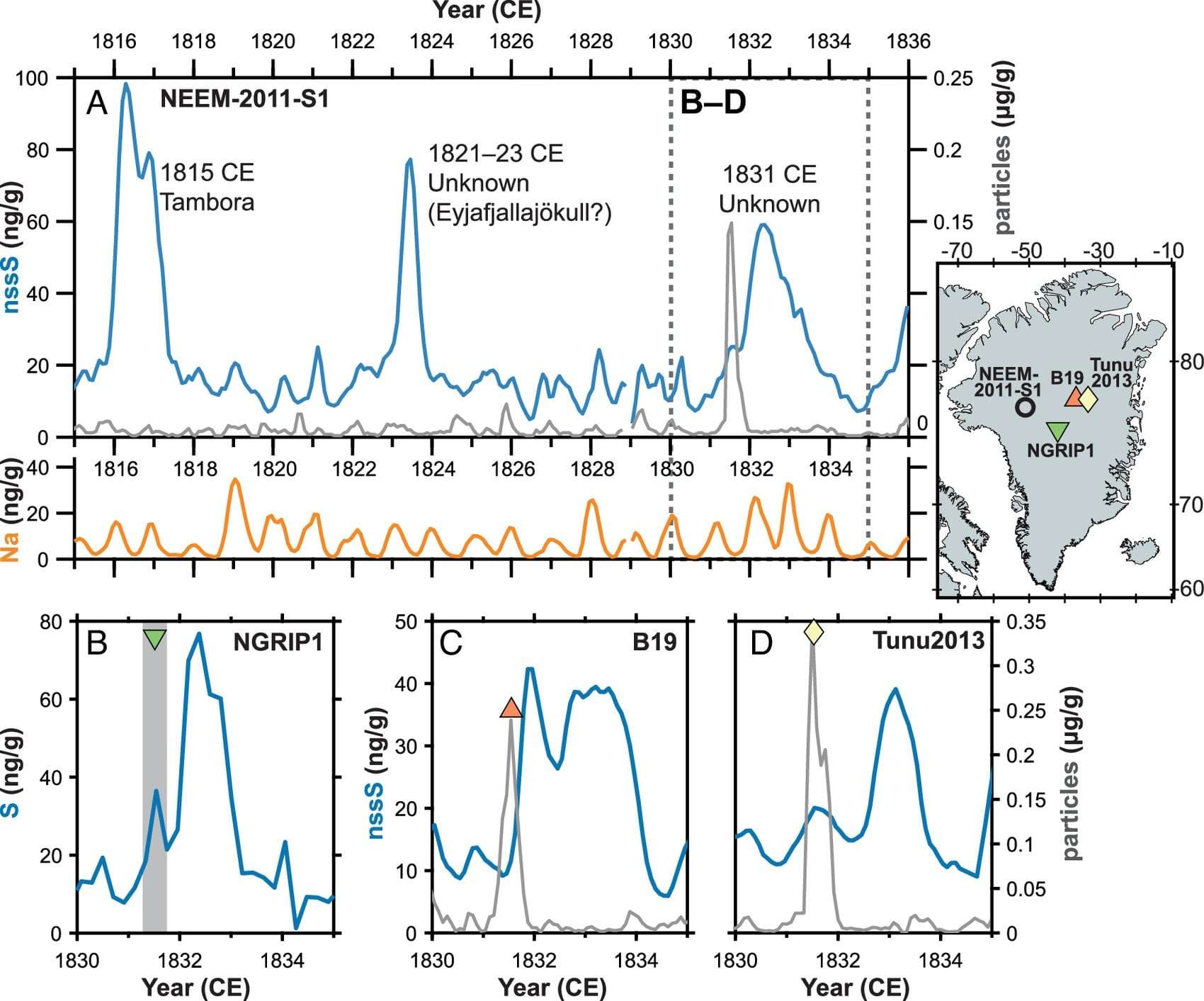
This sulfuric discharge led to the formation of sulfate aerosols that reflected solar radiation back into space, significantly cooling the Northern Hemisphere. Sulfate deposits identified in Greenland ice layers indicate a temperature decline of roughly 0.5 to 1°C during 1831–1833.
The intensity of this eruption compares with other major historic volcanic events, such as Mount Pinatubo in 1991 and the 1835 eruption of Cosegüina. Researchers estimate a radiative forcing effect of about −2 ± 1 watts per square meter from Zav-1, paralleling these significant eruptions.
Employing the EVA_H climate model, the team reconstructed the stratospheric aerosol optical depth and radiative forcing caused by Zav-1. Their simulation showed the eruption’s sulfur emissions and plume height—estimated between 11 and 35 kilometers—were sufficient to form a global veil of aerosols.
This aerosol layer reduced incoming solar energy, cooling Earth's surface and altering weather patterns, including the monsoons affecting Africa and India.
Why Earlier Hypotheses Missed the Mark
Various eruptions had been suggested as the cause of the 1831 atmospheric events, notably the sudden appearance of the submarine volcano Ferdinandea near Sicily in July 1831. This eruption coincided with blue sun sightings over Europe and North America, leading to speculation that Ferdinandea was responsible.
However, the recent findings undermine this theory. The geochemical profile of the ice-core volcanic glass does not align with material from Ferdinandea. Additionally, sulfur isotope data show no evidence for evaporite rock contributions typical of the Sicilian region.
Moreover, Ferdinandea’s sulfur output, estimated at only 0.3 Tg, was too small to match the ice-core sulfate peaks or to cause widespread cooling. Instead, it likely explains only temporary “blue sun” phenomena in August 1831. The broader climatic impacts arise primarily from the Zav-1 eruption.
Researchers compare this to events in 44 BCE, when a minor Mount Etna eruption caused localized atmospheric effects, while a far larger Alaskan eruption drove extensive global cooling.
Pinpointing the Timing and Scale of the Zav-1 Eruption
Integrating fieldwork, radiocarbon dating, and particle analysis, the scholars estimated the size of the Zav-1 eruption. Tephra layers spread across Simushir and neighboring islands, such as Chirpoi and Urup, suggest a volume between 3.3 and 4.5 cubic kilometers. This translates to an eruption magnitude of approximately 5.5, akin to the scale of Mount Pinatubo.
Radiocarbon measurements of soil and charred material beneath Zav-1 deposits, combined with artifacts like muscovite windowpanes and old firearms discovered in Chirpoi’s Peschanaya Bay, align with an 1831 date. Corroborating evidence from tree rings and ice cores further support a summer 1831 eruption.
Sulfur isotope analysis added confirmation. The Δ33S signature found in ice cores indicated stratospheric injection of volcanic aerosols, a hallmark of sulfur dioxide oxidation under ultraviolet light high in the stratosphere. This chemical fingerprint strongly supports the role of Zav-1 in driving climate shifts.
By synthesizing geochemical, glaciochemical, radiometric, modeling, and stratigraphic data, the researchers have finally identified the Zavaritskii eruption as the long-lost source behind the 1831 global cooling and strange sky hues.
- Categories:
- Science







0 comments
Sign in to Comment