
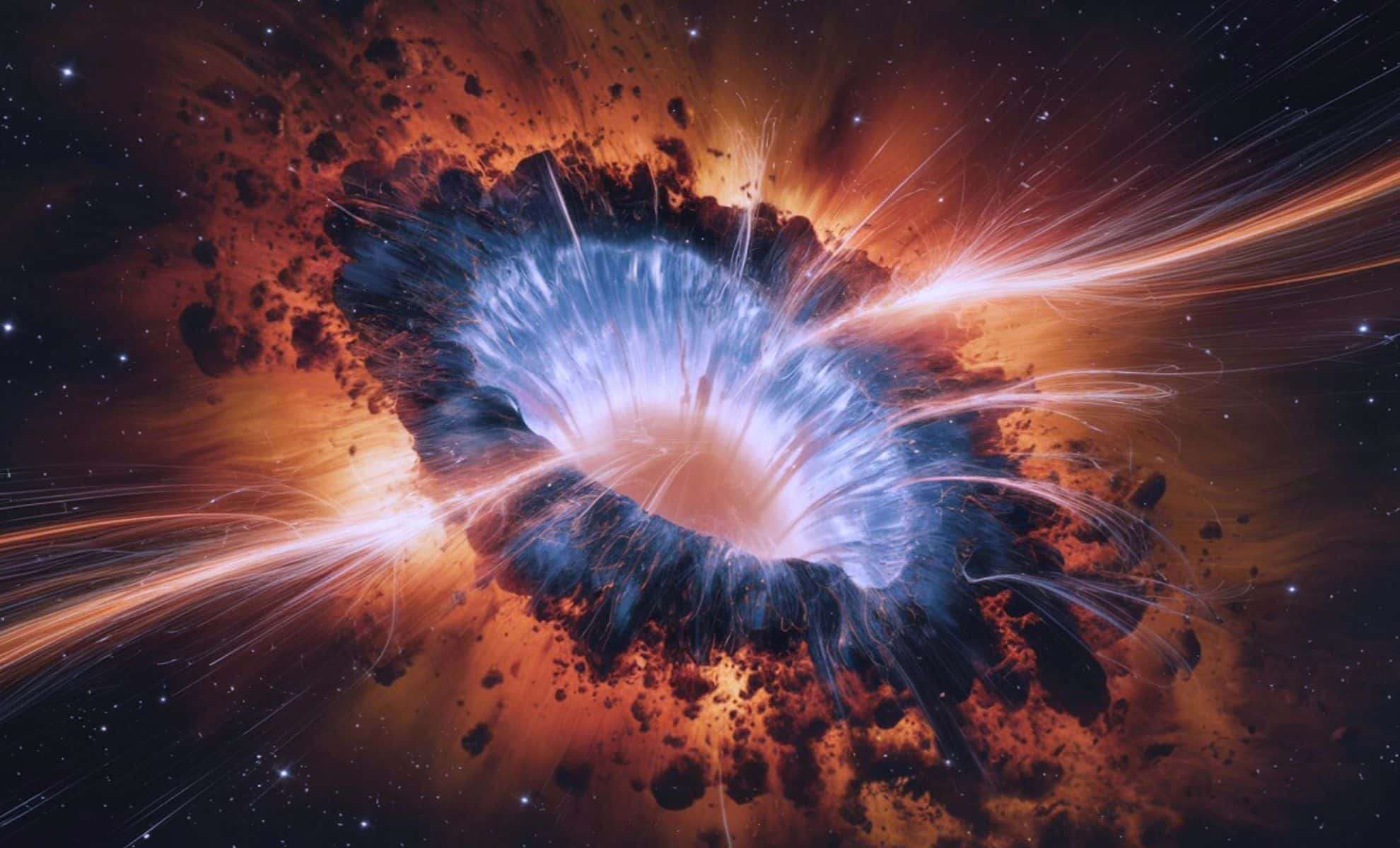
Fast radio bursts (FRBs) are brief yet extraordinarily intense emissions of radio waves that have challenged astronomers since their initial detection in 2007. These fleeting pulses can discharge as much energy in milliseconds as the Sun produces over a full day. Recently, an international research group led by Kenzie Nimmo from MIT, along with collaborators from institutions such as McGill University, successfully linked one such burst to its source—a magnetar approximately 200 million light-years distant, in a galaxy identified as FRB 20221022A.
Locating the Burst Using Scintillation Patterns
The team utilized the advanced CHIME (Canadian Hydrogen Intensity Mapping Experiment) radio telescope array to examine scintillation effects, which resemble the star twinkle caused by light bending through interstellar gas. This innovative method enabled them to pinpoint the burst's origin to within 10,000 kilometers of the magnetar’s surface, a region characterized by intensely chaotic magnetic fields—significantly less than the span between Earth and the Moon.
By integrating these observations with polarization data that exhibited an S-shaped pattern in the radio signals, researchers found distinctive evidence matching the rotation of a magnetized neutron star. This marked the first definitive confirmation that FRBs can be generated inside the magnetosphere of magnetars, substantiating theoretical models that had remained unproven.

The Intense Environment of Magnetars
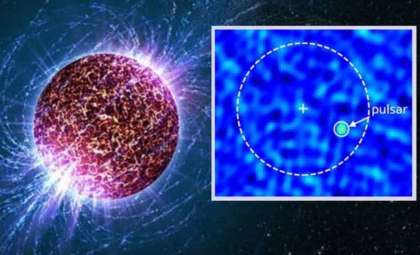
Magnetars are a rare class of neutron stars distinguished by magnetic fields up to 1,000 times stronger than those typically seen in neutron stars. Such extreme magnetism obliterates atoms nearby, producing a plasma environment so extreme that whether it can generate observable radio waves has been debated. MIT physicist Kiyoshi Masui explains, “The energy trapped in these magnetic fields, close to the source, twists and rearranges, releasing radio waves that we can detect across vast cosmic distances.”
This finding illuminates the enigmatic surroundings of magnetars, which form from the remnants of supernova explosions. The precision attained by the team is comparable to detecting the structure of a DNA helix from the Moon’s surface using telescopes on Earth.
FRB 20221022A Compared to Other Bursts
Here is a comparison illustrating where FRB 20221022A fits among other notable fast radio bursts:
This overview highlights FRB 20221022A as one of the closest and most thoroughly studied bursts, offering essential insights into magnetars’ role in generating FRBs.
The Diversity of FRBs and Remaining Mysteries
While the source of FRB 20221022A has been identified as a magnetar, not all FRBs may share this origin. Some have been linked to star-forming regions, whereas others seem connected to older stellar environments, implying that various physical processes could produce these powerful bursts.
Scientists are investigating whether similar methods can reveal the origins of more distant or subtler FRBs. With the CHIME telescope regularly discovering multiple FRBs daily, there is optimism about uncovering further details regarding their nature and the extreme conditions that spark these quick flashes.
Currently, FRB 20221022A stands as a vivid example of how advanced technologies and meticulous observations can unravel the mysteries of the universe’s most fleeting phenomena.
The findings are detailed in the journal Nature.
- Categories:
- Astronomy





0 comments
Sign in to Comment